
Sanskar and griha puja
Bhoomi Pujan before Building a Home or Shop
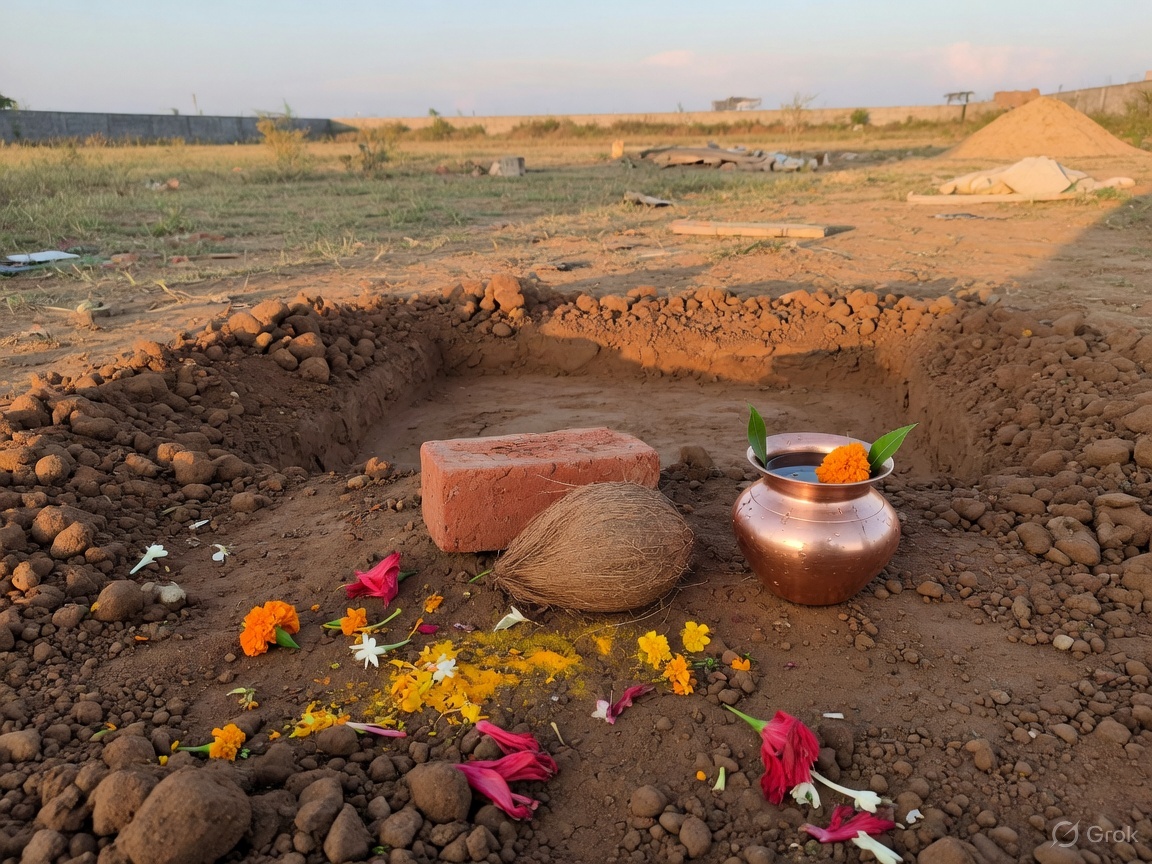
Bhoomi Pujan and shilanyas before construction — Ganesh, Prithvi and Vastu Purush puja, and the first dig in the north-east corner.
Bhoomi Pujan on the plot before building: Prithvi, Vastu Purush and naag puja, the first dig and shilanyas — for homes, shops and factories.
What this includes
- Muhurat for the first dig from the panchang
- Ganesh puja, kalash sthapana and Prithvi puja
- Vastu Purush and naag puja
- The first dig in the north-east corner
- Shilanyas — laying the foundation stone
- Samagri list on WhatsApp once the date is fixed
Families often treat Bhoomi Pujan as the formality that lets the contractor start on Monday. Others have been told that it decides the fate of the building, or that a plot of the wrong shape cannot be settled by any puja. The rite is simpler and older than both. Before the earth is cut, she is worshipped as Prithvi and asked to bear the digging. The Vastu Purush of the plot and the devatas of the directions are honoured. A naag and a kalash are placed in the first pit, as the tradition holds, and the owner makes the first strokes in the chosen corner. It is a request for leave and for a settled beginning. It is not a certificate for the plot.
Bhoomi Pujan, shilanyas and Griha Pravesh
Three moments in a building are often spoken of as one:
- Bhoomi Pujan — the worship of the earth and the first dig, before construction begins.
- Shilanyas — the laying of the foundation stone. It is often done on the same day, straight after the first dig; on a larger building it may wait until the foundation trench is ready.
- Griha Pravesh — the family’s first entry when the building is complete. It has its own page.
A family buying a flat in a building that is already built, or being built by a developer, does not need a Bhoomi Pujan of its own. The earth beneath it was dug before they arrived. Their rite is the Griha Pravesh.
The north-east corner and the Vastu Purush
The tradition describes the Vastu Purush lying across every plot, face down, his head in the north-east — Ishan — and his feet in the south-west. Ishan is the corner of the devas, of water and of beginnings. In the common North Indian practice the first dig is made there, in the north-east corner of the plot or of the building’s footprint, and the kalash is placed in that corner.
Some paddhatis also consult the vastu naag chakra, in which the position of the serpent beneath the earth is held to shift with the Sun’s sign every three months, and choose the corner for the first stroke so that it does not fall at the head. Where the family’s tradition follows this, I check it for the month. I look at the site plan, with north marked, before the day, so that the corner is chosen on paper and not guessed on the morning.
The naag, the kalash and the foundation
In the first pit the tradition places a small naag of silver or copper, as a sign of Sheshnag, on whom the earth is held to rest, with a kalash of water and auspicious materials beside it. In many families a small kurma is placed too — a tortoise, sign of the one who bore Mount Mandara at the churning of the ocean. The pit is closed over them, and the foundation rises above. The exact items vary between families and paddhatis, and they are on the samagri list I share once the date is fixed.
How the muhurat is chosen
I do not publish a list of dates. The day is worked out for the owner and the place:
- The month and the Sun’s sign. Many traditions do not begin a building in Chaturmas or in kharmas.
- The nakshatra. Fixed and gentle nakshatras such as Rohini, Mrigashira, Anuradha, Revati and the three Uttaras are favoured.
- The tithi and the day. Rikta tithis and Amavasya are avoided, and most families avoid Tuesday.
- Bhoomi shayan — days the panchang marks as the earth at rest. Digging is not begun on them.
- The owner’s Chandra bal and tara bal on the date.
Where a site has its own constraints — the monsoon, the engineer’s schedule — I look for the best day within them, and tell the family plainly which conditions the chosen date meets and which it does not.
The vidhi, in outline
- Preparation — the corner cleared and levelled, the place for the vedi marked, the site plan at hand.
- Sankalp — the owner’s name and gotra, the location of the plot, and the purpose: a home, a shop, a factory.
- Ganesh puja, kalash sthapana and punyahavachan, with the navagraha worshipped.
- Prithvi puja — the earth worshipped and asked to forgive the digging.
- Vastu Purush puja — the Vastu Purush and the devatas of the directions invoked and honoured.
- Naag and kalash puja — the naag, the kalash and the other materials worshipped before they go into the pit.
- The first dig — after the acharya, the owner makes the first strokes with the spade in the chosen corner, and the naag and kalash are placed and covered.
- Shilanyas, where it is held the same day — the foundation stones or bricks worshipped and laid with their mantras, the first in the north-east.
- A short havan where the family wishes, then aarti and prasad — given first to the masons and labourers who will build on this earth.
Samudravasane devi parvatastanamandale, Vishnupatni namastubhyam padasparsham kshamasva me.
Many families say this verse on rising, asking the earth to forgive the touch of their feet. At a Bhoomi Pujan it is said with more reason. Today the earth is not only being walked on. She is being cut.
Homes, shops and factories
The core rite is the same for all three. For a home, the owner sits with the spouse. For a shop or a firm, the owner or the partners sit, and the sankalp names the business as well as the family. For a factory or a large plot, I look at the drawing and fix the north-east corner of the building itself, not of a boundary wall a hundred metres away, and the shilanyas may be held later when the foundation is ready. In many trades Vishwakarma is also remembered at a factory’s beginning, where the family’s custom holds it.
What the puja does not replace
Bhoomi Pujan does not replace the soil test, the structural design or the sanctions a building needs. Those are the work of the engineer and the authority, and a careful family does both. Nor does the puja promise that a business will prosper or that a house will be finished on time. It asks for leave, and for a settled beginning.
What the family arranges, and what I bring
I bring the paddhati, the mantras and the conduct of the rite. The samagri list, including the naag and kalash materials as your family’s custom holds them, is shared on WhatsApp once the date is fixed. The family arranges access to the plot, a cleared and level corner, a spade, water, shade if the day is hot, and the site plan with north marked.
What I need from you
- The location of the plot, and the site plan or a sketch with north marked.
- The owner’s name and gotra, and birth details for Chandra bal and tara bal.
- Whether it is a home, a shop or a factory, and who will sit — the owner, the couple, the partners.
- Whether the shilanyas is to be held the same day.
- The engineer’s or contractor’s start date, so that the muhurat is chosen with it in view.
How it is held
Bhoomi Pujan is held on the plot. It cannot be done online, because the earth being dug is there. I perform it in Sultanpur and the districts around it, and travel elsewhere in India. Where the owner lives abroad and is building in the family’s village or town, the muhurat is worked out on WhatsApp or a video call. The owner coming to sit is best. Where that is not possible, a close family member often sits with the sankalp in the owner’s name, and the owner watches by video. I tell the family plainly that this is the second-best arrangement, not the same one. Dakshina is discussed on WhatsApp.
Questions people ask
- Which direction should the first dig be in Bhoomi Pujan?
- In the common North Indian practice, the north-east — Ishan — corner of the plot or of the building’s footprint, where the head of the Vastu Purush is held to lie. Some paddhatis also consult the vastu naag chakra, which shifts with the Sun’s sign every three months, and adjust the corner by it. I fix the corner from the site plan, with north marked, before the day.
- What is the difference between Bhoomi Pujan and Shilanyas?
- Bhoomi Pujan is the worship of the earth, the Vastu Purush and the naag, with the first dig, before construction begins. Shilanyas is the laying of the foundation stone. For a house they are often done together on one muhurat. On a larger building the shilanyas may wait until the foundation trench is ready, and then it is given its own day.
- Can Bhoomi Pujan be done without the owner present?
- It is best when the owner sits, because the sankalp is theirs and the first strokes are theirs. Where the owner is abroad or unwell, a close family member — a parent, the spouse or a sibling — often sits with the sankalp in the owner’s name, and the owner can watch by video. It is an accepted arrangement, though not the same as being there.
- Is Bhoomi Pujan needed when buying a flat?
- No. A family buying a flat in a building that is already built, or being built by a developer, is not digging the earth themselves. Their rite is the Griha Pravesh when they move in, with the vastu puja held inside the flat. Bhoomi Pujan belongs to whoever begins construction on the plot, before the first dig.
- Can Bhoomi Pujan be done in Kharmas or Chaturmas?
- Most traditions avoid beginning a building in Chaturmas and in kharmas, and also avoid days the panchang marks as bhoomi shayan. Where a project genuinely cannot wait, I look for the best date available within those limits and tell the family which conditions it meets and which it does not, rather than pretending that every date is equal.
- Duration
- 2–3 hours
- Where it is held
- On the plot itself
- Phone
- +91 94547 82346
Bhoomi Pujan before Building a Home or Shop
Book this serviceServices
Sanskar and griha puja
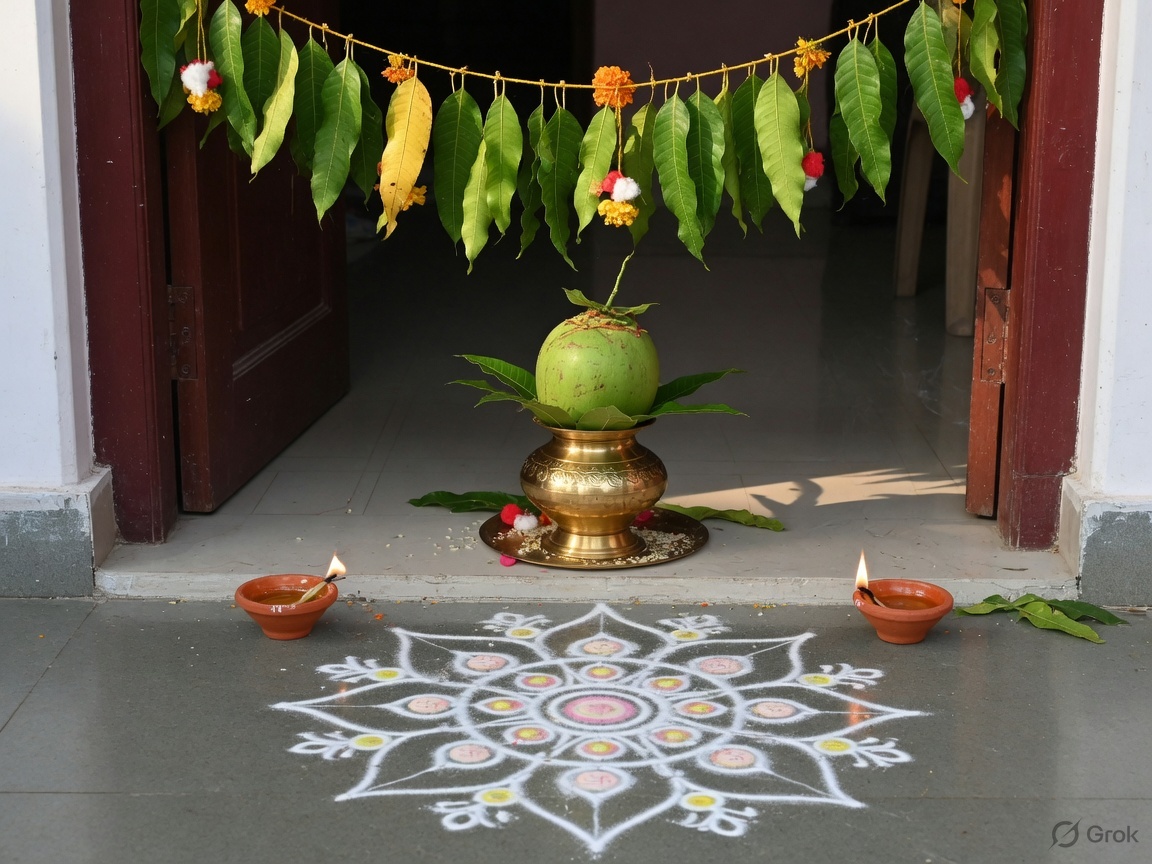
Griha Pravesh Puja for a New Home or Flat
Griha Pravesh Puja on a chosen muhurat — Ganesh and kalash puja, vastu puja, the first entry, milk in the new kitchen and havan.
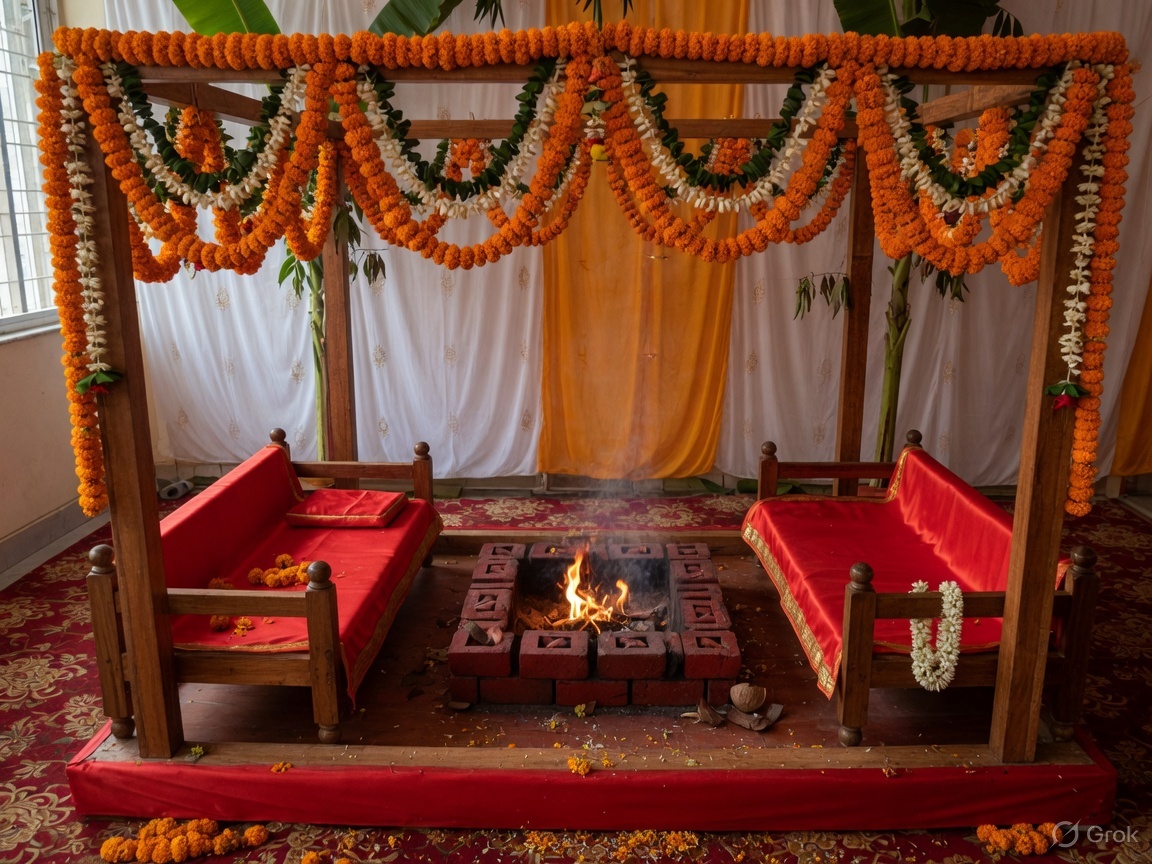
Vedic Vivah Sanskar (Hindu Wedding Rites)
The Vedic wedding rites — dwar puja, kanyadaan, panigrahan, laja homa and saptapadi — performed in full order at the mandap.

Namkaran Sanskar — Naming Ceremony by Nakshatra
The naming rite for a newborn at home — the nakshatra akshar, the puja, and the name first spoken by the father.