
Jaap, path and anushthan
Rudrabhishek Puja with Rudrashtadhyayi Path
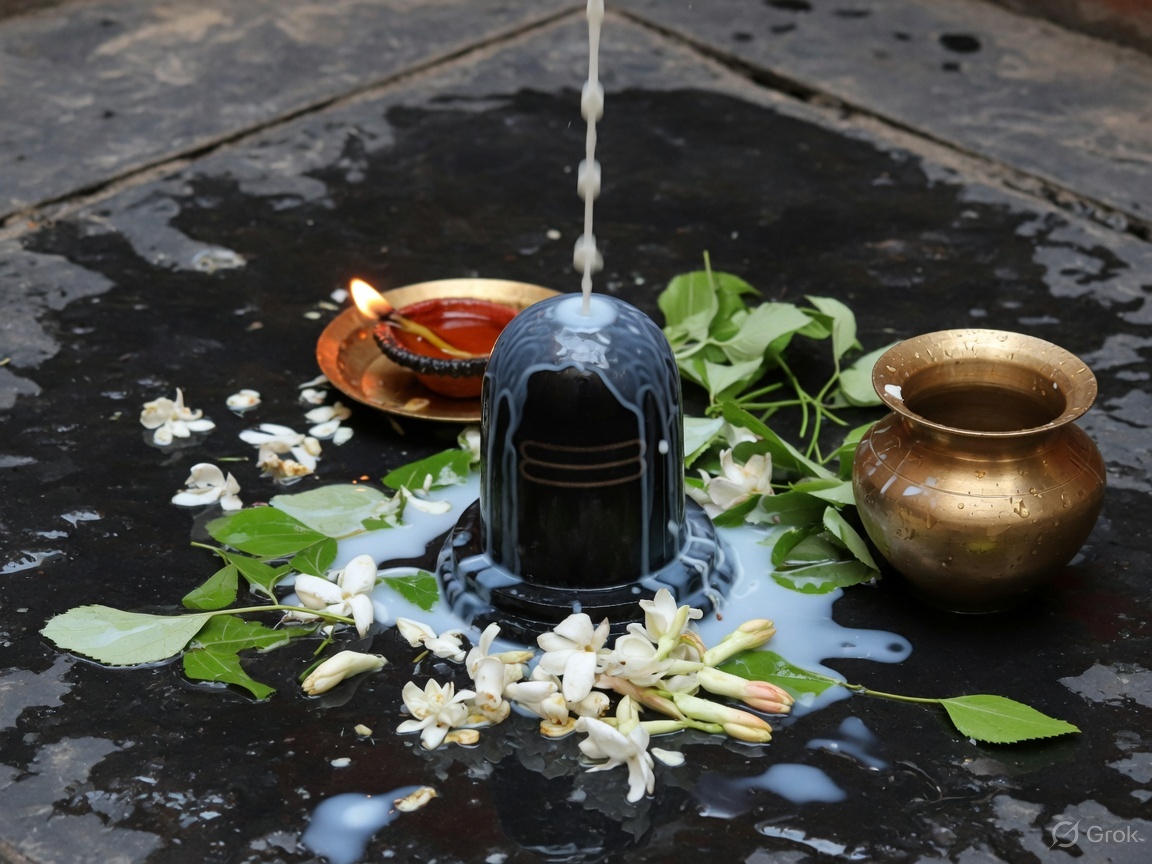
Abhishek of the Shivling with jal, dugdh and panchamrit while the Rudrashtadhyayi of the Shukla Yajurveda is recited.
Rudrabhishek: a steady stream of jal, milk and panchamrit on the Shivling as the Rudrashtadhyayi is recited — at home, on a parthiv linga or in a Shiv mandir.
What this includes
- Sankalp, Ganesh–Gauri puja and kalash sthapana
- Shiv puja at a Shivling or a parthiv linga
- Abhishek with jal, dugdh and panchamrit through the Rudri path
- Shringar with chandan, bhasma and bilva patra
- Aarti, pushpanjali and kshama prarthana
- Samagri list on WhatsApp once the date and form are fixed
Families often ask for a Rudrabhishek as if it were simply a bigger Shiv puja — the one with more milk. Some have been told it only counts at a jyotirlinga. Others have been handed a chart in which each liquid buys a different result: honey for one wish, sugarcane juice for another, ghee for a third. What a Rudrabhishek actually is is older and simpler. The Shivling is bathed in a continuous stream while the Rudrashtadhyayi of the Shukla Yajurveda is recited over it. The stream and the recitation, together, are the rite. Everything else is the household’s devotion arranged around them.
What the Rudrashtadhyayi is
The Rudrashtadhyayi — the Rudri, in most North Indian homes — gathers eight adhyayas of mantras from the Shukla Yajurveda. The first opens with Ganapati and the Shivasankalpa verses, which ask that the mind settle on what is auspicious. The second is the Purusha Sukta. The fifth is its heart: Namaste Rudra manyava, the Shatarudriya, which bows to Rudra in every form — in the forest and the field, in the river and the dust, in the healer and the hunter. The eighth asks for the things of a full life one by one, each line ending cha me. Read whole, it is not a list of demands. It is a long act of recognising Shiva everywhere, and of asking for a mind that can bear that recognition.
How the scale is counted
- A single path — the whole Rudrashtadhyayi once, with the abhishek running through it. This is what most families hold at home.
- Ekadashini, or Ekadash Rudra — the Rudra adhyaya recited eleven times, usually shared among several ritviks.
- Laghurudra and Maharudra — eleven Ekadashinis, and eleven Laghurudras. These need many ritviks, several days and a havan, and are planned as anushthans, not as an afternoon puja.
When families hold it
- Shravan, and above all its Somvars.
- Mahashivratri, and the monthly Shivratri of Krishna chaturdashi.
- Pradosh — the trayodashi evening kept for Shiva.
- Any Somvar the family chooses for its own reasons.
- A new beginning: griha pravesh, a new shop, a birthday, an anniversary, the first day of a long undertaking.
- As part of a larger shanti, such as the one families are told to hold for Kaal Sarp Dosh.
On that last point: when a family arrives with a Rudrabhishek prescribed for a dosh, I ask to read the chart first, because the dosh may not be what the report said it was. The Rudrabhishek itself needs no dosh to justify it. It stands on its own as worship of Shiva, whatever the chart shows.
For a sakama Rudrabhishek — one held for a stated purpose — many paddhatis check Shiv vas, the place Shiva is held to reside on a given tithi, before fixing the day. Many households and paddhatis do not insist on it in Shravan, on Mahashivratri, or at a jyotirlinga. When the date is flexible I check it; when it is not needed, I say so plainly rather than sell a delay.
How the abhishek is performed
- Sankalp in the yajman’s name and gotra, with the place, the tithi and the purpose.
- Ganesh and Gauri puja, kalash sthapana and punyahvachan; in a fuller form, navagraha puja as well.
- For a parthiv linga, the linga is shaped that morning from clean earth and Shiva is invoked into it; for a fixed Shivling, dhyan and puja as it stands.
- Abhishek in an unbroken stream — jal, then dugdh, dahi, ghee, madhu and sharkara, then panchamrit, with shuddh jal between and after — while the Rudrashtadhyayi is recited.
- Shringar: chandan, bhasma, akshat, bilva patra, dhatura and flowers, vastra and yajnopavit.
- Dhoop, deep, naivedya, aarti and pushpanjali.
- Kshama prarthana, visarjan of a parthiv linga, and prasad.
Older texts associate different dravya with different intentions — sugarcane juice, honey, ghee, kusha water, scented water. I keep that list for families who ask. I do not sell it as a menu of results. A Shivling bathed in plain water during an attentive Rudri has received a Rudrabhishek.
A few customs are kept in most homes. Tulsi is not offered to Shiva, nor the ketaki flower. The bilva patra is offered with its smooth face toward the linga. The channel of the jalahari, through which the abhishek water runs, is not stepped across. And the water that has bathed the linga goes to the roots of a tree or to clean earth — never into a drain.
At home, or in a Shiv mandir
At home, the family’s own Shivling serves — a Narmadeshwar banalinga, or a stone or metal linga already kept in the puja room — or a parthiv linga made on the day and released after the puja. In Shravan many households prefer the parthiv form, because it is made, worshipped and returned to the earth within one sitting. In a Shiv mandir, the abhishek is held where the temple permits a private sitting. That permission and the slot are the family’s to arrange with the temple, because they belong to the place, not to me.
I am based in Lambhua, Sultanpur, and hold Rudrabhishek at homes in Sultanpur and the nearby districts, and elsewhere in India where I travel. An abhishek is water poured on a linga by hands in the room. It cannot be done online on anyone’s behalf. For a family abroad, the honest arrangement is a relative in India sitting as yajman, with the sankalp taken in the absent member’s name and the family joining by video. I will not describe a video of someone else’s abhishek as yours.
What the family arranges, and what I bring
The family arranges the place, a low seat facing the linga, a vessel for the stream — a kalash or a shringi — and the dravya and samagri. The samagri list is sent on WhatsApp once the date and the form are fixed; how much milk and panchamrit is needed depends on whether it is a single path or an Ekadashini. I conduct the puja, recite the Rudrashtadhyayi, and arrange additional ritviks where the chosen form needs them.
What I need from the family
- The yajman’s name and gotra, and who else will sit at the linga.
- The form: a single path, an Ekadashini, or larger.
- Home or temple, and for a temple, the permission already arranged.
- Whether a Shivling is already kept in the house, or a parthiv linga is wanted.
- The reason, said plainly — Shravan, a new house, a hard year. It shapes the sankalp. It does not purchase an outcome.
Questions people ask
- What is the difference between Rudrabhishek and ordinary Shiv puja?
- An ordinary Shiv puja offers water, flowers and bilva with a few mantras. A Rudrabhishek bathes the Shivling in a continuous stream while the whole Rudrashtadhyayi of the Shukla Yajurveda is recited — at least once, or eleven times of the Rudra adhyaya in an Ekadashini. The recitation is what makes it a Rudrabhishek, not the quantity of milk.
- Can Rudrabhishek be done at home?
- Yes. Most Rudrabhisheks are held at home, on the family’s own Shivling — a Narmadeshwar banalinga or a stone or metal linga in the puja room — or on a parthiv linga made from clean earth that morning and released after the puja. A jyotirlinga is a revered place for it, not the only valid one. The samagri list comes on WhatsApp once the date is fixed.
- Which day is best for Rudrabhishek?
- Shravan, especially its Somvars, Mahashivratri, Pradosh and the monthly Shivratri are the days households reach for, and any Somvar is proper. For a Rudrabhishek held for a stated purpose, many paddhatis also check Shiv vas on the tithi; many do not insist on that in Shravan or on Mahashivratri. The family’s ability to sit through it unhurried matters as much as the day.
- Can Rudrabhishek be done online?
- Not on your behalf through a screen. An abhishek is water poured on a linga by hands in the room. For a family abroad, the honest form is a relative in India sitting as yajman, with the sankalp taken in the absent member’s name, while the family joins by video. The date, the form and the arrangements can be discussed on WhatsApp beforehand.
- How long does a Rudrabhishek take?
- A single path of the Rudrashtadhyayi with abhishek, preceded by sankalp, Ganesh puja and kalash sthapana and followed by shringar and aarti, takes about two to three hours at an unhurried pace. An Ekadashini, with several ritviks, takes longer. Laghurudra and Maharudra run over days and include havan, so they are planned as anushthans.
- Duration
- 2–3 hours (single path)
- Where it is held
- At home or in a Shiv mandir
- Phone
- +91 94547 82346
Rudrabhishek Puja with Rudrashtadhyayi Path
Book this service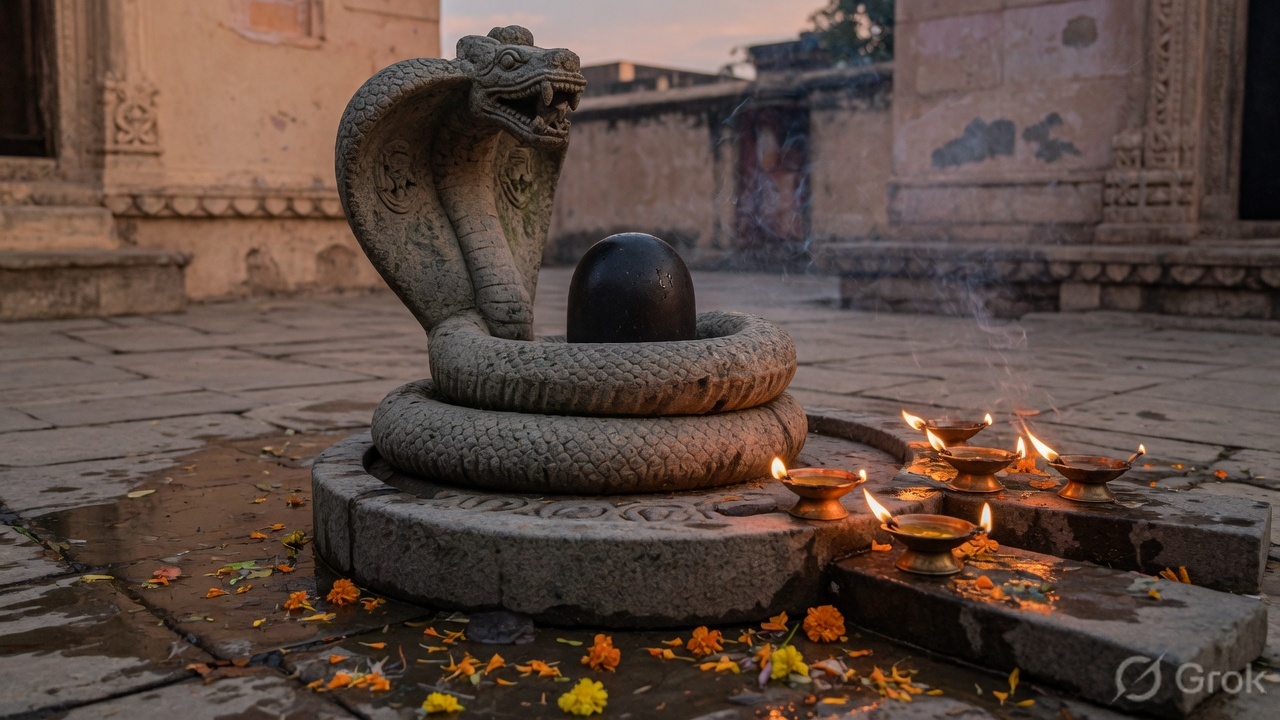 RelatedKaal Sarp Dosh — what the Rahu–Ketu axis actually isRead the article
Services
Jaap, path and anushthan
Mahamrityunjay Mantra Jaap Anushthan
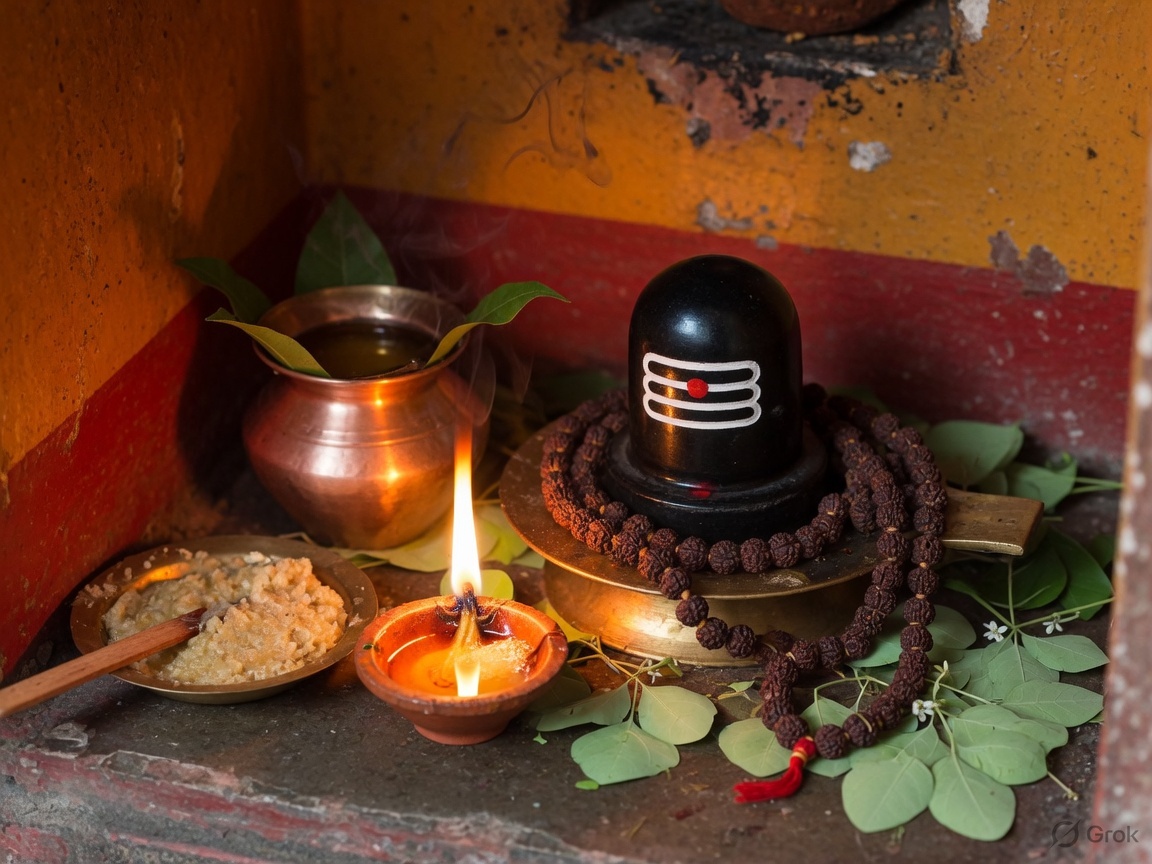
Mahamrityunjay jaap with sankalp in the person’s name and gotra — a count fixed with the family, closed with dashansh havan.
Sundarkand Path at Home (Tuesday and Saturday)
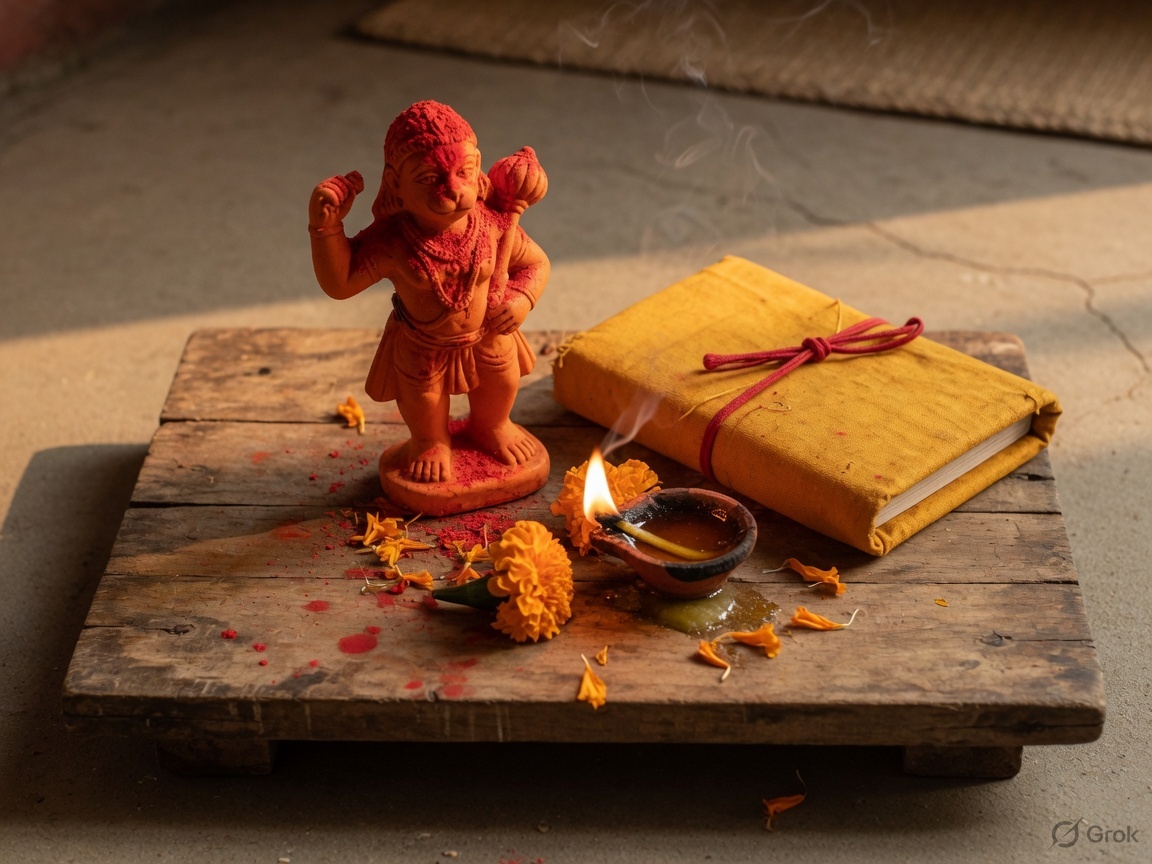
Sundarkand from the Ramcharitmanas, sung with the family before Hanuman ji, with Hanuman Chalisa, aarti and prasad.
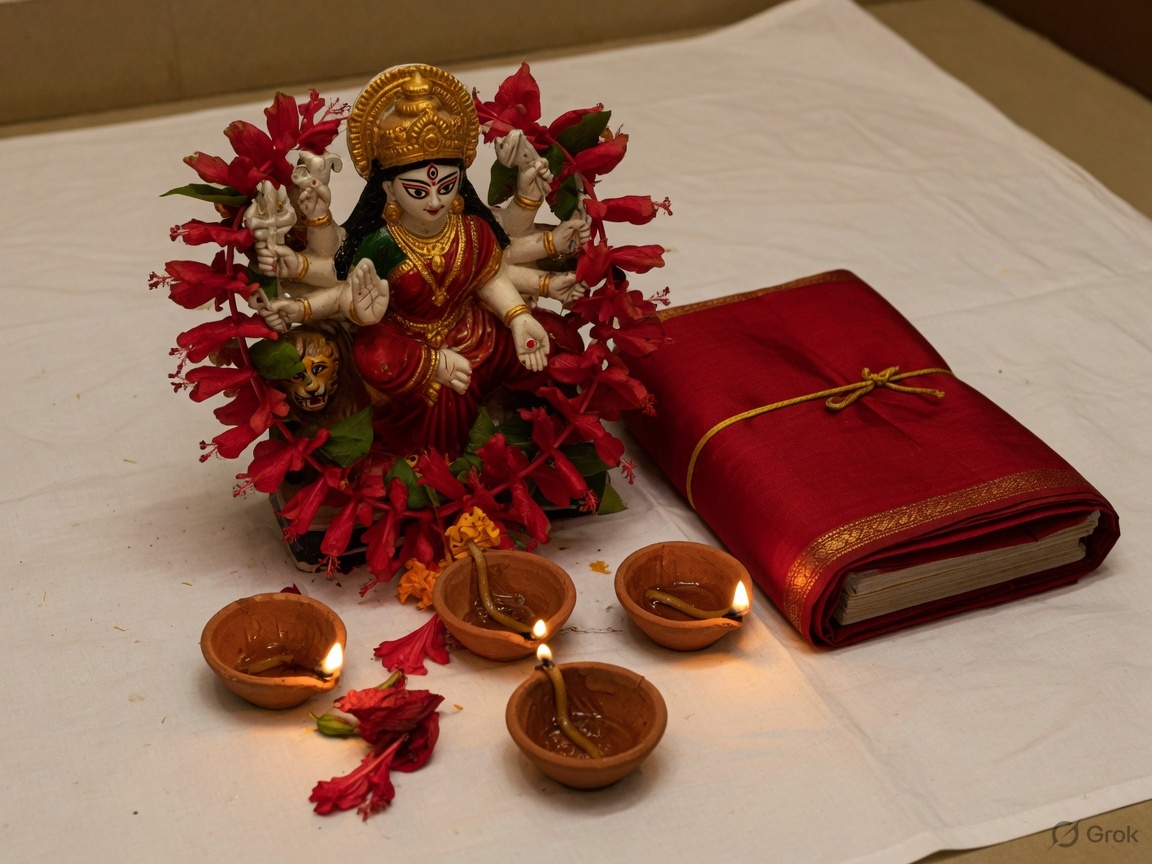
Durga Saptashati (Chandi) Path at Home
Durga Saptashati path — kavach, argala, keelak, the thirteen adhyayas and Navarna jaap — as a single path or across Navratri.