
Jaap, path and anushthan
Durga Saptashati (Chandi) Path at Home
Durga Saptashati path — kavach, argala, keelak, the thirteen adhyayas and Navarna jaap — as a single path or across Navratri.
Durga Saptashati — the Devi Mahatmya’s 700 shlokas — recited with its angas in one sitting or over Navratri, at home or in a temple, with kanya pujan.
What this includes
- Sankalp, Ganesh puja and kalash sthapana
- Kavach, argala, keelak and Navarna jaap
- The thirteen adhyayas, plain or with samput
- Devi Sukta, the Rahasyas and kshama prarthana
- Havan and kanya pujan at the close, where the sankalp includes them
- Samagri list on WhatsApp once the form and dates are fixed
Families come to Durga Saptashati with one of two pictures of it. In the first it is a heavy, almost dangerous book that only a specialist may open, full of prayogs that must not go wrong. In the second it is a nine-day package whose value lies in the number of pandits on the stage. Neither is quite it. Durga Saptashati — the Devi Mahatmya, also called the Chandi Path — is thirteen adhyayas of the Markandeya Purana, reckoned as seven hundred shlokas, in which the Devi is praised through three battles. It is read with care, in a fixed order, under a sankalp. Households hold it every Navratri, and careful families hold it at other times as well.
What the text is
The frame is a story about loss. King Suratha has lost his kingdom; the merchant Samadhi has been turned out by his own wife and sons. Both still ache for what rejected them, and they ask the Rishi Medha why. His answer is the Devi’s story, told in three charitras:
- Pratham charitra — adhyaya 1. Madhu and Kaitabha, and the Devi as Mahakali, the yoganidra of Vishnu.
- Madhyam charitra — adhyayas 2 to 4. Mahishasura, and the Devi as Mahalakshmi, formed from the tejas of all the devas.
- Uttam charitra — adhyayas 5 to 13. Dhumralochana, Chanda and Munda, Raktabija, Nishumbha and Shumbha; the Devi as Mahasaraswati; the Narayani stuti of the eleventh adhyaya, the phala of the twelfth, and the boons to Suratha and Samadhi in the thirteenth.
The count of seven hundred is the tradition’s reckoning of mantras, the speaker lines included. That is why the text is called the Saptashati. Read slowly, it is not a war chronicle. It is two grieving men being shown that what holds the world together is the same power that holds them.
The angas around the thirteen adhyayas
A Saptashati path is more than the thirteen adhyayas. In the order most North Indian households follow:
- Kavach, Argala and Keelak — the armour, the bolt and the pin — recited before the text.
- The Ratri Sukta, and the Navarna mantra with its nyas and a mala of jaap: ॐ ऐं ह्रीं क्लीं चामुण्डायै विच्चे.
- The thirteen adhyayas, in order, aloud.
- The Navarna jaap again, the Devi Sukta, and the three Rahasyas.
- Kshama prarthana.
A household that cannot read the whole text on a given day keeps the kavach, argala and keelak and one adhyaya. Many read the Siddha Kunjika stotra when time is short. Both are honest practice. Neither should be called a full path.
Single path, samput path, and the nine nights
- A single path: the whole text once, in one sitting. With the puja, a steady reader takes about three hours.
- A samput path: a chosen verse — for example Sarvamangalamangalye — recited before and after each shloka. The samput is chosen at the sankalp to fit its purpose, and it roughly doubles the length. It is not added later for effect.
- A Navratri path: the whole text on each of the nine days, or the thirteen adhyayas divided across the days. One older division reads them over seven days — 1; 2–3; 4; 5–8; 9–10; 11; 12–13 — which leaves Ashtami and Navami for havan and kanya pujan.
- Larger anushthans: Navchandi and Shatachandi multiply the paths across many ritviks and close with havan, in which the shlokas themselves are offered as ahutis.
How the path is held
- Sankalp in the yajman’s name and gotra, with the place, the tithi, the form of the path and its purpose.
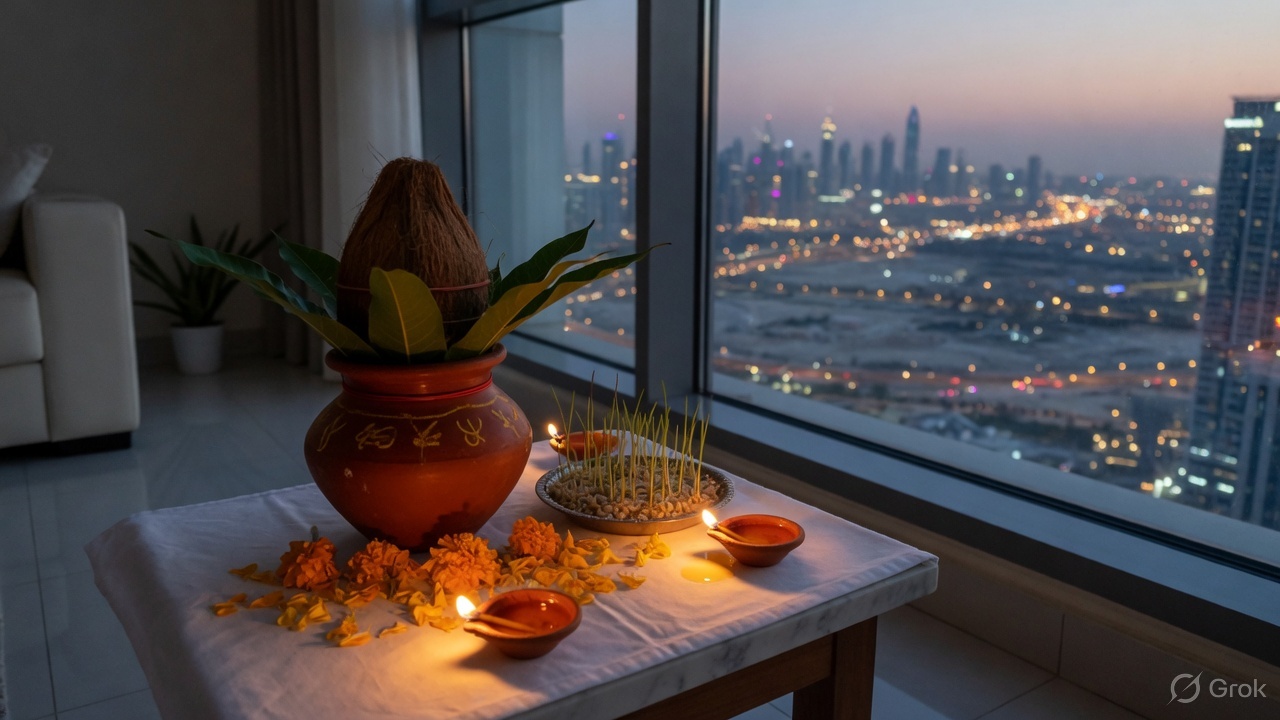
- Ganesh puja and kalash sthapana — in Navratri, the kalash of Ghatasthapana itself; in a fuller form, Gauri and navagraha puja as well.
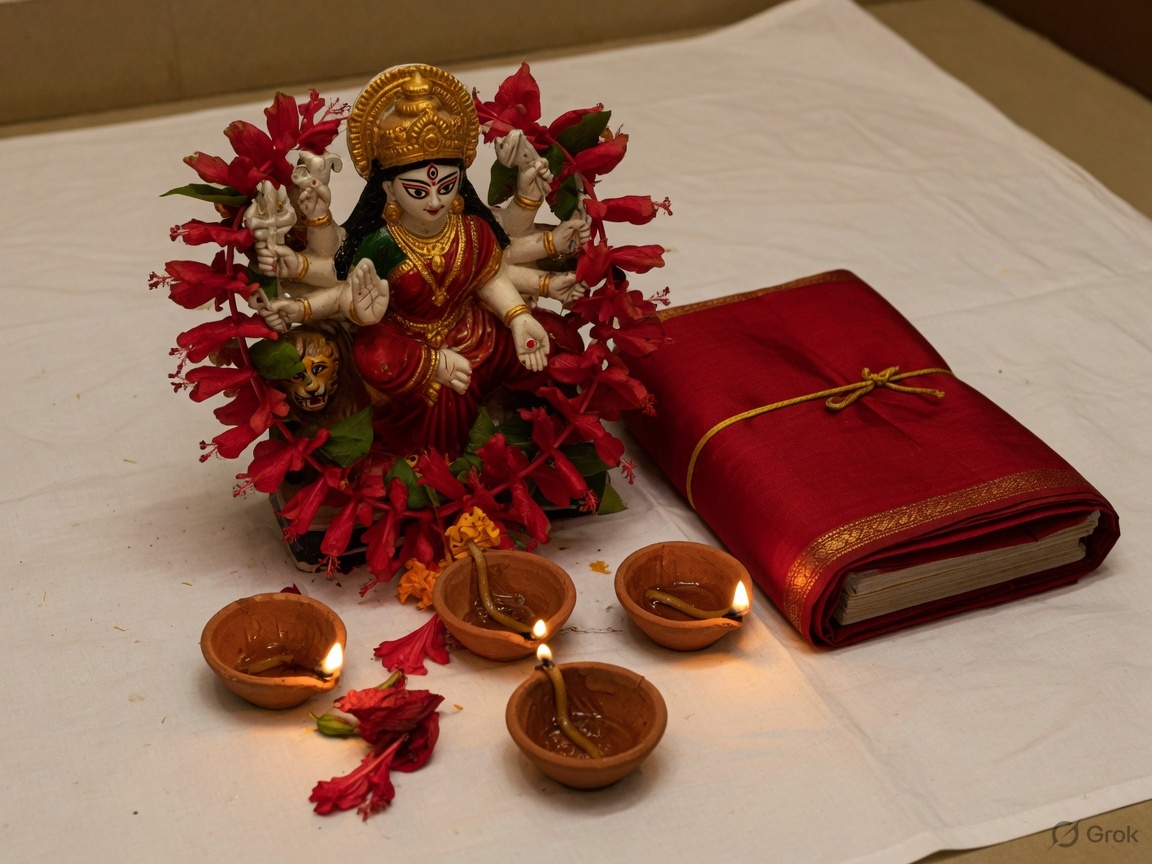
- Devi puja: avahan, shodashopachar, red flowers, chunari and shringar.
- The book placed on a stand — not held in the hand, not kept on the floor — then the angas and the path, aloud and clear, neither rushed nor theatrical.
- Aarti and pushpanjali at the close of each day’s reading.
- On the final day, havan where the sankalp includes it, with the Navarna mantra or the Saptashati shlokas as ahutis.
- Kanya pujan, then visarjan.
Kanya pujan honours the Devi as a child. Girls, traditionally between two and ten years old, are invited and seated; their feet are washed, tilak is applied, they are fed and given a small gift. Many homes also seat a little boy as Batuk Bhairav. It is not a talent show, and it is not a bribe for a wish. If no girls can come, the food is offered at the kalash and the hungry in the house are fed.
Fasting is the family’s choice and within the family’s capacity. The Saptashati does not ask a diabetic, a pregnant woman or an elderly parent to go without food, and neither do I.
What the Saptashati path is not
It is not a weapon. The text carries a long reputation for prayog, and families sometimes ask for a path against a relative, a rival or an opponent in court. I do not do that. The Devi of these adhyayas is mother to Suratha and to Samadhi both. A path is offered for a household’s steadiness and devotion — not to harm anyone, and not on a promise about a case, a job, a marriage or a recovery.
When it is held
Chaitra and Sharad Navratri above all, and the Gupt Navratris of Magha and Ashadha for those who keep them. Ashtami and Navami of any month, Fridays, and the start of an undertaking are the other natural times. For a sankalp outside Navratri, the day is chosen from the panchang. In Navratri the first day follows Ghatasthapana, and I keep to one panchang for all nine days.
At home, and for families abroad
I am based in Lambhua, Sultanpur, and hold Saptashati path at homes in Sultanpur and the nearby districts, and travel within India for Navratri sittings where the calendar allows. Because it is a recitation, a family abroad can join it honestly: the kalash and lamp are in their own room, the path is recited with the sankalp in their name, and they join by video in their own time zone. Havan and kanya pujan happen where people are physically present, so a family abroad keeps those in its own home, and I explain the order beforehand.
What the family arranges, and what I need
The family arranges the place, the kalash and the lamp, a stand for the book, and the samagri. The samagri list is sent on WhatsApp once the form and the dates are fixed. I bring the order of the angas and the recitation, and arrange additional ritviks where the form needs them. Before that, I need:
- The yajman’s name and gotra.
- The form: a single path, a samput path, or the nine days.
- The days the family can actually be present, and whether there will be a havan.
- How many girls can be invited for kanya pujan, if it is to be held.
- For a family joining from abroad, the city and its time zone.
Questions people ask
- How long does a full Durga Saptashati path take?
- A steady reader takes about three hours for one full path with its angas — kavach, argala, keelak, the thirteen adhyayas, the Navarna jaap and the Rahasyas — and the puja around it. A samput path roughly doubles that. In Navratri many families read one full path every day; others divide the thirteen adhyayas across the days so the reading can be finished properly.
- What is a samput path of Durga Saptashati?
- In a samput path a chosen mantra — for example Sarvamangalamangalye from the eleventh adhyaya — is recited before and after each shloka of the text, enclosing it. The samput is chosen at the sankalp to fit its purpose, and the path takes roughly twice as long. It is a fuller form of devotion, not a guarantee that the purpose will be fulfilled.
- Should kavach, argala and keelak be read before Durga Saptashati?
- Yes, in the order most households follow, the Devi Kavach, the Argala stotra and the Keelak come before the thirteen adhyayas, followed by the Navarna jaap. After the text come the Navarna jaap again, the Devi Sukta, the Rahasyas and kshama prarthana. On a day when the whole text cannot be read, keeping these three with even one adhyaya is honest practice.
- Can Durga Saptashati path be done online?
- Yes, because it is a recitation. A family abroad keeps the kalash and lamp in its own room, the path is recited with the sankalp in their name, and they join by video in their own time zone. Havan and kanya pujan need people physically present, so the family keeps those at home, and I explain the order beforehand on WhatsApp.
- Can Durga Saptashati be read at home without a pandit?
- Yes. The text is not closed to households. Use a reliable edition, keep the book on a stand, speak a short sankalp, and read aloud slowly and clearly in the traditional order. Finish an adhyaya before rising. If the full text is too much, take the seven-day division and complete it. A pandit is useful for a samput path, a havan, or a larger anushthan.
Related
Read next
- Duration
- About 3 hours; 9 days in Navratri
- Where it is held
- Home or temple; family may join by video
- Phone
- +91 94547 82346
Durga Saptashati (Chandi) Path at Home
Book this service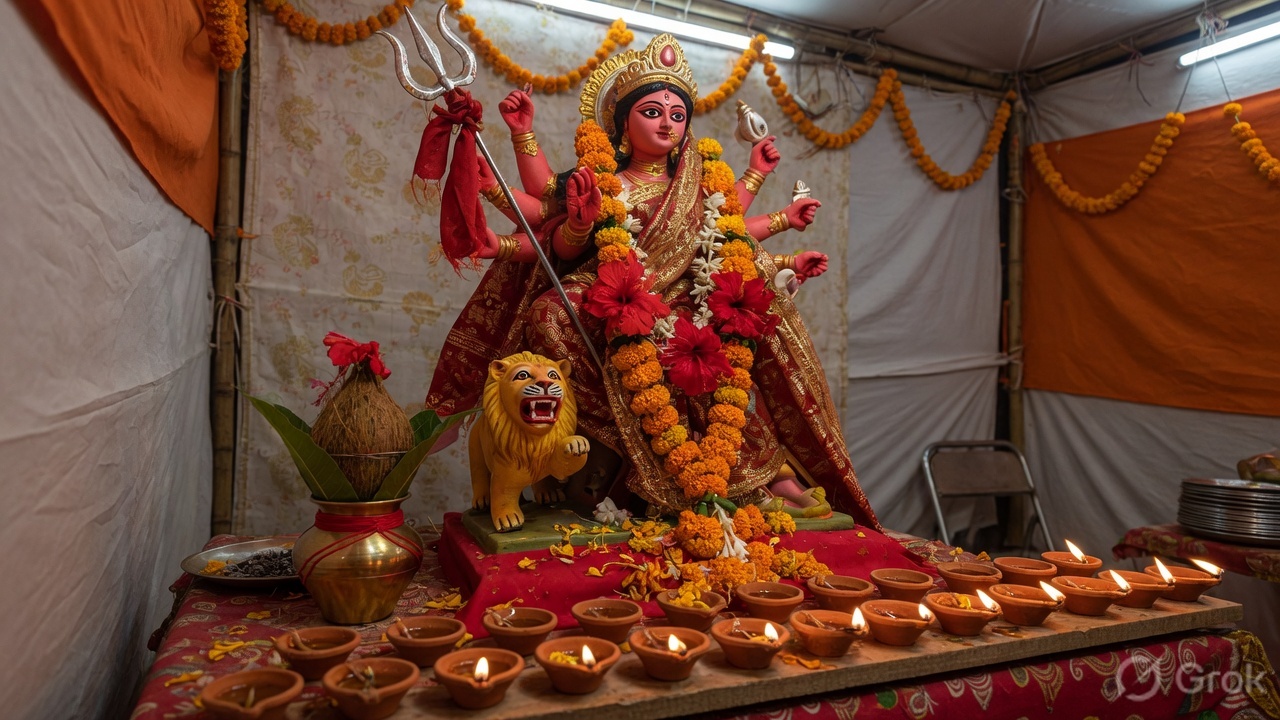 RelatedSharad Navratri 2026 — nine nights, nine forms, and what a household actually keepsRead the article
Services
Jaap, path and anushthan
Mahamrityunjay Mantra Jaap Anushthan
Mahamrityunjay jaap with sankalp in the person’s name and gotra — a count fixed with the family, closed with dashansh havan.
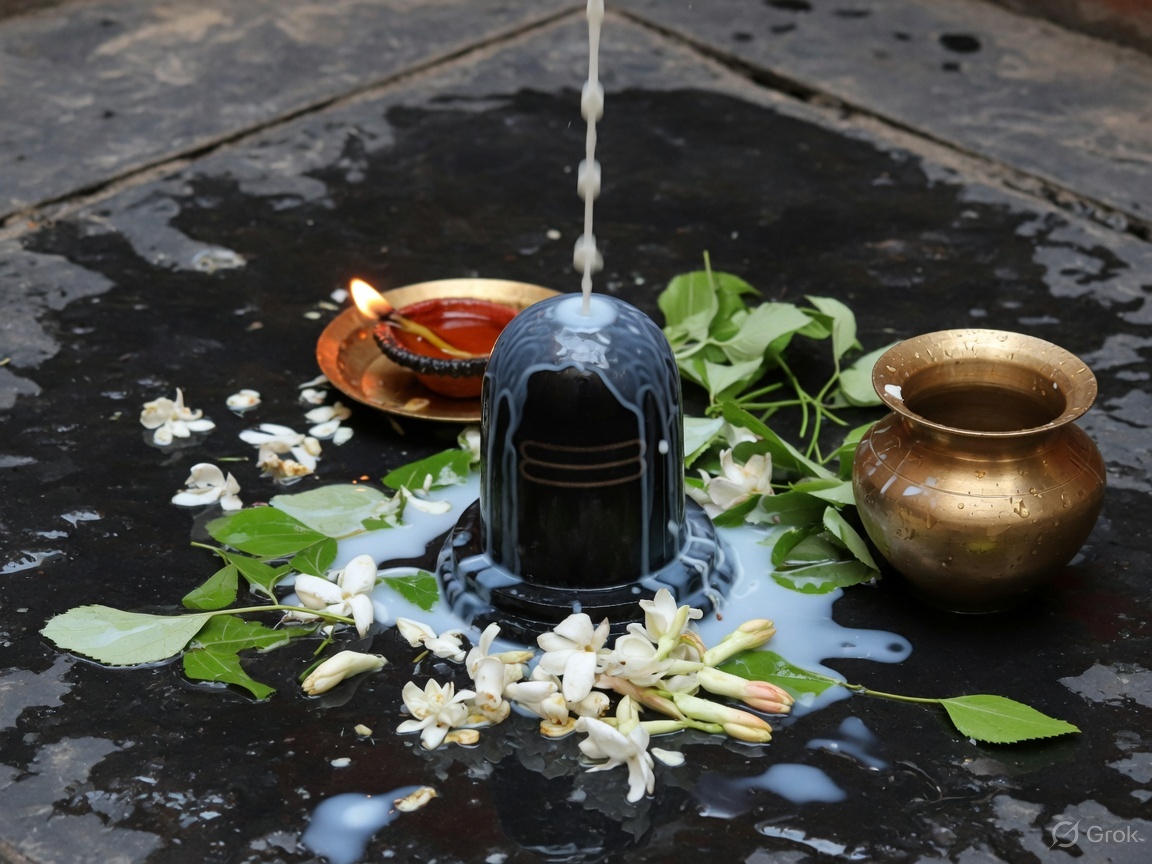
Rudrabhishek Puja with Rudrashtadhyayi Path
Abhishek of the Shivling with jal, dugdh and panchamrit while the Rudrashtadhyayi of the Shukla Yajurveda is recited.
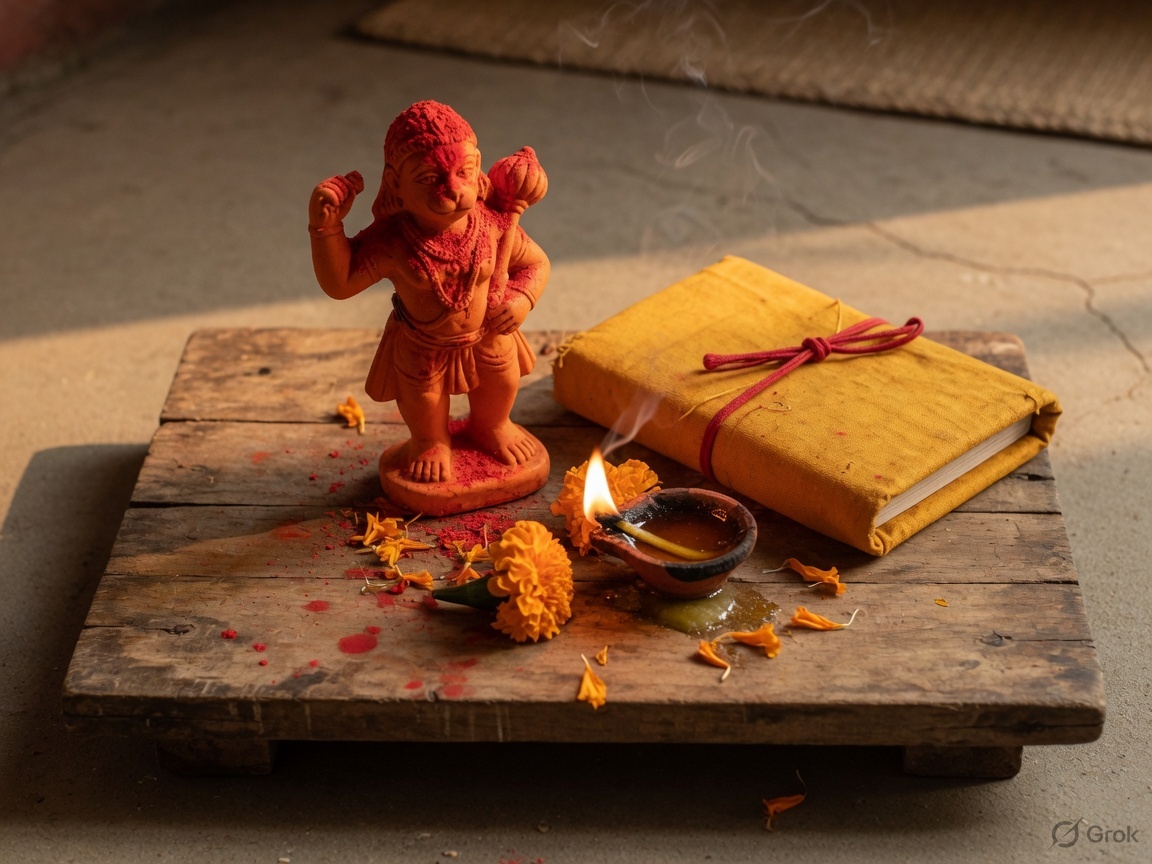
Sundarkand Path at Home (Tuesday and Saturday)
Sundarkand from the Ramcharitmanas, sung with the family before Hanuman ji, with Hanuman Chalisa, aarti and prasad.