
Sanskar and griha puja
Namkaran Sanskar — Naming Ceremony by Nakshatra
The naming rite for a newborn at home — the nakshatra akshar, the puja, and the name first spoken by the father.
Namkaran Sanskar at home after the sutak, often on the 11th or 12th day: puja, the nakshatra charan akshar for the name, and the family’s blessing.
What this includes
- Nakshatra and charan akshar from the birth time
- Shuddhi at the close of the sutak
- Sankalp, Ganesh puja and kalash
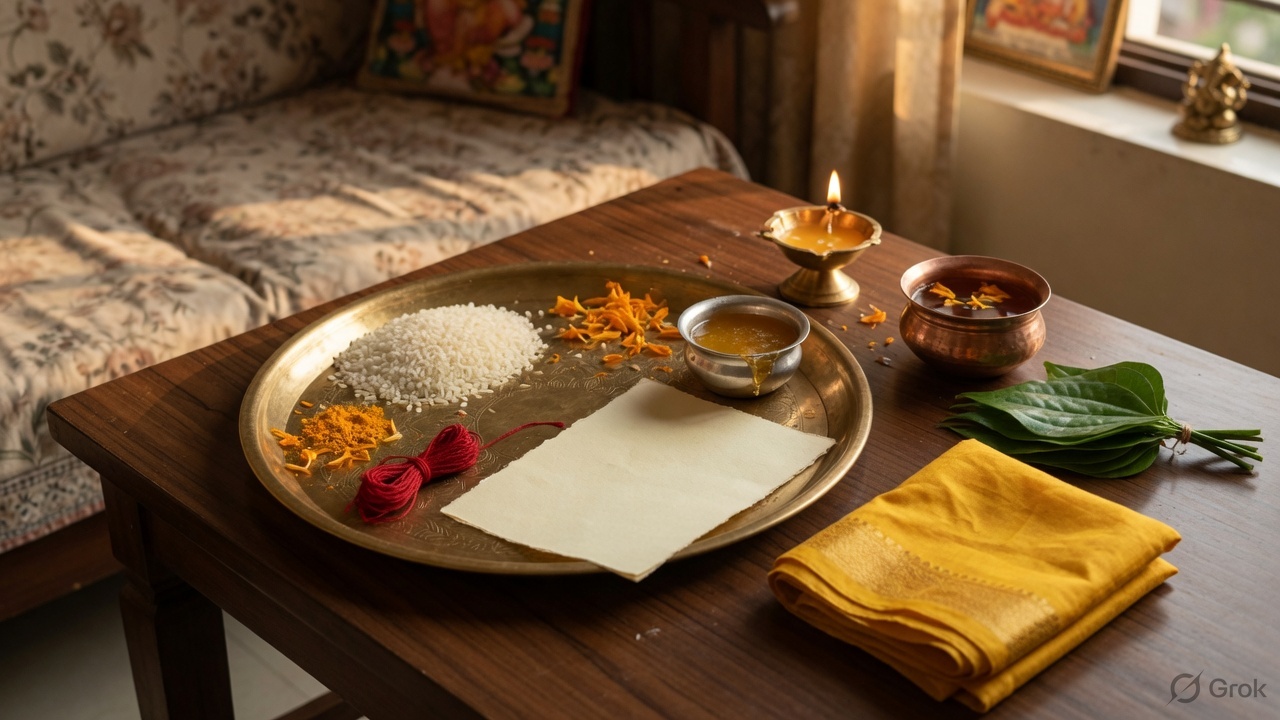
- The name spoken in the child’s ear and written on a thali of rice
- A short havan and the elders’ blessing
Families are usually told one of two things about Namkaran. Either the name must begin with the letter the pandit gives and no other name will do, or the nakshatra letter is an old habit and the name they already love is enough. Neither is how the rite sits in the tradition. Namkaran is the sanskar in which a child is called by name for the first time, before the household and its deities. The nakshatra akshar has a real place in it. So does the name a mother may have been carrying for months.
When Namkaran is held
The older texts place the naming on the tenth or the twelfth day after birth. In practice most households first let the sutak run its course — the period of birth impurity the family observes, its length set by the family’s custom, commonly ten days — and hold the naming on the eleventh or twelfth day, once the house has been cleaned and the mother and child have had their shuddhi snan. In many Awadh homes it falls together with the barahi.
That day is a custom, not a deadline. If the mother needs rest, if the baby is still under a doctor’s care, or if a grandparent has to travel to be present, the naming moves to a later muhurat — in the first few months, or in some families within the first year. I choose that day from the Panchang: the tithi, the vaar and the nakshatra are checked, and the Rikta tithis — Chaturthi, Navami and Chaturdashi — are usually avoided. A later day chosen calmly is better than an early one held around a tired mother.
The nakshatra and the charan akshar
There are twenty-seven nakshatras, and each is divided into four charans, or padas. Each charan carries a syllable. Ashwini, the first nakshatra, gives चू, चे, चो and ला, one for each of its four charans. At the moment of birth the Moon sits in one charan of one nakshatra, and that charan’s syllable is the traditional first sound of the child’s name. It is also the basis of the rashi naam that goes into the kundli.
The Moon spends roughly six hours in a charan. A birth time that is off by an hour usually changes nothing, but near the edge of a charan it changes the akshar, and near the edge of a nakshatra it changes more. That is why I ask for the time from the hospital record, not from memory. Where a birth falls close to a boundary, I say so, and I tell the family which syllable each side of the boundary would give.
If the birth fell in a gandmool nakshatra
Families in this region often ask about mool when a child is born in Ashwini, Ashlesha, Magha, Jyeshtha, Mula or Revati. The tradition places a Mool Shanti on the day the Moon returns to the birth nakshatra, about twenty-seven days after birth. That is a separate shanti, held calmly, and it is not a verdict on the child. It does not have to delay the naming, and the naming does not replace it.
The name you already like
Many parents arrive with a name already chosen, and it does not begin with the charan akshar. There is no need to give it up. These are the ways families in this tradition have long handled it:
- Choose a name the family likes that begins with the charan akshar, if one can be found.
- Keep the loved name as the vyavaharik naam, the name the child is called by, and give a second name on the charan akshar as the rashi naam — written in the kundli and used in sankalp and puja. Households here have kept two names for generations.
- Use one of the other three akshars of the same nakshatra. I tell the family which syllable is the charan’s own, and they choose knowing that.
Whatever the name, it should have a meaning the parents can explain to the child one day. The grihya sutras even discuss the sound of a name — the number of syllables, the soft consonants. Few families follow those rules closely now. I mention them when parents are curious, but I do not press them on anyone.
How the rite is performed
The rite is held at home and takes about an hour and a half. The mother sits beside the father with the child in her lap, and the sequence I follow is this:
- Shuddhi. The house is cleaned, Gangajal is sprinkled, and the mother and child are bathed. This closes the sutak.
- Sankalp. The father takes the sankalp, naming the family, the gotra, the tithi, the place and the purpose.
- Ganesh puja and kalash sthapana, with the matrika puja and the invocation of the navagraha where the family keeps them.
- Nandi shraddh, the remembrance of the ancestors that comes before an auspicious sanskar, where it is the family’s custom.
- The naming. The father speaks the chosen name softly into the child’s right ear. The name is then written on a thali spread with rice, and spoken aloud to the family.
- The elders call the child by name, one after another, and bless the child.
- A short havan, with the fire kept small and well away from the baby.
- Ashirvad, prasad and daan, as the household’s means allow.
Some families join the Nishkraman — the child’s first outing to see the sun — to the same day. It is a separate sanskar. If the family wishes, I explain it and place it after the naming.
Care for the mother and child on the day
A newborn’s day is short, and a new mother’s strength is limited. I keep the rite unhurried but not long. Hold it at a time when the baby usually sleeps or feeds well, keep the room airy, and keep the number of people around the child small. Whatever the doctor has advised about the mother’s recovery or the baby comes first. The rite can wait. Their rest cannot.
What the family arranges, and what I bring
The family arranges the place in the home where the puja will sit, new clothes for the child, the thali and rice for writing the name, and the samagri. I share the samagri list on WhatsApp once the date is fixed. I bring the vidhi — the sankalp, the mantras and the order — and I explain each step to the family as it happens, so the grandparents and the parents know what is being said over their child.
What I need from the family
- The date, time and place of birth, from the hospital record.
- The parents’ names and the family’s gotra.
- Any names already being considered.
- The family’s customs — whether the naming falls with the barahi, whether a kuldevta is remembered first.
- Two or three days that suit the household.
Where it is held
I hold Namkaran at home in Sultanpur and the districts around it, and travel elsewhere in India when the family asks. The akshar and the name can be worked out entirely on WhatsApp or a video call, for parents anywhere, including families living abroad. The rite itself needs the family together in its own home. For parents abroad, I walk them through the steps on a call beforehand so the father can speak the name himself, and many hold the fuller rite with havan when they next come to India. I will not tell a family that a sanskar was performed in their home by a priest on a screen.
Questions people ask
- On which day is Namkaran done after birth?
- Traditionally on the tenth or twelfth day. Most households wait for the sutak to end and hold it on the eleventh or twelfth day, often with the barahi. That is a custom, not a deadline. If the mother needs rest or the baby is under a doctor’s care, the naming moves to a later muhurat in the first months, and some families hold it within the first year.
- What if the name we like doesn’t start with the nakshatra letter?
- Keep it. Use it as the vyavaharik naam, the name the child is called by, and give a second name on the charan akshar as the rashi naam for the kundli, the sankalp and puja. Many households here have kept two names for generations. Or choose from the other akshars of the same nakshatra, knowing which syllable is the charan’s own.
- Does the exact birth time change the name letter?
- Sometimes. The Moon stays in one charan for about six hours, so an error of an hour usually changes nothing. Near the edge of a charan it changes the akshar, and near the edge of a nakshatra it changes more. Bring the time from the hospital record. If the birth falls close to a boundary, I will say so and show what each side would give.
- Can Namkaran be done for a baby born abroad?
- The akshar and the name can be worked out fully on WhatsApp or a video call, using the place of birth abroad. The rite itself is held by the family in its own home. I can walk the parents through the steps on a call beforehand so the father speaks the name himself. Many families hold the fuller rite with havan when they next visit India.
- Our baby was born in a mool nakshatra. Does that change the Namkaran?
- Not the naming itself. The tradition keeps a separate Mool Shanti for births in Ashwini, Ashlesha, Magha, Jyeshtha, Mula and Revati, held on the day the Moon returns to the birth nakshatra, about twenty-seven days after birth. It is a shanti held calmly, not a verdict on the child. The naming keeps its own day, as the family’s custom holds.
- Duration
- About 1.5 hours
- Where it is held
- At home; name consultation online
- Phone
- +91 94547 82346
Namkaran Sanskar — Naming Ceremony by Nakshatra
Book this serviceServices
Sanskar and griha puja
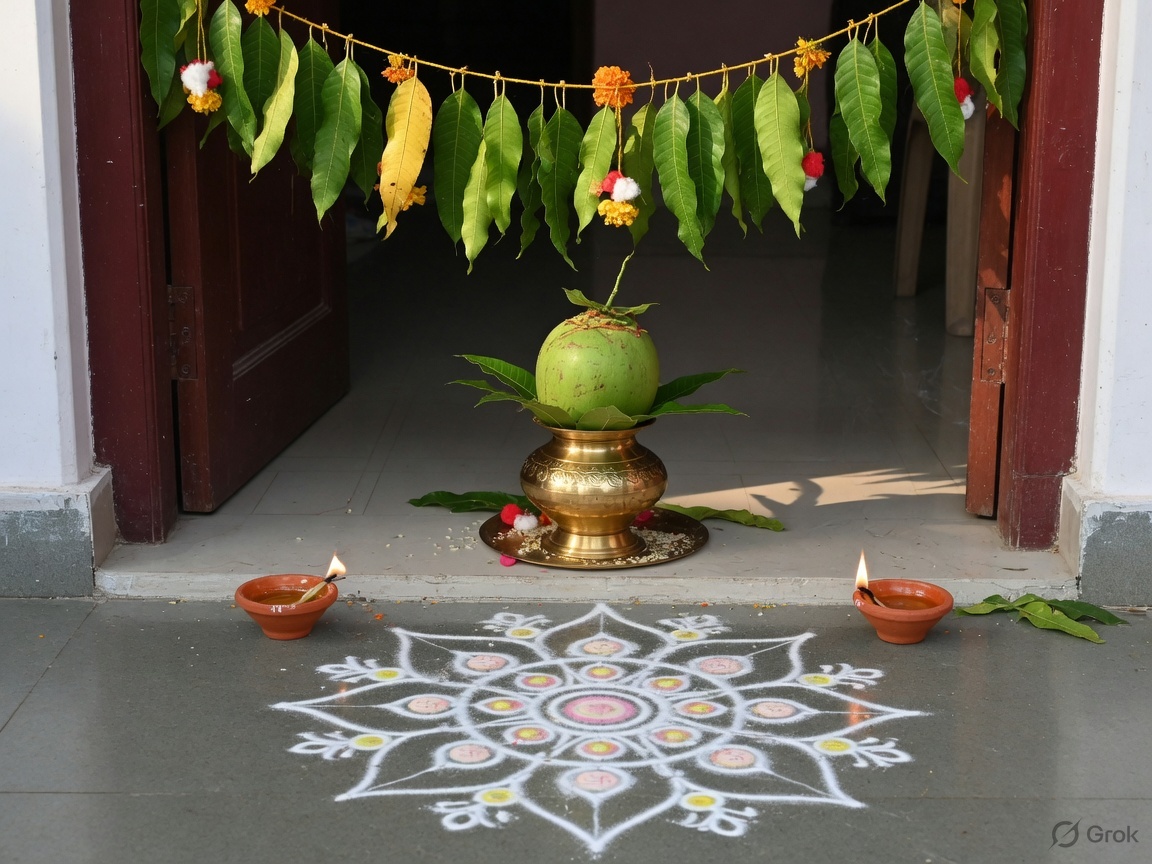
Griha Pravesh Puja for a New Home or Flat
Griha Pravesh Puja on a chosen muhurat — Ganesh and kalash puja, vastu puja, the first entry, milk in the new kitchen and havan.
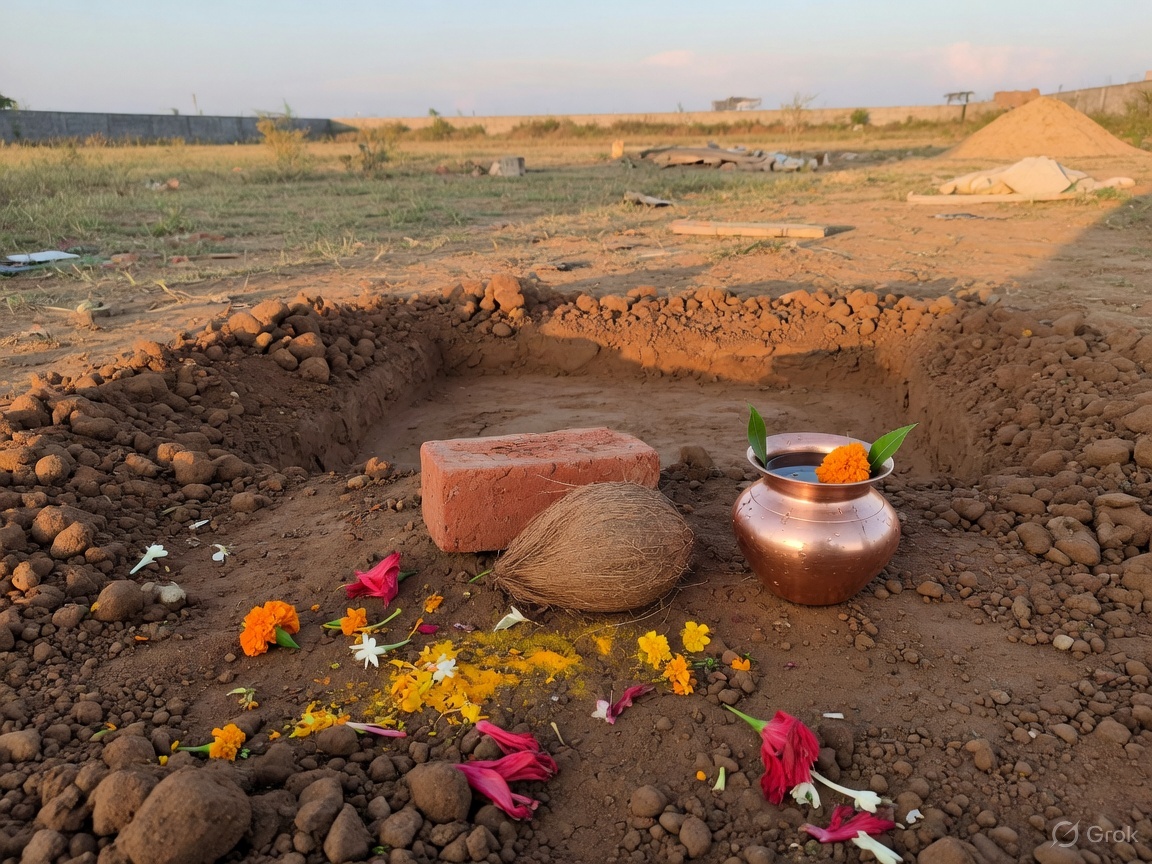
Bhoomi Pujan before Building a Home or Shop
Bhoomi Pujan and shilanyas before construction — Ganesh, Prithvi and Vastu Purush puja, and the first dig in the north-east corner.
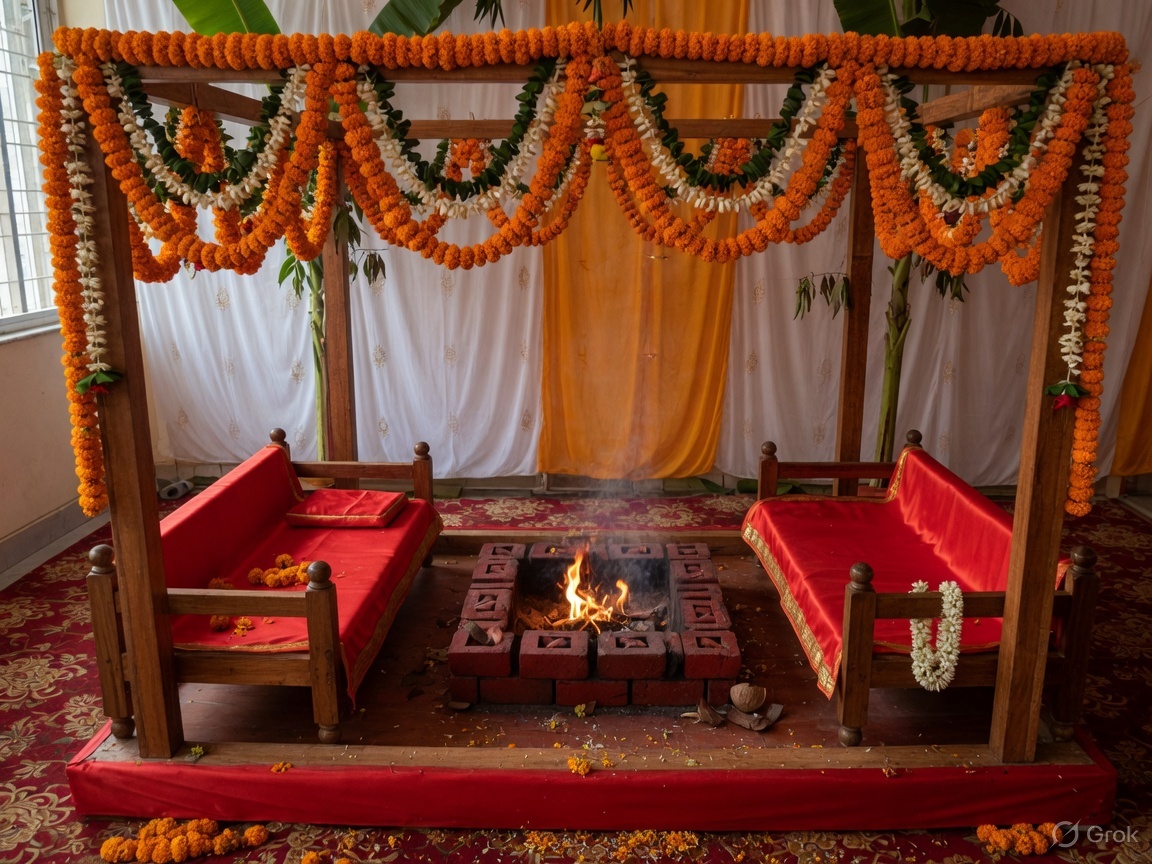
Vedic Vivah Sanskar (Hindu Wedding Rites)
The Vedic wedding rites — dwar puja, kanyadaan, panigrahan, laja homa and saptapadi — performed in full order at the mandap.