
Dosh shanti puja
Pitra Dosh Shanti Puja and Narayan Bali
Pitra Dosh Shanti with shraddh, tarpan and havan, and Narayan Bali where an untimely death left the last rites incomplete.
Pitra Dosh Shanti — sankalp, Vishnu puja, tarpan, havan and daan — chosen from the chart and the family’s history; at home or a ghat, Narayan Bali at a tirtha.
What this includes
- Reading of the ninth house, Surya and Rahu, with the family’s history
- Sankalp with gotra and the names that are known
- Vishnu pujan, tarpan and pinda where indicated
- Havan, panchabali and brahman bhojan
- Narayan Bali at a tirtha, where an untimely death calls for it
- Samagri list on WhatsApp once the date is fixed
Families who ask me for a Pitra Dosh puja have often been handed three rites at once. Someone has said the ancestors are angry, that a Gaya pind daan is needed, that Narayan Nagbali must be done, and that a Tripindi Shraddh should follow — all because a report printed one word. These are different acts for different situations. Which one a family needs is decided far more by its own history than by a label in a chart. On this page I set out how I decide, how a Pitra Dosh Shanti is performed, and what Narayan Bali is for. How Pitra Dosh is read from the ninth house is in the Gyaan article on Pitra Dosh.
Three facts before any rite
- The chart. The ninth house, its lord, Surya, and Rahu with any of them; Shani and Guru too. The chart is read whole, and it needs an accurate birth time, because the ninth house moves with the Lagna.
- The family’s history. Has the annual Shraddh been kept, and for whom? Was there an untimely death whose antyeshti could not be completed? Are names, gotra or tithis lost?
- The question. ‘Is there Pitra Dosh’ and ‘we have not kept Shraddh since grandfather died’ are different questions. The second is usually the one that decides the rite.
The history matters more than the chart here. A family that knows its annual offering has lapsed has reason enough for a rite without any horoscope. A family that keeps its Shraddh faithfully is already doing what the texts put first, whatever a report has printed.
Which rite fits which situation
- Annual Shraddh and tarpan — where the yearly remembrance has lapsed recently or been kept irregularly. This is the first act, and often the only one needed.
- Pitra Dosh Shanti — where the chart shows the combination and the family wishes to mark it with a vidhi, alongside a restored Shraddh. This page describes it.
- Narayan Bali — where a death in the family was untimely or unnatural, and the last rites could not be done in the ordinary way.
- Tripindi Shraddh — where the annual offering lapsed across generations, or the names themselves were lost. It is offered for the whole lineage on a single day, and it has its own page on this site under Tripindi Shraddh.
These can coincide in one family. I will not stack all four because a report printed a word, and I will say so if the first one is enough.
How a Pitra Dosh Shanti is performed
The order below is the one I follow at home or at a river ghat. The tithi decides the timing of the shraddh portion, which the tradition prefers in the afternoon, the aparahna.
- Sankalp. The yajman states name and gotra, the names of the departed as far as they are known, the place, the tithi and the purpose. Unknown names are included under the gotra.
- Ganesh pujan and punyahavachan, so the work begins without obstruction and the place is purified.
- Vishnu pujan. Shraddh is offered with Narayan as witness, and the Shanti opens and closes with his smaran.
- Surya arghya, and japa of Surya or Rahu where the chart points to them, in a count fixed at the sankalp.
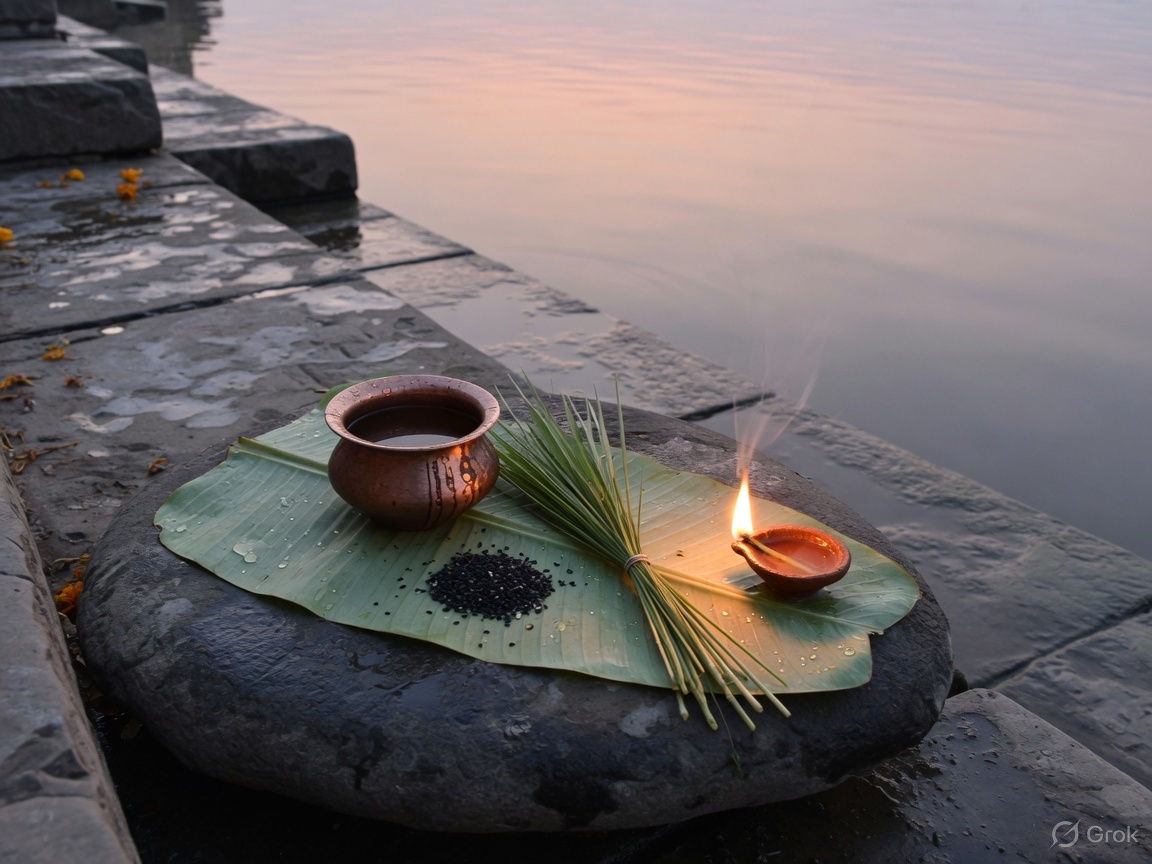
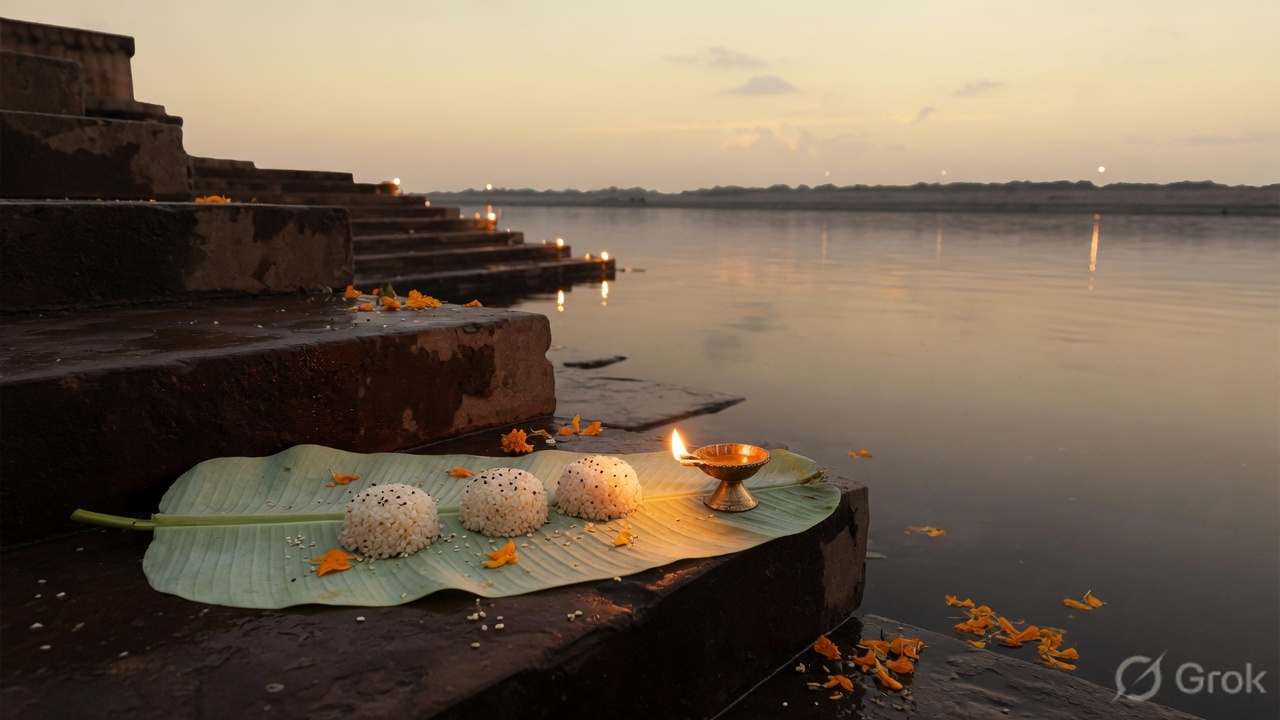
- Tarpan. Water with black sesame and kusha, offered by hand for the named ancestors and for the unknown departed of the line. Pinda is offered where the paddhati and the family’s situation call for it.
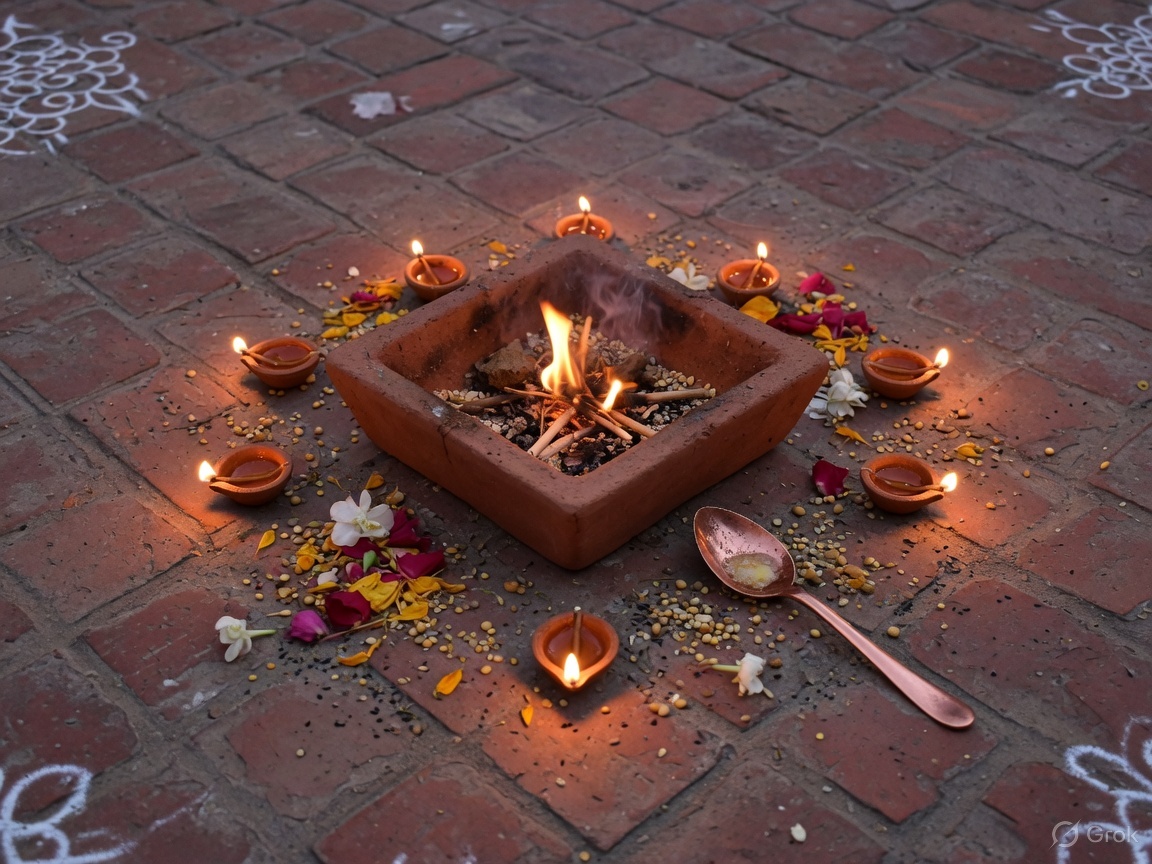
- Havan. A tenth of the japa as aahuti, ending in purnahuti.
- Panchabali, brahman bhojan and daan. Portions are set aside for the cow, the dog, the crow, the ants and the devas, and food and daan are given as the household can.
Shraddh is remembrance offered with faith. Ancestors are remembered; they are not billed.
Narayan Bali — what it is, and when it applies
Narayan Bali is the rite the shraddh tradition, the Garuda Purana among its sources, prescribes for a death that was untimely or unnatural — an accident, drowning, a death far from home — where the last rites could not be completed as they should have been. In outline, the kriya that was missed is given to the departed through Narayan. Vishnu is worshipped, the departed is invoked, the missed rites are performed in the form the paddhati sets, and pinda and tarpan follow.
It is not a rite for the house. It is kept at a tirtha or on a riverbank. Trimbakeshwar is the place most associated with it, often together with Nagbali, which is a separate rite for a different cause. The paddhati of the kshetra decides the order and the number of days, and it is commonly spread over more than one. It answers a specific event in a specific family. Usually the family knows of that event long before any chart is drawn. Where there was no such death, I do not advise it.
Choosing the day
Amavasya is a pitru tithi in every month. Pitru Paksha, the dark fortnight of Bhadrapad–Ashwin, is given wholly to the ancestors, and its last day, Sarva Pitru Amavasya, is kept for every departed person whose tithi is not known. The tithi of the death, where it is known, weighs in the choice. I take the day from the Panchang for the place where the family will sit. A date far enough ahead that the household can gather is better than an early one at which half of it is absent.
What the family arranges, and what I bring
I bring the paddhati, the sankalp in proper form, the mantras and the order. The full samagri list comes on WhatsApp once the date is fixed. What only the family can bring is the information.
- The gotra, and the maternal gotra if those ancestors are to be included. If the gotra is not known, say so; it is not invented for a form.
- The names of the departed, as many generations as anyone recalls, and their relation to the yajman.
- The tithi or date of death where known, and the circumstances of any untimely death.
- Who will sit as yajman. It is customary for the eldest son; where there is none, a daughter, wife or other relative of the line sits.
- Simple, undyed clothing, and a light fast for the yajman until the offering is complete, where health allows.
How it is held
- At home, or on a ghat of the Gomti in Sultanpur, and in the nearby districts — Ayodhya on the Sarayu, Prayagraj at the sangam, Varanasi, Jaunpur, Pratapgarh and Lucknow.
- At tirthas such as Gaya, Prayagraj, Kashi or Trimbakeshwar, where the family wishes to travel, arranged in advance. These are named by tradition, not as places I keep a seat.
- The reading and the planning can be done by video call or WhatsApp.
- For a family abroad, the annual Shraddh can be kept where they live, on the tithi. A larger Shanti can be performed in India on their behalf, with the sankalp in their names, and they can join by video. I do not call that an online puja.
What I need from the family
Date, time and place of birth of the person whose chart raised the question, with the source of the time. What the family knows of the Shraddh — kept or lapsed, and for whom. Any untimely death, and whether its rites were completed. Where you will sit, because the tithi belongs to the sky above that place. If the worry behind all this is an illness in the family, the doctor comes first. A Shanti sits alongside medical care, never instead of it, and I make no promise about marriage, children or health.
Questions people ask
- What is the difference between Pitra Dosh puja and Tripindi Shraddh?
- Pitra Dosh Shanti answers a reading of the chart — the ninth house, Surya and Rahu — and is held alongside a restored annual Shraddh. Tripindi Shraddh is a separate rite for a lapse across generations, or where the names of the ancestors were lost, and it is offered for the whole lineage on a single day. It has its own page on this site. A family may need one, both or neither.
- Is Narayan Bali necessary for Pitra Dosh?
- Only where the family’s history calls for it. Narayan Bali is prescribed for a death that was untimely or unnatural, where the last rites could not be completed in the ordinary way. It is kept at a tirtha or on a riverbank, Trimbakeshwar being the place most associated with it. A chart label alone is not a reason for it, and where there was no such death I do not advise it.
- Can Pitra Dosh puja be done at home?
- Yes. The annual Shraddh, tarpan and the Pitra Dosh Shanti can all be done properly at home, or on a river ghat nearby, with the sankalp, the vidhi in order and water for the tarpan. A tirtha such as Gaya or Prayagraj is the older and preferred form where the family can travel, but a rite at home is not a lesser one. Narayan Bali is the exception; it belongs at a tirtha.
- We live abroad. Can Pitra Dosh puja be done on our behalf?
- Yes. A Shanti can be performed in India on the family’s behalf, with the sankalp taken in their names and gotra, and they can join by video. That is an old arrangement, not a shortcut. The annual Shraddh, though, is best kept by the family itself where they live, on the tithi, with water, sesame, a lamp and food given quietly. Distance does not cancel it.
- Which day is best for Pitra Dosh puja — Amavasya or Pitru Paksha?
- Both are proper. Amavasya is a pitru tithi in every month, so a suitable day can be found through the year. Pitru Paksha is the fortnight given wholly to the ancestors, and Sarva Pitru Amavasya at its end is kept for those whose tithi is unknown. The tithi of the death, where known, also weighs in. I take the day from the Panchang for your place.
Related
Read next
- Duration
- Half a day; Narayan Bali longer
- Where it is held
- Home, river ghat or tirtha
- Phone
- +91 94547 82346
Pitra Dosh Shanti Puja and Narayan Bali
Book this service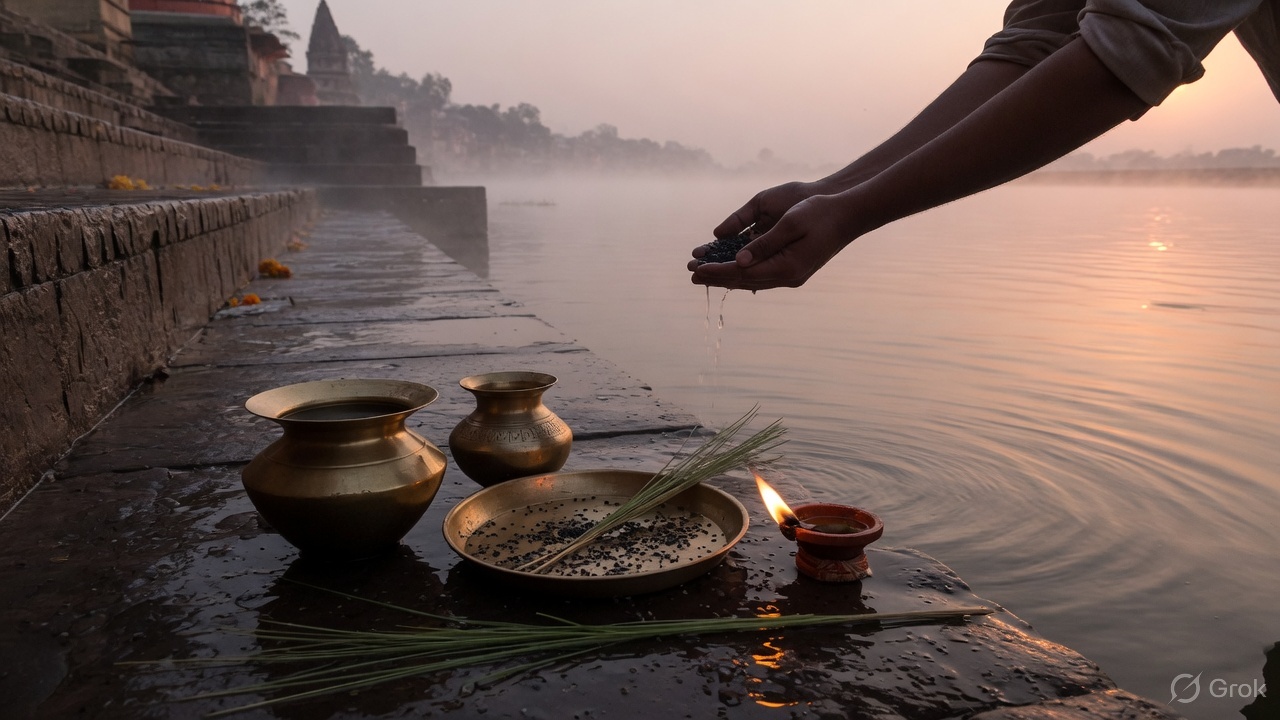 RelatedPitra Dosh — how the ninth house is read, and what Shraddh actually isRead the article
Services
Dosh shanti puja
Navgraha Shanti and Graha Shanti Puja
Navgraha Shanti, or the shanti of one graha, decided from the chart’s dasha and gochar — with mantra-jaap, havan and dan.
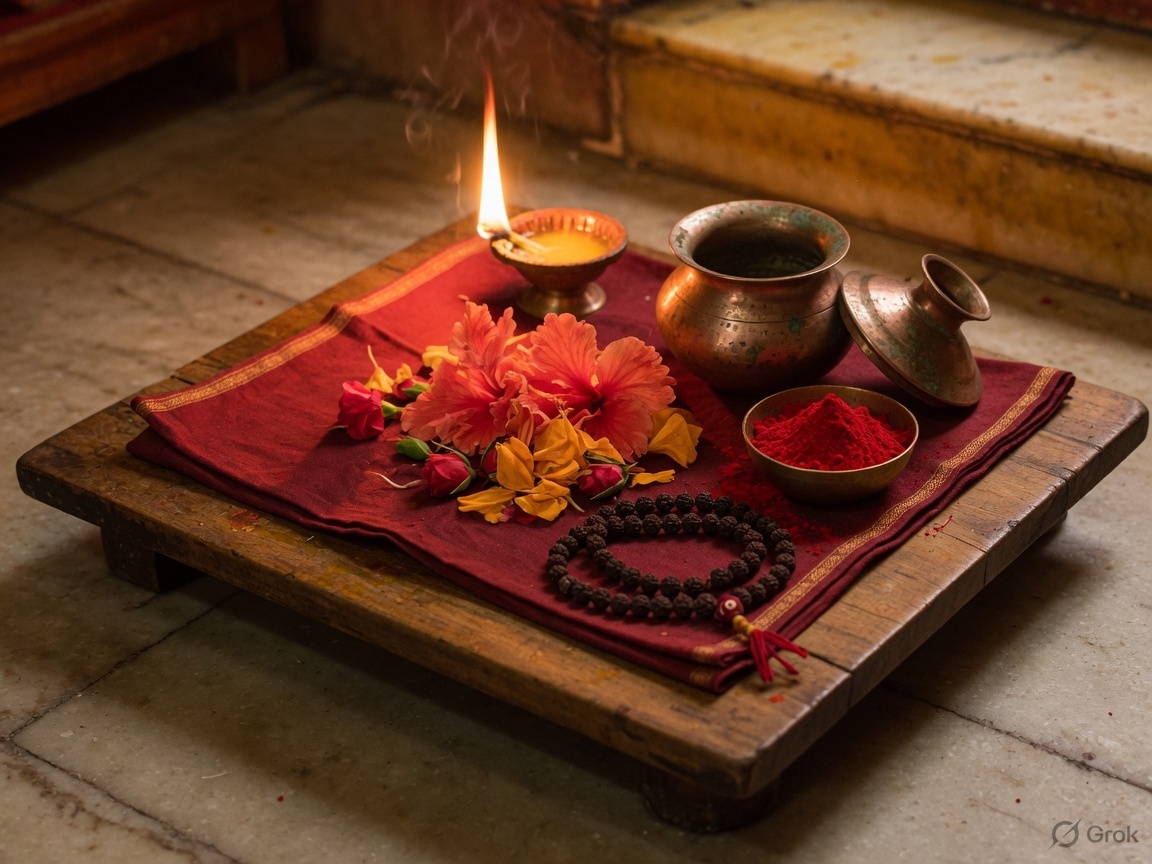
Mangal Dosh Shanti Puja (Manglik Dosh)
Mangal Shanti with sankalp, Mangal japa, havan and daan — advised only after the chart is read whole and the parihar checked.
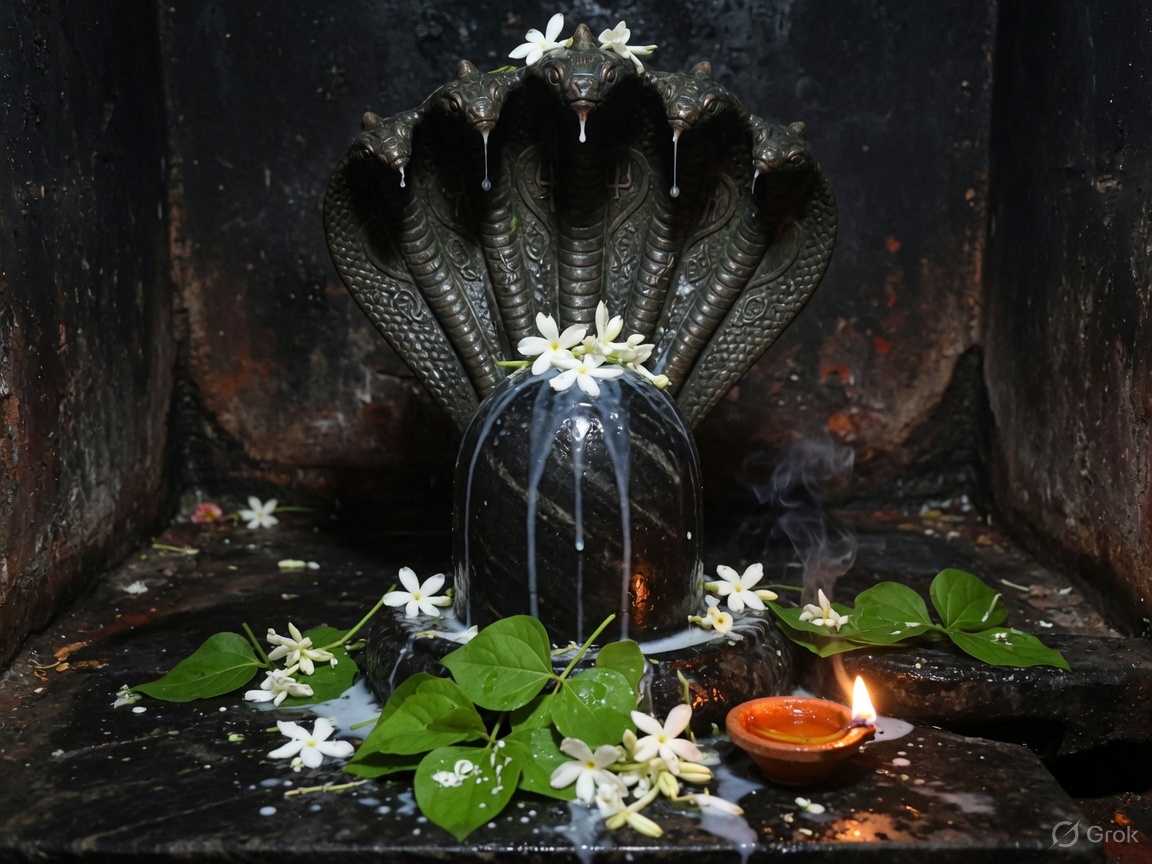
Kaal Sarp Dosh Shanti Puja
Kaal Sarp Shanti — Nag puja, Rudrabhishek, Rahu–Ketu japa and havan — advised once the Rahu–Ketu axis is read with the whole chart.