
Katha
Shri Satyanarayan Vrat Katha and Puja at Home
Shri Satyanarayan Katha at home — sankalp, puja, the five adhyayas, aarti and prasad — on Purnima, at a griha pravesh or after a vow.
The Satyanarayan Vrat Katha from the Skanda Purana — puja, the five adhyayas, aarti, panchamrit and panjiri — held at home in about two to three hours.
What this includes
- Sankalp in the family’s names and gotra
- Gauri–Ganesh, kalash and Navgraha puja
- Shodashopachar puja of Shri Satyanarayan
- Recitation of the five adhyayas
- Aarti, panchamrit and panjiri prasad
- A short havan, where the family wishes
Families usually hear of the Satyanarayan Katha as the puja that fulfils wishes: keep it on Purnima and what you asked for will arrive. Read the five adhyayas and you find almost the opposite. Every story in it turns on a promise made and then delayed, or prasad offered and then ignored — the merchant who vowed the vrat and kept postponing it, the king who would not bow to the cowherds’ offering. The Satyanarayan vrat is the worship of Narayan as Satya, the truth, and its lesson is the keeping of one’s word. It is a household’s thanksgiving and its small, regular return to that truth. It is not a contract. That is why it is the puja most homes in Awadh reach for at a griha pravesh, after a vow is fulfilled, or simply on a Purnima.
When families hold it
- Purnima — many households keep it every month, or on particular Purnimas such as Vaishakh or Kartik.
- Griha pravesh, or the opening of a shop or an office.
- After a vrat is completed, or when something prayed for has come to pass.
- A marriage or an anniversary; a birthday; the birth of a child, once the days of ashaucha are over.
- Sankranti, Ekadashi, or any day the family chooses. The text does not bind the vrat to one tithi, and it speaks of the evening.
The five adhyayas
The Katha belongs to the Skanda Purana tradition, the Reva Khand, and is told as a conversation in Naimisharanya: Suta ji telling the rishis, led by Shaunak, what Shri Vishnu told Narada.
- The first adhyaya — Narada, seeing the suffering of the earth, goes to Vishnu, who tells him of the Satyanarayan vrat and how it is kept.
- The second — Shatananda, a poor Brahmin of Kashi, to whom the Lord appears as an old Brahmin; and a woodcutter who sees the vrat being kept and keeps it himself.
- The third — King Ulkamukh keeping the vrat on the bank of the Bhadrashila; the merchant Sadhu, who vows it if a child is born and then postpones it; his imprisonment on a false charge in a far city; his wife Lilavati and daughter Kalavati keeping the vrat at home.
- The fourth — the merchant’s lie to a sannyasi on the way home, the goods in his boat turning to leaves and creepers, and Kalavati, who runs to meet her husband and leaves the prasad untaken.
- The fifth — King Tungadhwaj, who will not accept the prasad offered by cowherds under a tree, and what follows.
I read each adhyaya and open it in plain Hindi, or in English where the family needs it, so that the children in the room know why the shankh is sounded at its close.
How the puja is performed
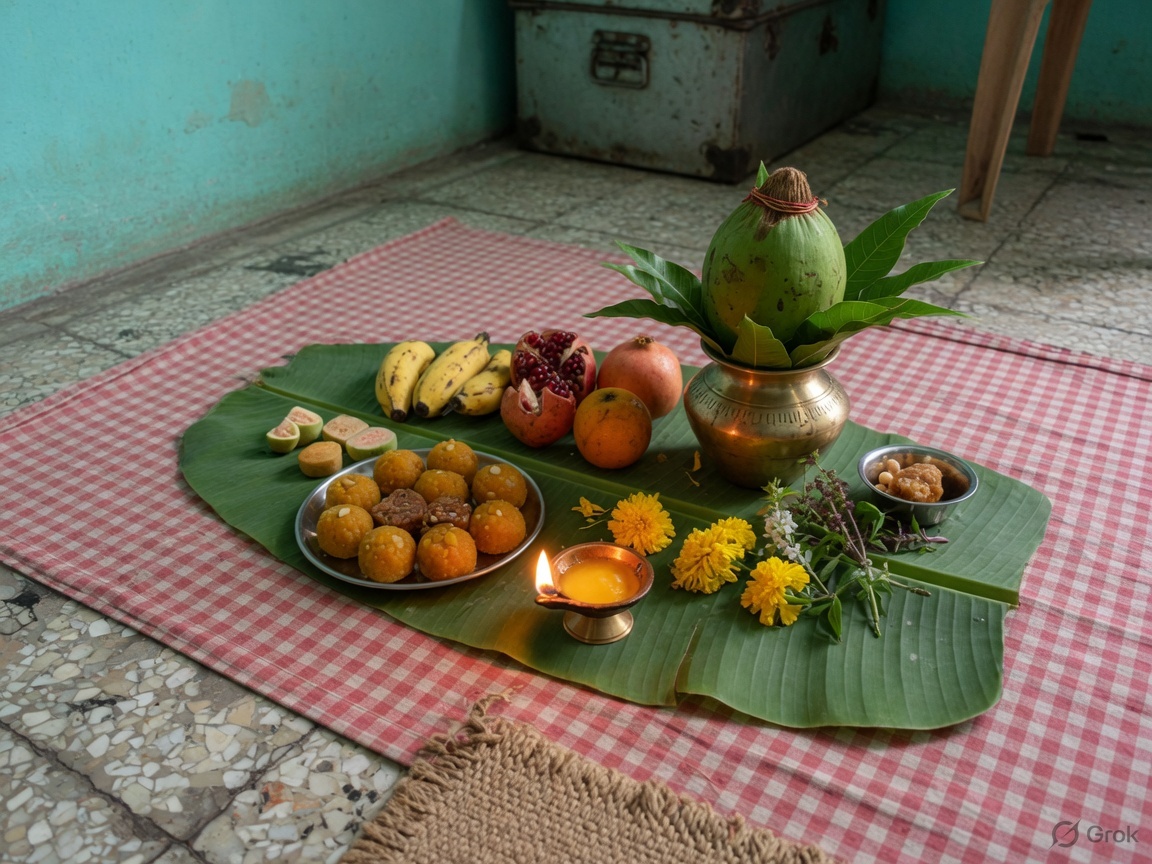
- The place is cleaned and a chowki is set facing east, with a mandap of banana stems at its corners where the family keeps that custom.
- Achaman, pavitrikaran and the sankalp — the place, the tithi, the family’s gotra and names, and the purpose of the puja.
- Gauri–Ganesh puja, kalash sthapana with the avahan of Varun, and the Navgraha puja.
- Shri Satyanarayan is worshipped, as a Shaligram or an image, with the sixteen upachars — from avahan and asan, through snan with panchamrit, vastra, chandan, flowers and tulsi, to dhoop, deep, naivedya and tambul.
- The five adhyayas are read, with the shankh sounded at the close of each.
- Where the family wishes, a short havan follows.
- Aarti — ‘Om Jai Lakshmi Ramana’ in most homes here — then pushpanjali, and the prasad taken by everyone present.
From the first achaman to the prasad, this takes about two to three hours at home. It is not a puja to hurry. A Katha read at speed so that guests can eat sooner has kept the form and dropped the point.
Panchamrit, panjiri and the prasad
The text speaks of the offering in a sawa measure — one and a quarter — of wheat flour or suji, ghee, milk, sugar and ripe banana. Most homes here make panjiri of roasted atta and sugar, often with dhaniya, alongside panchamrit of milk, curd, ghee, honey and sugar with tulsi in it. Tulsi on the naivedya is not optional for Narayan. And the prasad is not decoration. The Katha itself is a warning about what happens when it is set aside. Everyone in the house takes it, and guests carry a little home.
The vrat
The yajman couple customarily keep the vrat until the Katha is complete, and break it with the prasad. Guests are not asked to fast. An elder, a diabetic, a pregnant woman or anyone on medication eats as their health requires; the vrat is a discipline of intention, not a test of the body, and it never stands in for medical advice.
What the family arranges, and what I bring
The family arranges the chowki, a clean place, flowers, tulsi, the prasad and the panchamrit. I conduct the whole sequence from achaman to aarti, and bring what the puja needs from my side. Once the date is fixed, the samagri list is shared on WhatsApp, with what the household buys marked clearly. Dakshina is spoken on WhatsApp before the day. There is no package and no online payment.
Timing
Purnima is the day most families keep, but the tithi is checked on the panchang, because Purnima often begins in the afternoon of the civil day before. The evening, when the household is home and the lamps are lit, suits the Katha best. For a griha pravesh, the Katha is usually held the same day after the pravesh, or within the first days in the new house. For a vow fulfilled, the sooner the better: delay is exactly what the third adhyaya warns about.
How it is held
Satyanarayan is a home puja. Most that I keep are in Sultanpur and the nearby districts. Elsewhere in India it is usually joined to a larger visit — a griha pravesh with Navgraha shanti, or a Katha week — because a two-hour puja rarely justifies a long journey on its own.
For families abroad, the honest form is a guided puja. The family sets the chowki and offers the upachars with their own hands, in their own home, while I take the sankalp and read the adhyayas with them over a live video call. Nothing is done for them in their absence. The puja is theirs; I am reading with them.
What the Katha is not
It is not a payment made for a result. I do not promise that a Satyanarayan Katha will bring a job, a marriage, a child, a recovery or a sale. It is a thanksgiving, and a reminder to keep one’s word. Families who keep it every Purnima tend to say the same: what changes is not the luck of the house but its habit of gathering.
What I need from you
- The occasion, and the purpose of the sankalp in a sentence.
- A date window, and whether an evening is possible.
- The address for a home puja, or the city and time zone for a guided one.
- The gotra, and the names of those who will sit.
- Roughly how many guests will take prasad.
Questions people ask
- When should Satyanarayan Katha be done?
- Most families keep it on Purnima, either every month or on particular ones such as Vaishakh or Kartik. It is also held at a griha pravesh, after a vrat or a vow is fulfilled, on an anniversary or a birthday, and on Sankranti or Ekadashi. The text does not bind it to one tithi and speaks of the evening. Check the Purnima on the panchang, since it often begins the afternoon before.
- How long does Satyanarayan puja take?
- About two to three hours at home, from the first achaman to the prasad. That covers the sankalp, Gauri–Ganesh, kalash and Navgraha puja, the shodashopachar puja of Shri Satyanarayan, the five adhyayas, the aarti, and a short havan where the family wants one. It is not a puja to hurry so that guests can eat sooner; the Katha itself is about attention and keeping one’s word.
- Can Satyanarayan Katha be done online?
- For families abroad, yes — as a guided puja, honestly named. The family sets the chowki and offers the upachars with their own hands in their own home, while I take the sankalp and read the five adhyayas with them over a live video call. Nothing is performed on their behalf in their absence. Within Sultanpur and the nearby districts, the Katha is held in person at home.
- Do we have to fast for Satyanarayan Katha?
- Customarily the yajman couple keep the vrat until the Katha is complete and break it with the prasad. Guests are not expected to fast. Elders, diabetics, pregnant women and anyone on medication should eat as their health requires; the vrat is a discipline of intention, not a test of the body, and it is never a substitute for medical advice.
- What prasad is made for Satyanarayan Katha?
- The text speaks of a sawa — one and a quarter — measure of wheat flour or suji, ghee, milk, sugar and ripe banana. Most homes here make panjiri of roasted atta and sugar, often with dhaniya, along with panchamrit of milk, curd, ghee, honey and sugar. Tulsi on the naivedya is essential. Everyone present takes the prasad; the Katha itself warns against setting it aside.
- Duration
- 2–3 hours
- Where it is held
- At home
- Phone
- +91 94547 82346
Shri Satyanarayan Vrat Katha and Puja at Home
Book this serviceServices
Katha
Shrimad Bhagwat Katha and Seven-Day Bhagwat Saptah
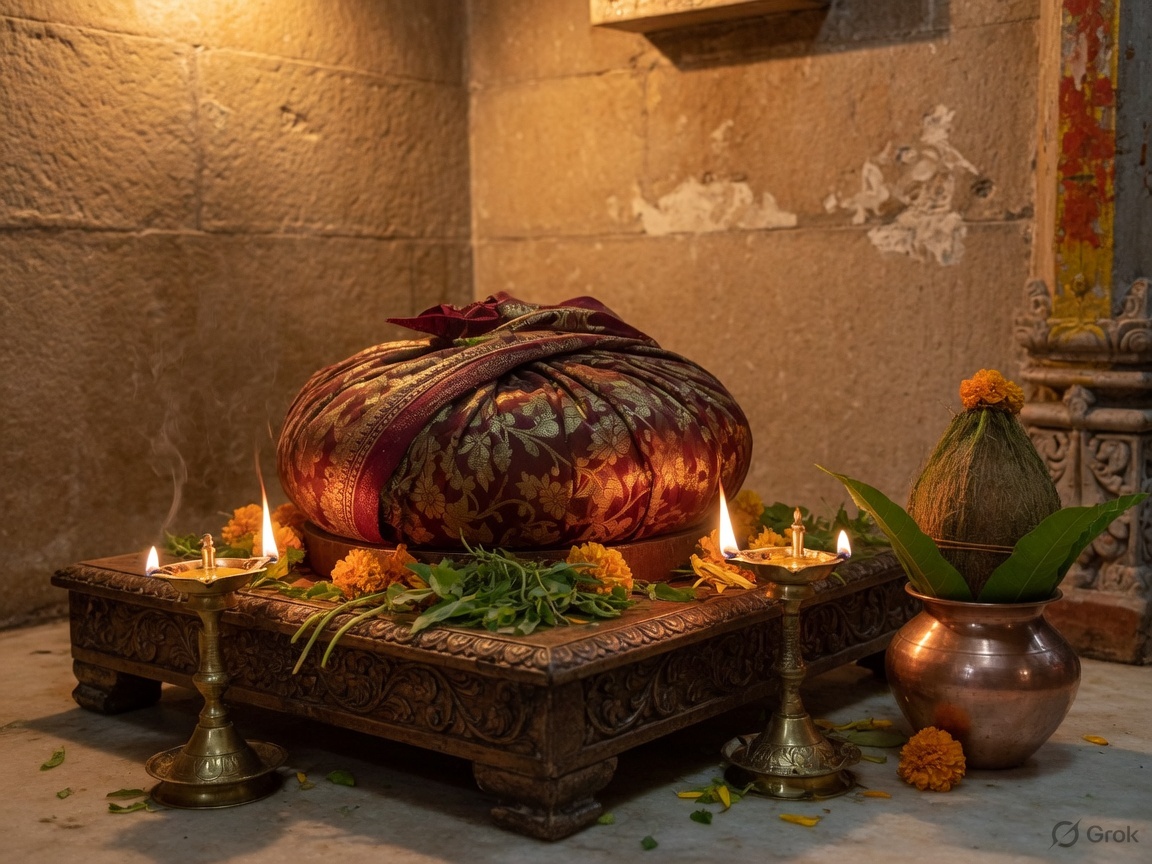
The Bhagwat Puran heard over seven days, three or one — with sankalp, Vyas Peeth, daily aarti, and a closing havan and bhandara.
Shri Ram Katha (Manas) and Devi Bhagwat Katha
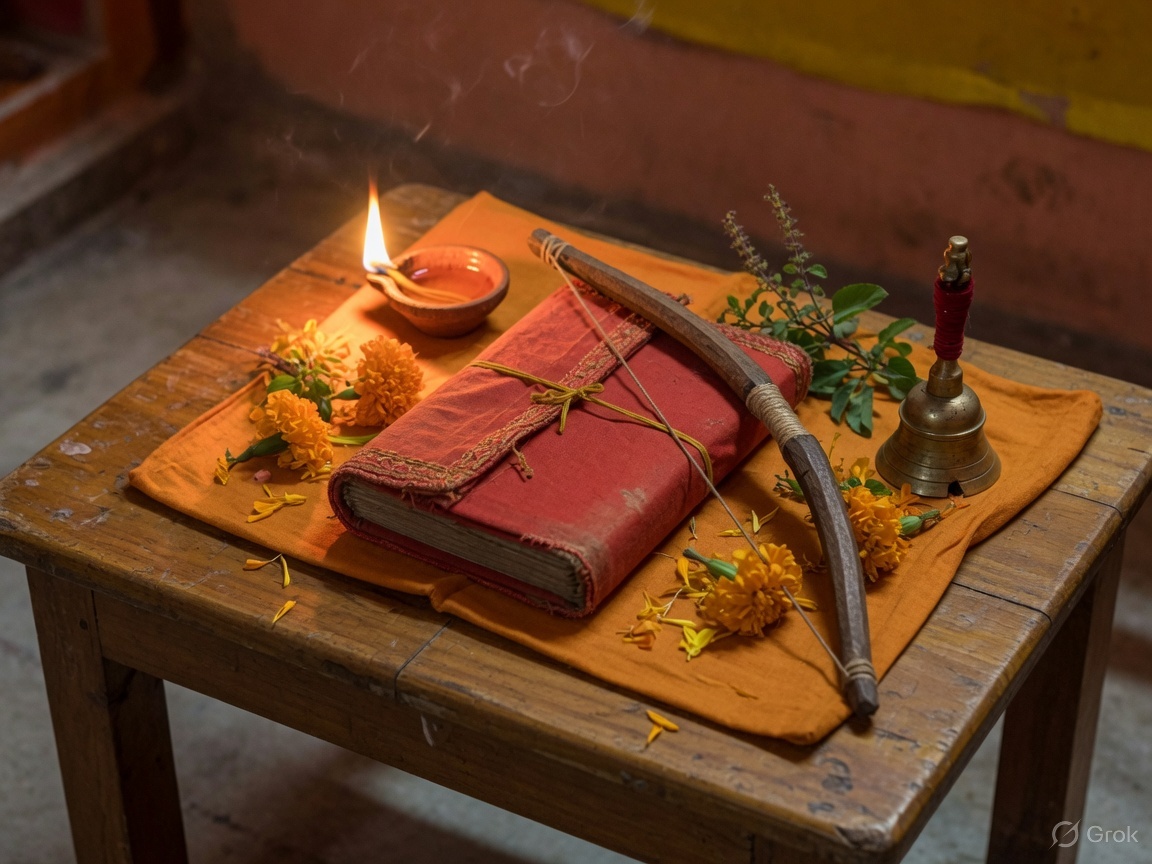
Shri Ram Katha from the Ramcharitmanas and the Devi Bhagwat Katha — for a family, a temple or a samiti, in one to nine days.
Janam Kundli Reading and Astrology Consultation
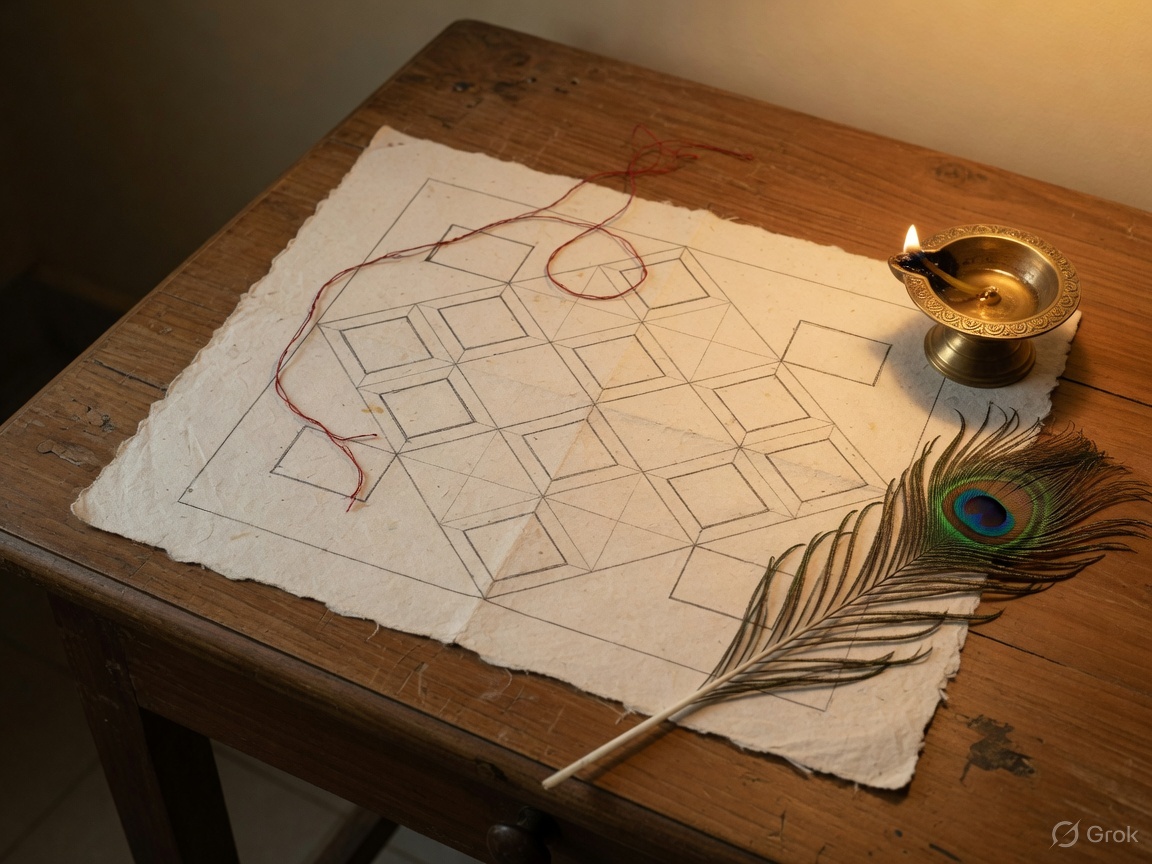
Your janam kundli prepared from birth details and read whole — lagna, grahas, dasha and gochar — without fear.