
Jaap, path and anushthan
Sundarkand Path at Home (Tuesday and Saturday)
Sundarkand from the Ramcharitmanas, sung with the family before Hanuman ji, with Hanuman Chalisa, aarti and prasad.
Sundarkand Path from Tulsidas’s Ramcharitmanas, recited together with the family at home after Hanuman puja, closing with the Chalisa, aarti and prasad.
What this includes
- Ganesh puja and sankalp
- Shri Ram and Hanuman puja with sindoor and a ghee lamp
- Sundarkand recited in full, led for the family
- Hanuman Chalisa and aarti
- Prasad and kshama prarthana
- Samagri list on WhatsApp once the date is fixed
Sundarkand is often booked as a cure — for a stuck job, a frightening dream, a hard Saturday. Families are told it must be read by eleven pandits, or only on a Tuesday, or in one particular tune, or it will not work. What it actually is, is gentler and more demanding at once: the fifth sopan of Goswami Tulsidas’s Ramcharitmanas, sung together by a household in front of Shri Ram and Hanuman ji, from the first shloka to the last doha, in one sitting. It is a recitation of devotion and of courage. In the tradition’s own telling, its strength is simply that Hanuman listens wherever the story of Ram is told.
What Sundarkand contains
The Ramcharitmanas is written in Awadhi in seven sopans. Sundarkand, the fifth, opens with three Sanskrit shlokas and then moves in chaupai and doha — around sixty dohas — through one of the most loved stretches of the Ram story:
- Hanuman’s leap across the ocean, past Mainak, Surasa and Simhika.
- Entering Lanka at night, meeting Vibhishan, and finding Sita in the Ashok Vatika, where he gives her Ram’s ring.
- The vatika laid waste, Akshay Kumar, Meghnad’s brahmastra, Hanuman before Ravan, and Lanka in flames.
- The return with Sita’s chudamani, and the report at Ram’s feet.
- Vibhishan’s counsel to Ravan, his exile, and his refuge with Ram.
- Ram’s request to the Ocean, and the Ocean yielding when the request is not heard.
Valmiki’s Ramayana has its own Sundara Kanda, in Sanskrit. What a North Indian family means by a Sundarkand path at home is almost always Tulsidas’s. The tradition gives more than one reason for the name. The one I like best is the plainest: in this kand everything turns. The lost is found, the grieving is comforted, and the one turned out by his own brother is taken in.
When families hold it
- Tuesday and Saturday — the days most homes keep for Hanuman ji.
- Hanuman Jayanti, and in Awadh the Bada Mangal Tuesdays of Jyeshtha.
- Griha pravesh, a new shop, a return from a long journey, or a family’s monthly sitting.
- A hard stretch — an illness in the house, a Sade Sati year, a fear that will not settle.
On that last line I am careful. Sundarkand is devotion for a hard time, and it steadies a house as few things do. It does not shorten Shani’s transit, decide a court case, or replace a doctor, and I do not offer it as if it did. Families who come in Sade Sati sometimes keep Saturday Sundarkand for the whole period. That is a good practice. It is not a mechanism.
How the path is held
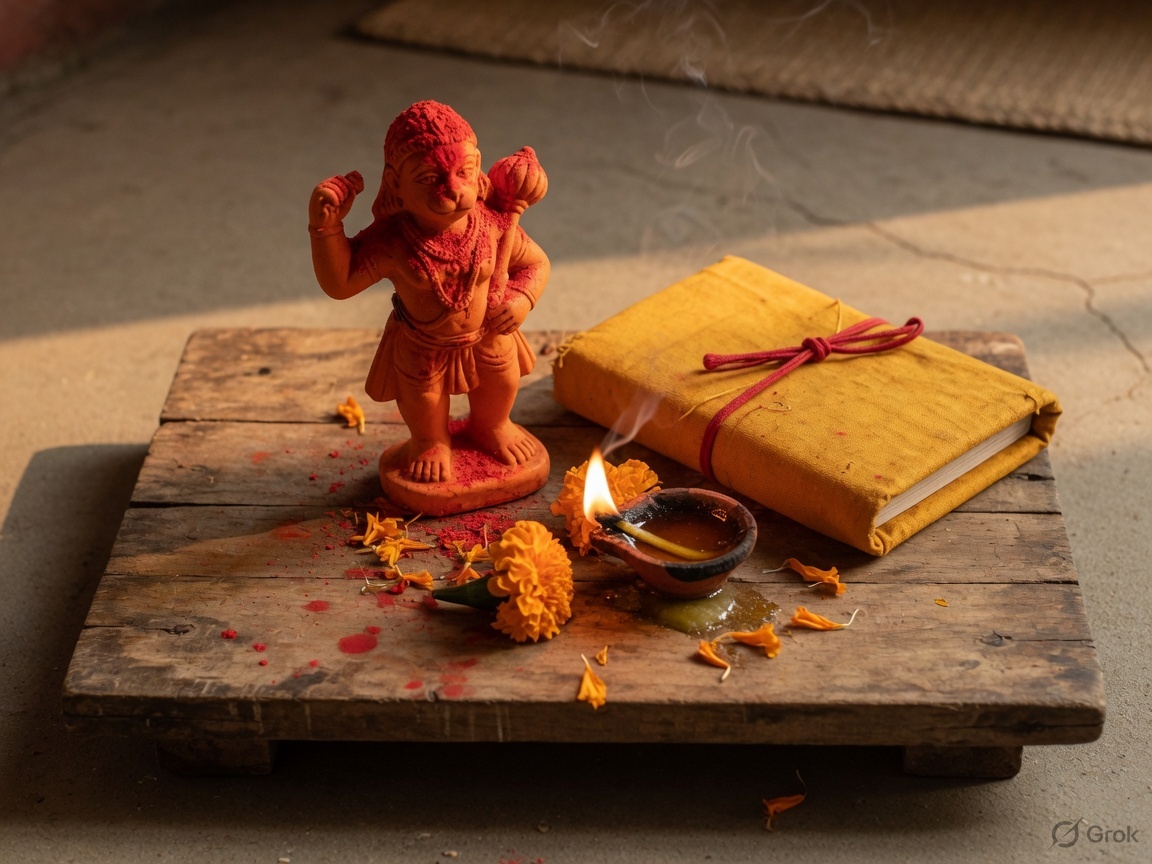
- The room is cleaned and a chowki set with a red or yellow cloth; Shri Ram darbar and Hanuman ji are placed on it, and an empty asan is kept for Hanuman.
- Ganesh puja, then the sankalp in the yajman’s name and gotra.
- Ram puja and Hanuman puja — sindoor, red flowers, janeu, a ghee lamp, and the naivedya the house keeps: gud-chana, boondi or besan laddu.
- Hanuman is invited as the listener of the katha.
- Sundarkand, start to finish, doha by doha — one voice leading, the family answering, the pace even.
- Hanuman Chalisa, then the aarti of Hanuman ji and of Shri Ram.
- Kshama prarthana, prasad, and the asan returned to its place.
Wherever the glory of Raghunath is sung, there Maruti stands, palms joined above his head, eyes full of tears.
That shloka, recited at the start of many Ramayana sittings, is the reason for the empty asan. The family is not performing for Hanuman. It is reading in his presence.
How long it takes
Sung together at an unhurried pace, with the puja before and the Chalisa and aarti after, a Sundarkand sitting runs two and a half to three hours. A practised reader alone can finish it in under two, but a family sitting is not a race. Pause between dohas when the children are reading. Keep the tune simple enough that the oldest person in the room can join it. Begin early enough that the aarti is not squeezed by dinner or by the building’s quiet hours.
Who reads
Everyone who can. Sundarkand is not a text reserved for the pandit. Children can take a chaupai each; elders who cannot read can repeat the refrain; daughters and daughters-in-law read as fully as sons. I lead the recitation and keep the order and the pronunciation, but the best Sundarkand is the one the family’s own voices are in. Whether there will be dholak and manjira is settled when the date is fixed.
What the family arranges, and what I bring
The family arranges the room, a chowki, enough copies of the Ramcharitmanas or of Sundarkand for everyone who will read, the lamp, flowers and prasad. The samagri list is sent on WhatsApp once the date is fixed. I bring the order of the puja and lead the path from the first shloka to the aarti.
At home, and for families far away
I am based in Lambhua, Sultanpur, and hold Sundarkand at homes in Sultanpur and the nearby districts, and travel for it elsewhere in India. Because Sundarkand is a recitation, a family abroad can join it honestly by video: they light their own lamp before their own picture of Hanuman ji, the path is recited with the sankalp in their name, and they read along in their own time zone. That is a shared path, not a substitute for one. The consultation about the day and the form happens on WhatsApp.
What I need from the family
- The day the family wants — a Tuesday, a Saturday or an occasion — and one or two alternatives.
- The yajman’s name and gotra.
- How many people will sit, and how many will read.
- Any custom of the house — a particular prasad, a Ramayan mandali, a tune the family already sings.
Questions people ask
- How long does a Sundarkand path take?
- Sung together by a family at an unhurried pace, with Hanuman puja before and the Chalisa and aarti after, it takes two and a half to three hours. A practised reader alone can finish the text in under two. A family sitting should not be rushed: pause for the children, keep a tune the elders can follow, and leave time for the aarti.
- Which day is best for Sundarkand path?
- Tuesday and Saturday are the days most households keep for Hanuman ji, and Hanuman Jayanti is the natural festival. In Awadh many families also keep the Bada Mangal Tuesdays of Jyeshtha. Any day is proper for an occasion such as griha pravesh. What matters more is a time when the whole family can sit through it together, start to finish.
- Can women read Sundarkand?
- Yes. Sundarkand is in Awadhi, written by Tulsidas for everyone who loves Ram, and the home tradition has always included women’s voices. Daughters, daughters-in-law and mothers read as fully as anyone else in the family. In my sittings I lead the order and the pronunciation, and everyone in the room who can read is welcome to take a chaupai.
- Can Sundarkand path be done online?
- Yes, honestly so, because it is a recitation. A family abroad lights its own lamp before its own picture of Hanuman ji, the path is recited with the sankalp in their name, and they join by video and read along in their own time zone. It is a shared path, not a recording. The day and the arrangements are discussed on WhatsApp first.
- Does Sundarkand help during Sade Sati?
- Many families keep Saturday Sundarkand through Sade Sati, and it is a good discipline for a hard period — it steadies the house and gives the week a centre. It does not shorten Shani’s transit or change what the chart shows, and I do not offer it as if it did. If the question is about the Sade Sati itself, that needs a chart reading.
- Duration
- 2½–3 hours
- Where it is held
- At home, with the family reciting
- Phone
- +91 94547 82346
Sundarkand Path at Home (Tuesday and Saturday)
Book this serviceServices
Jaap, path and anushthan
Mahamrityunjay Mantra Jaap Anushthan
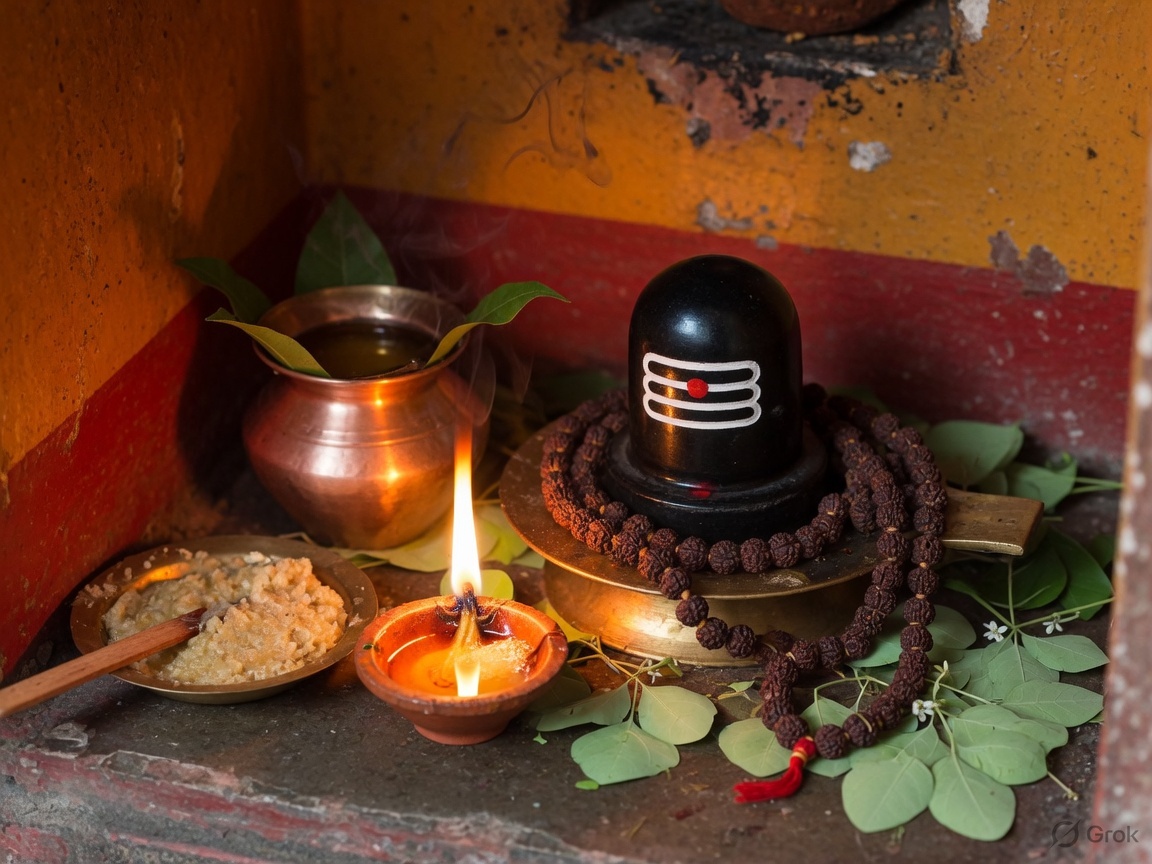
Mahamrityunjay jaap with sankalp in the person’s name and gotra — a count fixed with the family, closed with dashansh havan.
Rudrabhishek Puja with Rudrashtadhyayi Path
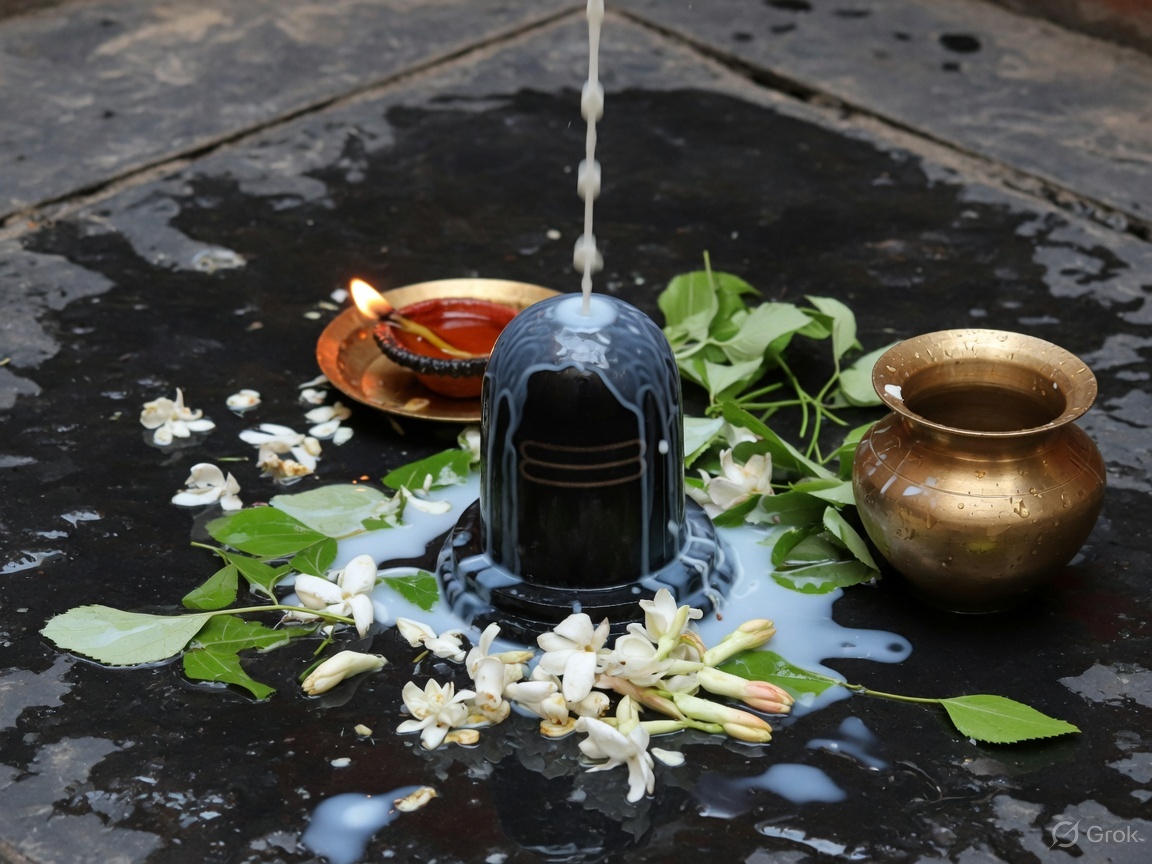
Abhishek of the Shivling with jal, dugdh and panchamrit while the Rudrashtadhyayi of the Shukla Yajurveda is recited.
Durga Saptashati (Chandi) Path at Home
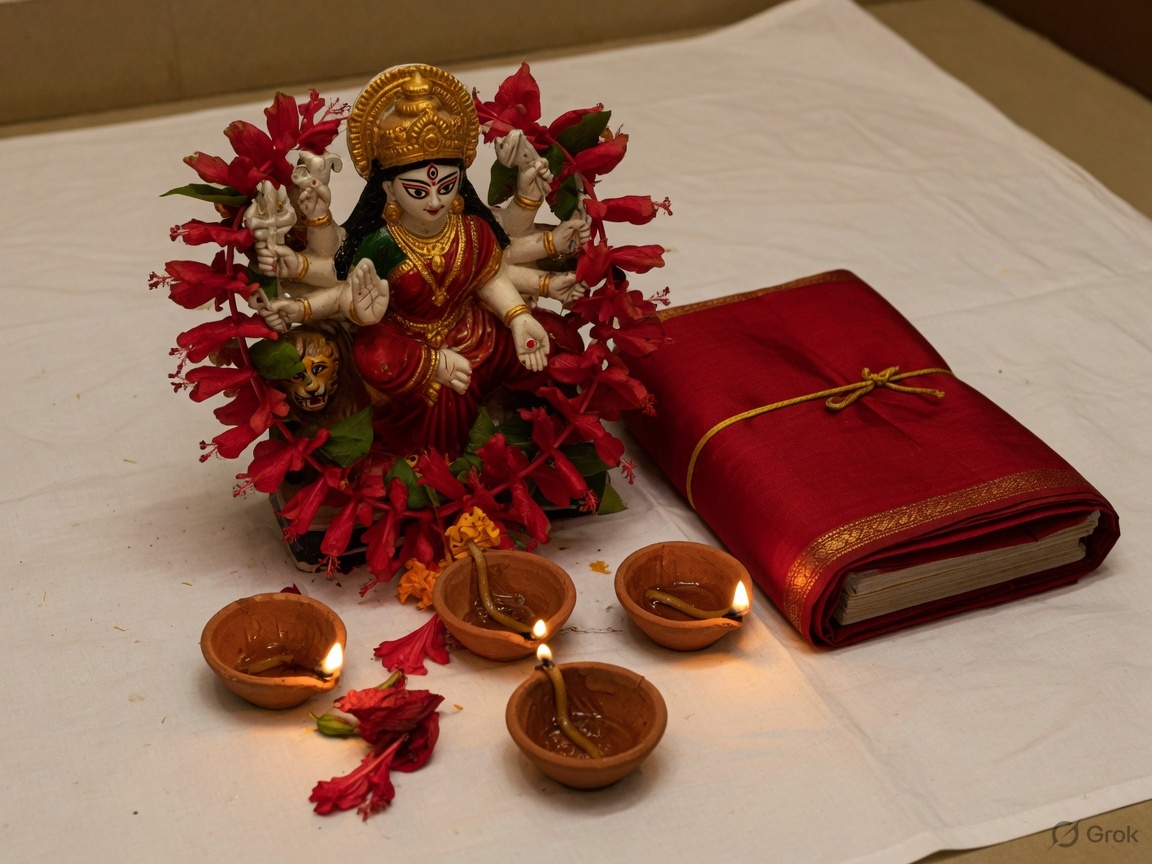
Durga Saptashati path — kavach, argala, keelak, the thirteen adhyayas and Navarna jaap — as a single path or across Navratri.