
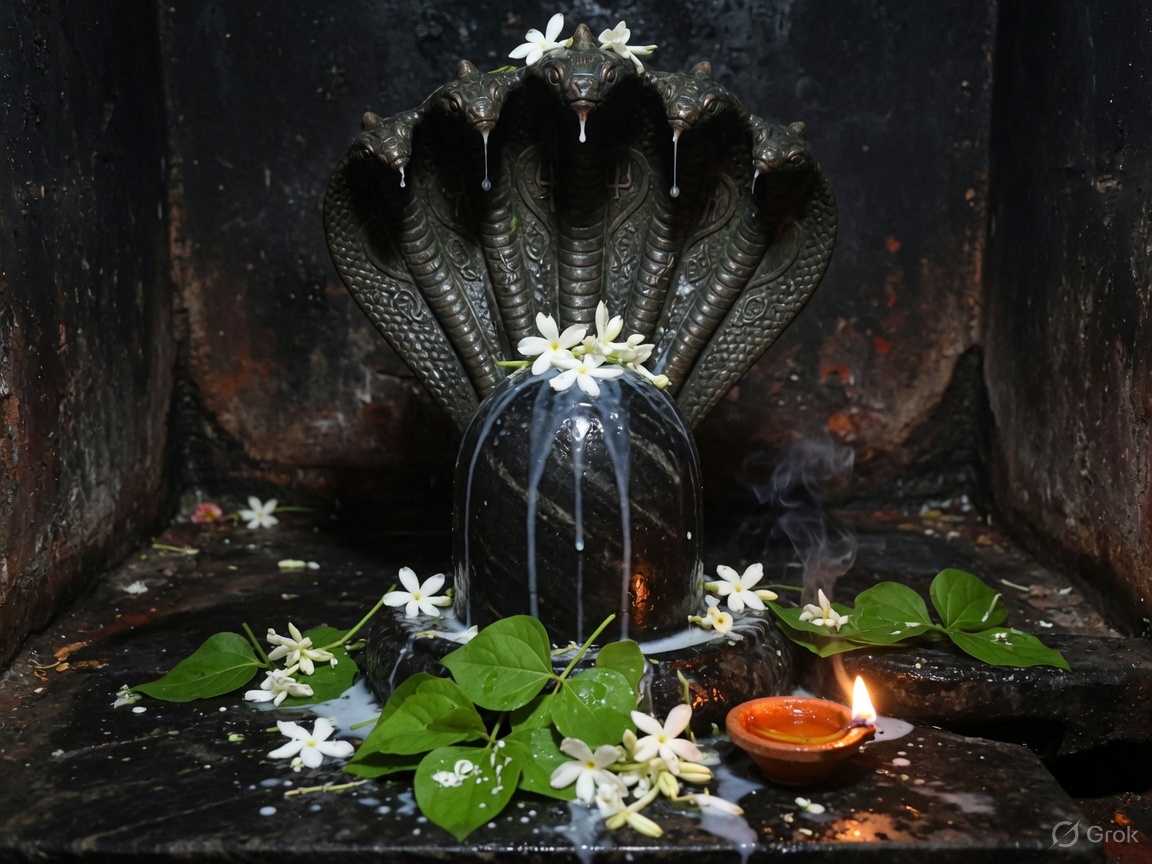
Dosh shanti puja
Kaal Sarp Dosh Shanti Puja
Kaal Sarp Shanti — Nag puja, Rudrabhishek, Rahu–Ketu japa and havan — advised once the Rahu–Ketu axis is read with the whole chart.
Kaal Sarp Shanti with Nag puja, Rudrabhishek, Rahu–Ketu japa and havan, after the chart is read. Held at home or a Shiva temple; the reading can be online.
What this includes
- Reading of the Rahu–Ketu axis, complete or partial
- Sankalp, Ganesh pujan and Navagraha avahan
- Nag puja of the naga pair
- Rudrabhishek with Rudri path
- Rahu–Ketu japa, havan and purnahuti
- Samagri list on WhatsApp once the date is fixed
Families usually reach me about Kaal Sarp Dosh in a hurry. A free report has printed one of the twelve serpent names. Someone has said the chart is ‘closed’, that nothing will move until the puja is done, and that it must be done at Trimbakeshwar, soon. The Shanti they are asking for is a real ritual tradition. It is also a later one, and it was never meant to be the first answer to a website. I advise it only after I have read the Rahu–Ketu axis inside the whole chart. This page is about the puja itself: when I advise it, how I perform it, and what the family does. What the yoga is — the counting, complete and partial, the twelve names — is in the Gyaan article on Kaal Sarp Dosh.
Before I advise a Shanti
Four things are checked first. None of them takes long, and each can change the answer.
- Is the enclosure complete? Are all seven grahas — Surya, Chandra, Mangal, Budh, Guru, Shukra and Shani — inside the arc from Rahu to Ketu, or does one sit outside it or with a node?
- Which houses and signs the nodes occupy, and which grahas sit closest to them. This needs an accurate birth time, because the houses follow the Lagna.
- Which dasha is running. A complete yoga in a Rahu or Ketu period is read more closely than the same yoga in a Guru dasha.
- What the family is actually worried about. A delay that belongs to Shani, a matching question that belongs to Mangal, or a health question that belongs to a doctor does not become a Kaal Sarp question because the axis is present.
Where the enclosure is partial, I say so, and I start the reading from the graha that sits outside it. Where the birth time cannot fix the houses, I say that too, rather than naming a type from a guess. Where the yoga is complete and the family wishes to mark it with a vidhi — often at the start of a Rahu or Ketu dasha — I advise the Shanti, and I tell them plainly what it is and what it is not.
How I perform the Kaal Sarp Shanti
The tradition that grew around this name joins three strands: worship of Shiva as Rudra, worship of the nagas, and the japa of Rahu and Ketu. The order I follow is below.
- Sankalp. The yajman — the person whose chart it is — states name, gotra, place, tithi and purpose.
- Ganesh pujan, kalash sthapana and punyahavachan, so the work begins without obstruction and the place is made ready.
- Navagraha avahan. All nine grahas are invoked in the mandal, Rahu and Ketu in their own places.
- Nag puja. A pair of naga images, naag and naagin, often of silver, is worshipped with milk, flowers and akshat. Afterwards the pair is given in daan or set in flowing water, as the family’s custom holds.
- Rudrabhishek. The Shivling is bathed with water, milk and panchamrit while the Rudri from the Rudrashtadhyayi is recited.
- Japa. The mantras of Rahu and Ketu, in the count fixed at the sankalp. Where the count is large, it is shared among ritviks or completed over more than one day.
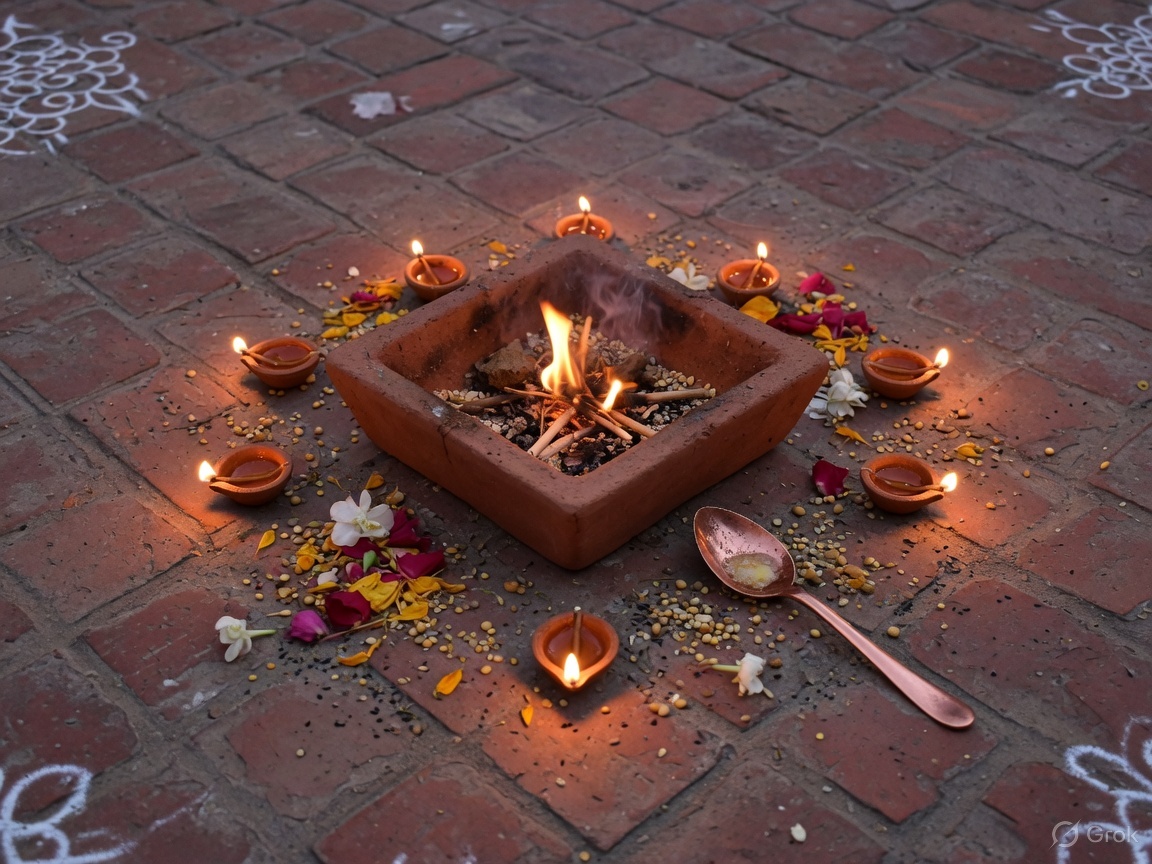
- Havan. A tenth of the japa is offered, with durva as Rahu’s samidha and kusha as Ketu’s, ending in purnahuti and aarti.
- Daan and brahman bhojan, as the household can give: black cloth, sesame, food, and silver where it is the family’s practice.
The vidhi is an act of prayer and composure. Rahu and Ketu do not move because a havan was performed.
It is done once, with attention. I do not advise repeating it every year out of fear. What continues afterwards is ordinary: a lamp to Shiva on Mondays, if the family wishes, and the rest of life lived inside the same chart.
What the family arranges, and what I bring
I bring the paddhati: the sankalp in proper form, the mantras, the count and the order of the rites. The family arranges the place, the people and the daan. The full samagri list, including the naga pair and the abhishek dravya, comes on WhatsApp once the date is fixed.
- A clean space for a small havan kund at home, or the permission of the Shiva temple where it will be held.
- The person whose chart it is, present for the sankalp and the purnahuti. A light fast until the purnahuti is customary where health allows.
- Parents or spouse, where possible. The sankalp names the family.
- The daan and a simple meal for those present, as the family chooses.
Choosing the day
Families often ask for Nag Panchami in Shravan, a Shravan Monday, an Amavasya or Mahashivaratri. Those are natural days for a household that already keeps them. None is required. The tithi comes from the Panchang and from the family’s ability to be present together. It should not be rushed into the nearest week because a report caused panic, and I do not publish lists of ‘Kaal Sarp puja dates’. Each date is chosen for one chart.
Trimbakeshwar, Ujjain and the puja at home
Trimbakeshwar near Nashik is the kshetra most associated with this Shanti. Ujjain and Kalahasti are named too. Families who can go and wish to go, go, and that is their choice. A Rudrabhishek and Nag puja at home, or at a Shiva temple nearer home, with the sankalp, japa and havan in order, is a complete vidhi. A journey taken in panic, without a reading, is not made correct by the fame of the temple.
How it is held
- At home or in a Shiva temple in Sultanpur and the nearby districts — Ayodhya, Prayagraj, Varanasi, Jaunpur, Pratapgarh and Lucknow.
- Further afield in India, with travel arranged in advance.
- The reading of the axis can be done by video call or WhatsApp, for families in other cities or abroad.
- For a family abroad that cannot come, the japa and the Shanti can be performed in India on their behalf, with the sankalp in their names, and they can join by video. The abhishek and the havan are done here by those present. I do not call that an online puja.
What I need from the family
Date of birth, time of birth as precisely as it is known, and place of birth as a town or village, not a district. The source of the birth time. Any earlier report that named a type, so I can check what it was counted from. And the question you are actually asking. ‘Is the yoga present’ and ‘why has this delay happened’ are different questions. The second is usually the one worth the sitting.
Questions people ask
- Is it necessary to go to Trimbakeshwar for Kaal Sarp puja?
- No. Trimbakeshwar is the kshetra most associated with this Shanti, and families who wish to go may. But a Rudrabhishek and Nag puja performed at home or in a Shiva temple nearer home, with the sankalp, the Rahu–Ketu japa and the havan in their proper order, is a complete vidhi. What matters more is that the chart was read before anyone travelled.
- Which day is best for Kaal Sarp Dosh puja?
- Nag Panchami, Shravan Mondays, Amavasya and Mahashivaratri are the days families most often ask for, and they suit a household that already keeps them. None is compulsory. I take the tithi from the Panchang and from the family’s ability to be present together. A date chosen calmly is better than the nearest one chosen in fear.
- Do I need a puja for partial Kaal Sarp Dosh?
- Usually not on the strength of the label alone. If even one graha sits outside the Rahu–Ketu arc, the enclosure is not complete, and that free graha is often where the reading should begin. I look at the houses, the dasha and the actual question first. If a Shanti is not indicated, I say so rather than recommending one for reassurance.
- Can Kaal Sarp puja be done online for NRI families?
- The reading can be done by video call or WhatsApp. If the family cannot travel, the Shanti can be performed in India on their behalf, with the sankalp taken in their names, and they can join by video to hear the sankalp and watch the purnahuti. The abhishek and havan are done here by those present, so I describe it honestly as a puja done for them, not an online puja.
- Will Kaal Sarp puja remove the dosh?
- No vidhi removes a placement from a birth chart. Rahu and Ketu stay where they were at birth. The word the tradition uses is shanti — settling — and the Shanti is an act of prayer and composure for the person and the family. I do not offer it with a promise about work, marriage, children or money, and nobody should.
- Duration
- 4–5 hours (longer japa over days)
- Where it is held
- At home or in a Shiva temple
- Phone
- +91 94547 82346
Kaal Sarp Dosh Shanti Puja
Book this service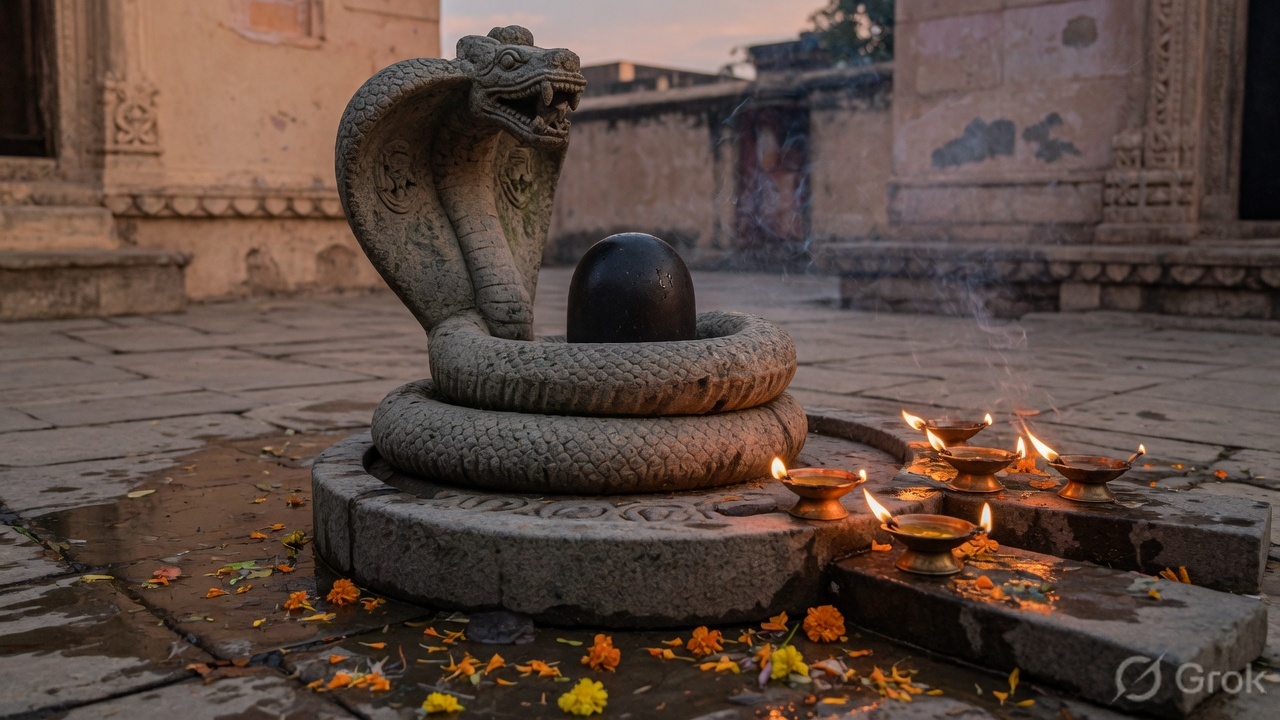 RelatedKaal Sarp Dosh — what the Rahu–Ketu axis actually isRead the article
Services
Dosh shanti puja
Navgraha Shanti and Graha Shanti Puja
Navgraha Shanti, or the shanti of one graha, decided from the chart’s dasha and gochar — with mantra-jaap, havan and dan.
Mangal Dosh Shanti Puja (Manglik Dosh)
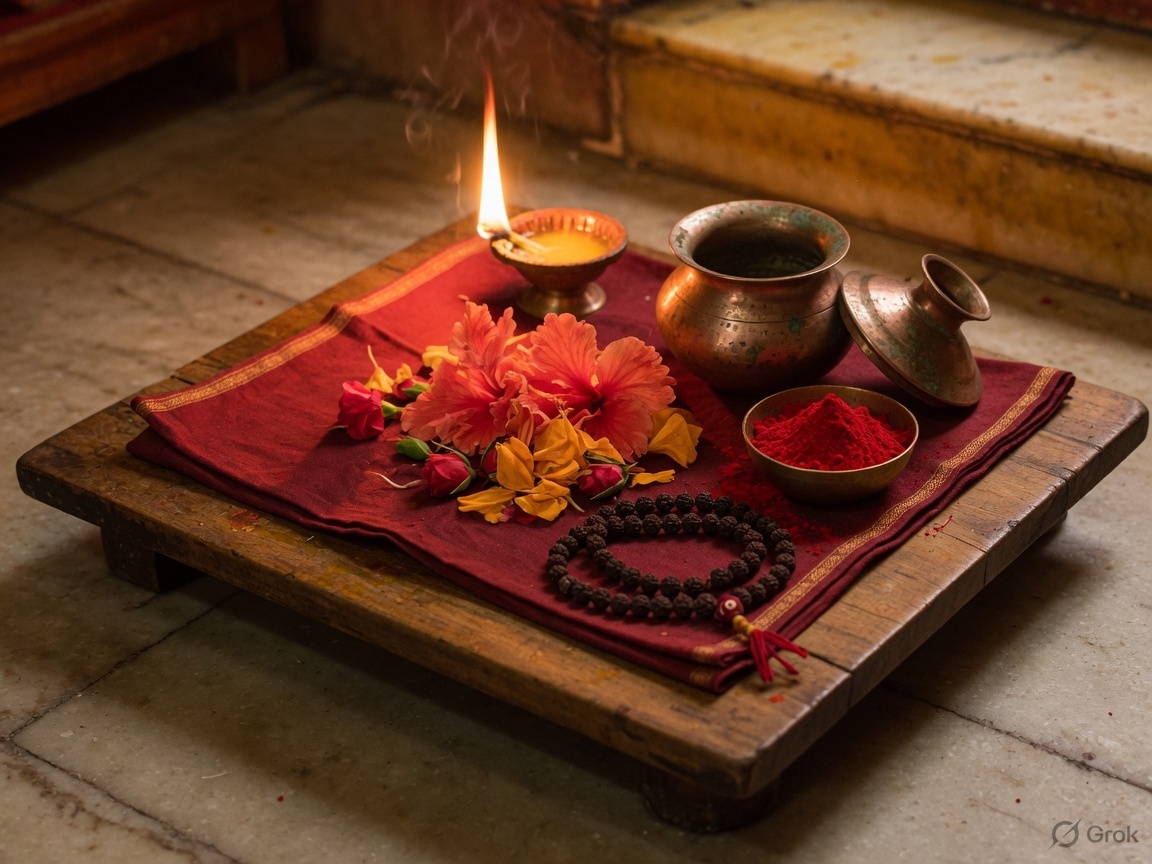
Mangal Shanti with sankalp, Mangal japa, havan and daan — advised only after the chart is read whole and the parihar checked.
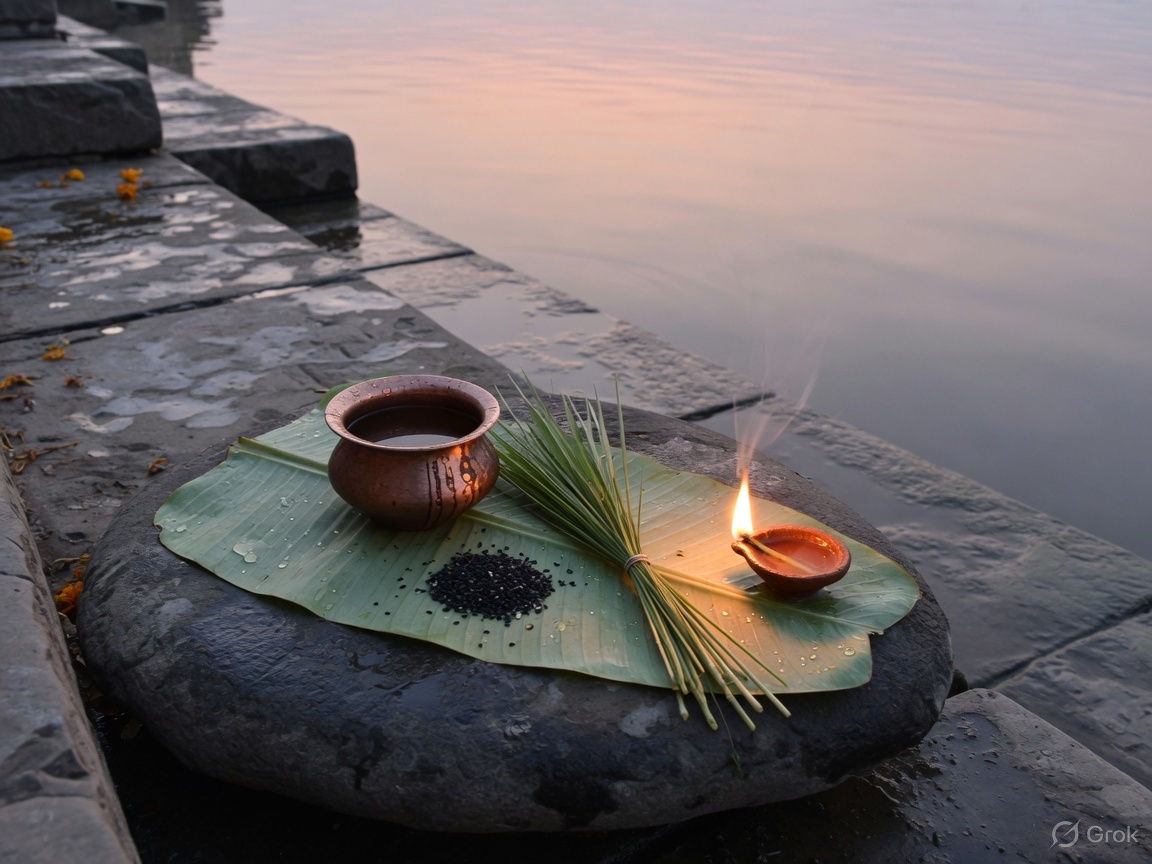
Pitra Dosh Shanti Puja and Narayan Bali
Pitra Dosh Shanti with shraddh, tarpan and havan, and Narayan Bali where an untimely death left the last rites incomplete.