
Sanskar and griha puja
Vedic Vivah Sanskar (Hindu Wedding Rites)
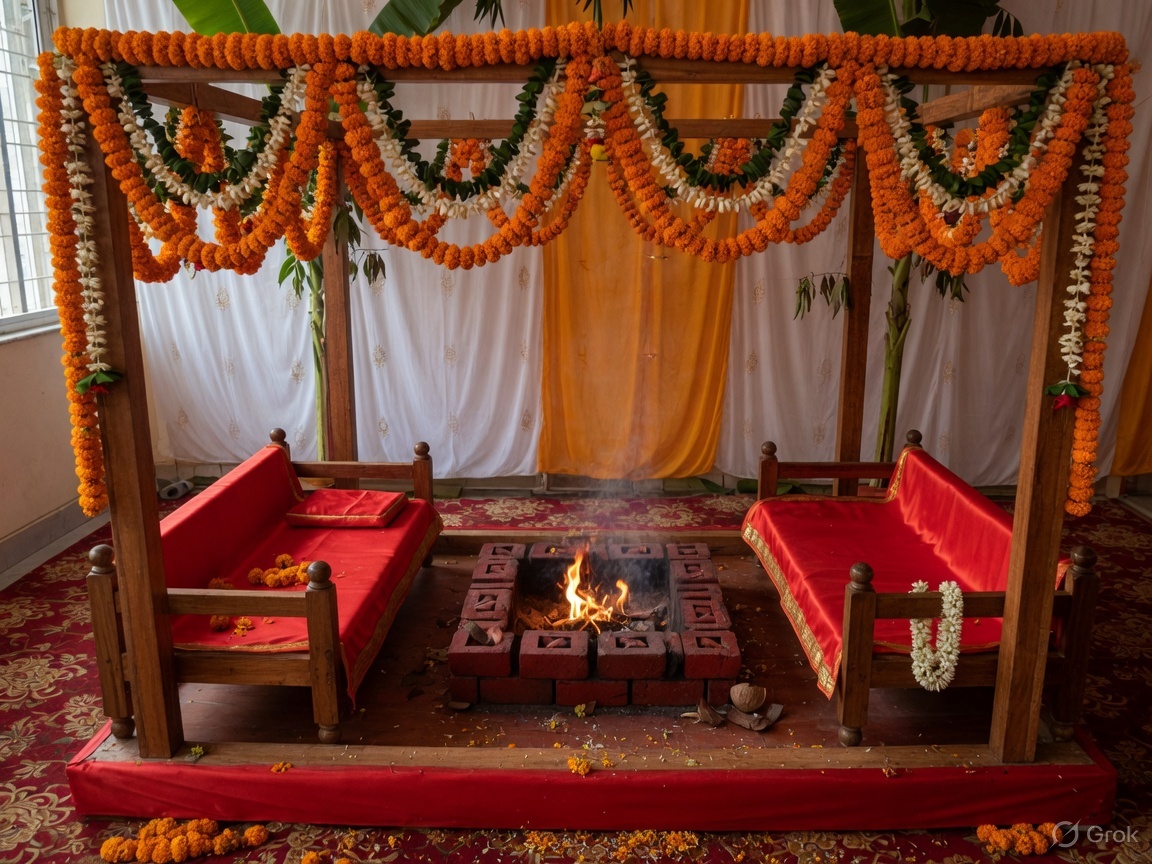
The Vedic wedding rites — dwar puja, kanyadaan, panigrahan, laja homa and saptapadi — performed in full order at the mandap.
Vedic Vivah Sanskar at the venue or home: dwar puja, kanyadaan, panigrahan, laja homa, saptapadi and sindoor daan, in a lagna taken from the Panchang.
What this includes
- Muhurat and lagna from the Panchang
- Dwar puja and Gauri–Ganesh puja
- Kanyadaan with gotrochchar
- Panigrahan, laja homa and agni parikrama
- Saptapadi, sindoor daan and ashirvad
- Samagri list on WhatsApp once the date is fixed
Most families reach me with the wedding already planned around the hall, the caterer and the baraat’s arrival time, and the rites held in their minds as one long item called ‘the pheras’. Some have been told a pandit can ‘finish the shaadi’ in forty minutes if the hall wants it back. Others have been told it must run until dawn because it always has. Neither is quite right. Vivah Sanskar is a sequence of distinct rites, each with its own mantra and its own meaning, and a family’s customs grow around that core. When the family knows which rite is which, nothing essential is cut for time, and nothing ornamental is mistaken for the vow.
What Vivah Sanskar is
Vivah is one of the sixteen sanskars, and for a household it is the one the others rest on. The grihya sutras describe it as a fire rite: the bride and the groom make their promises before Agni, who stands as witness, in the presence of both families. The pheras are part of it. So is the kanyadaan before them and the saptapadi after. A wedding that keeps the music and the dinner but rushes the mantras has kept the occasion and thinned the sanskar.
Kundli Milan, where the family wants it, is done well before this, as a separate reading. I have written elsewhere on what Gun Milan measures and what it does not. The wedding rite does not reopen that question at the mandap. By the time the sankalp is taken, the families have decided.
The core rites, in the order I perform them
The sequence below is the one I follow at a North Indian wedding. Family custom may add steps between these, and the names change from district to district, but the core does not change.
- Dwar puja. When the baraat reaches the door, the bride’s father receives the groom. Tilak, aarti and a welcome are offered, and the groom is honoured, in the old phrase, as Vishnu come to the door.
- Gauri–Ganesh puja. The bride worships Gauri, often before she comes to the mandap. At the mandap, Ganesh is worshipped first, the kalash is established and the navagraha are invoked.
- Kanyadaan. With a full sankalp, the bride’s parents place her hand in the groom’s. Gotrochchar is recited for both sides — the gotra and three generations of names — so that two lineages are named aloud before they are joined.
- Panigrahan. The groom takes the bride’s right hand with the Rigvedic mantra ‘gṛbhṇāmi te saubhagatvāya hastam’ — I take your hand for good fortune.
- Agni sthapana and laja homa. The fire is established and fed with ghee and samidha. The bride’s brother fills her cupped hands with laja, parched rice, and she offers it into the fire. In the grihya sequence she also sets her foot on a stone, ashmarohan, and is asked to be as steady as that stone. The couple then walk around the fire.
- Saptapadi. Seven steps, each with its own mantra: for food, for strength, for the increase of the household, for joy, for the cattle that were once a household’s livelihood, for the seasons, and the seventh for friendship — ‘sakhe saptapadī bhava’, having walked seven steps, be my friend.
- Sindoor daan and mangalsutra. The groom places sindoor in the parting of the bride’s hair and ties the mangalsutra, as the family’s custom holds.
- Ashirvad. The elders of both families bless the couple. Where the family keeps it, the couple are shown Dhruva, the pole star, as an image of constancy.
Pheras and saptapadi
In much of North India, ‘saat phere’ means seven rounds of the fire, and the seven steps have folded into them. In the grihya sutra sequence the rounds belong to the laja homa, and the saptapadi is its own rite. Where a family’s custom merges the two, I keep the custom, and I say aloud which mantra belongs to which step, so that neither rite is lost inside the other.
Regional and family customs
An Awadh wedding also carries things no sutra mentions: the haldi, the women’s songs and gaari at the mandap, the kohbar painted on a wall, the games at the threshold. Families from Bihar, Rajasthan or the south bring their own. I do not ask anyone to drop these. They are part of how a family marries. The only rule I keep is order: customs sit around the core rites, not in place of them. If time is short, customs bend. The kanyadaan sankalp, the panigrahan, the laja homa and the saptapadi do not.
Muhurat and lagna
A wedding date is not picked from a list. I take it from the Panchang and, where they are available, from both charts. Most North Indian families avoid Kharmas — the month when the Sun is in Dhanu, and again when it is in Meen — and the four months of Chaturmas between Devshayani and Devuthani Ekadashi. Days when Guru or Shukra is combust are avoided. The nakshatras the tradition prefers for vivah, such as Rohini, Mrigashira, Uttara Phalguni, Hasta, Swati, Anuradha and Revati, are looked for. The bride’s Guru bal, the groom’s Surya bal and the Chandra bal of both are checked.
Within the chosen day, I fix the lagna: the sign rising at the time the kanyadaan and the pheras will actually fall. That is why I ask the family when the baraat will realistically arrive, not what the card says. I do not publish lists of wedding dates for the year. A date that suits one couple’s charts may not suit another’s, and a list invites families to book a hall first and ask afterwards.
How long the rites take
The core rites take four to six hours when they are done without hurry. In this region weddings often run through the night, because the baraat arrives late and the dwar puja and the meal come before the mandap. If the venue must be vacated by a fixed hour, tell me when the date is fixed. I plan which customs to shorten so that the core rites do not have to be.
What the family arranges, and what I bring
The family arranges the mandap at the venue, with a havan kund and space around it to walk; seating for both families; the bride’s brother for the laja; the clothes and jewellery, including the sindoor and the mangalsutra; and the samagri. I share the samagri list on WhatsApp once the date is fixed, so that nothing is bought twice and nothing is forgotten. If the mandap is indoors, keep a window or door open for the fire.
I bring the vidhi: the order, the mantras, the sankalp and the gotrochchar. I keep time with the lagna, and I explain each step to both families as it happens — in Hindi, and in English when relatives from abroad are watching.
Registration is a separate matter
A Vedic wedding is a sanskar. Registration of the marriage is a legal step under the law that applies to the couple, done at the registrar’s office, and the family handles it. I can tell the family which rites were performed and on which day. I do not give legal advice, and questions about documents, visas or immigration belong to that office or to a lawyer.
What I need from the family
- Full names of the bride and groom, and the gotra of each family.
- Three generations of names on each side, for the gotrochchar.
- Birth details of both, if the muhurat is to be taken from the charts.
- The venue, the hours it is available, and the realistic arrival time of the baraat.
- The customs each family wants kept, and who will perform the kanyadaan.
Where the wedding is held
I perform weddings in Sultanpur and the districts around it, and I travel elsewhere in India when the family asks and the dates allow. Families living abroad usually hold the wedding in India; the muhurat and the planning can be discussed on WhatsApp or a video call well before they fly. A wedding cannot be performed online. The vows are taken before a fire, by two people standing in front of it.
Questions people ask
- How long does a Hindu wedding ceremony take?
- The core rites — Gauri–Ganesh puja, kanyadaan, panigrahan, laja homa, saptapadi and sindoor daan — take four to six hours when they are not hurried. Dwar puja and the family’s customs add to that, which is why weddings in Awadh often run through the night. If the venue has a fixed closing time, tell me when the date is fixed, and I will plan which customs to shorten.
- Are the seven pheras the same as saptapadi?
- Not in the grihya sutra sequence. There, the rounds of the fire belong to the laja homa, and the saptapadi is seven separate steps, each with its own mantra, ending with the vow of friendship. In much of North India the two have merged into ‘saat phere’. I keep the family’s custom, and I name which mantra belongs to which rite as we go.
- How is the wedding muhurat chosen?
- From the Panchang and, where available, both charts. Most North Indian families avoid Kharmas, Chaturmas and the days when Guru or Shukra is combust. The tradition’s vivah nakshatras are preferred, and Guru bal, Surya bal and Chandra bal are checked. Within the day, the lagna is fixed for the time the kanyadaan and pheras will actually fall. Fix the muhurat before booking the hall, not after.
- Do we still need to register the marriage after a Vedic wedding?
- Registration is a separate legal step, and the family handles it at the registrar’s office under the law that applies to the couple. I can tell you which rites were performed and on which day. I do not give legal advice. For the documents registration needs, or anything to do with visas or immigration, ask that office or a lawyer.
- Can a Vivah Sanskar be performed online for NRI families?
- No. The vows are taken before a fire by two people standing in front of it, with their families present. What can happen online is everything before that: the muhurat, the sequence of rites, the samagri list and the customs each family wants kept, discussed on WhatsApp or a video call. Most families living abroad hold the wedding in India, and I travel within India for it.
- Duration
- 4–6 hours (core rites)
- Where it is held
- At the wedding venue or home
- Phone
- +91 94547 82346
Vedic Vivah Sanskar (Hindu Wedding Rites)
Book this service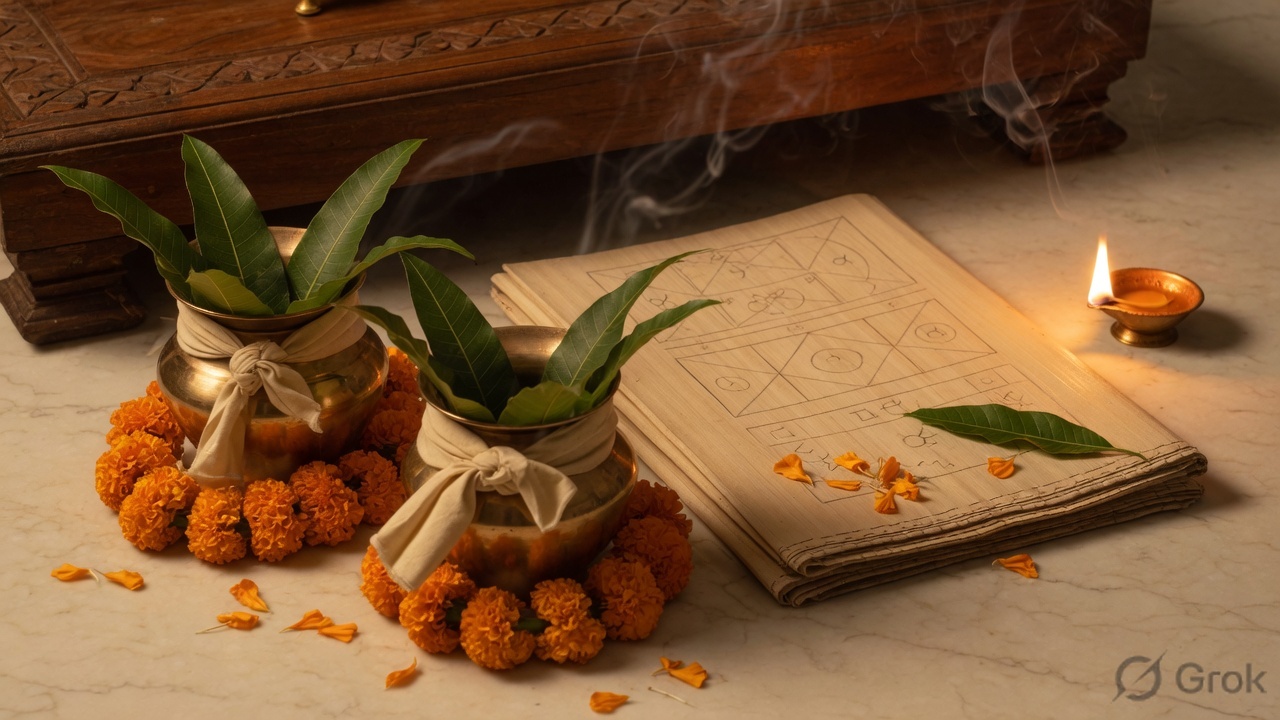 RelatedKundli matching and Gun Milan — what the thirty-six points actually measureRead the article
Services
Sanskar and griha puja
Griha Pravesh Puja for a New Home or Flat
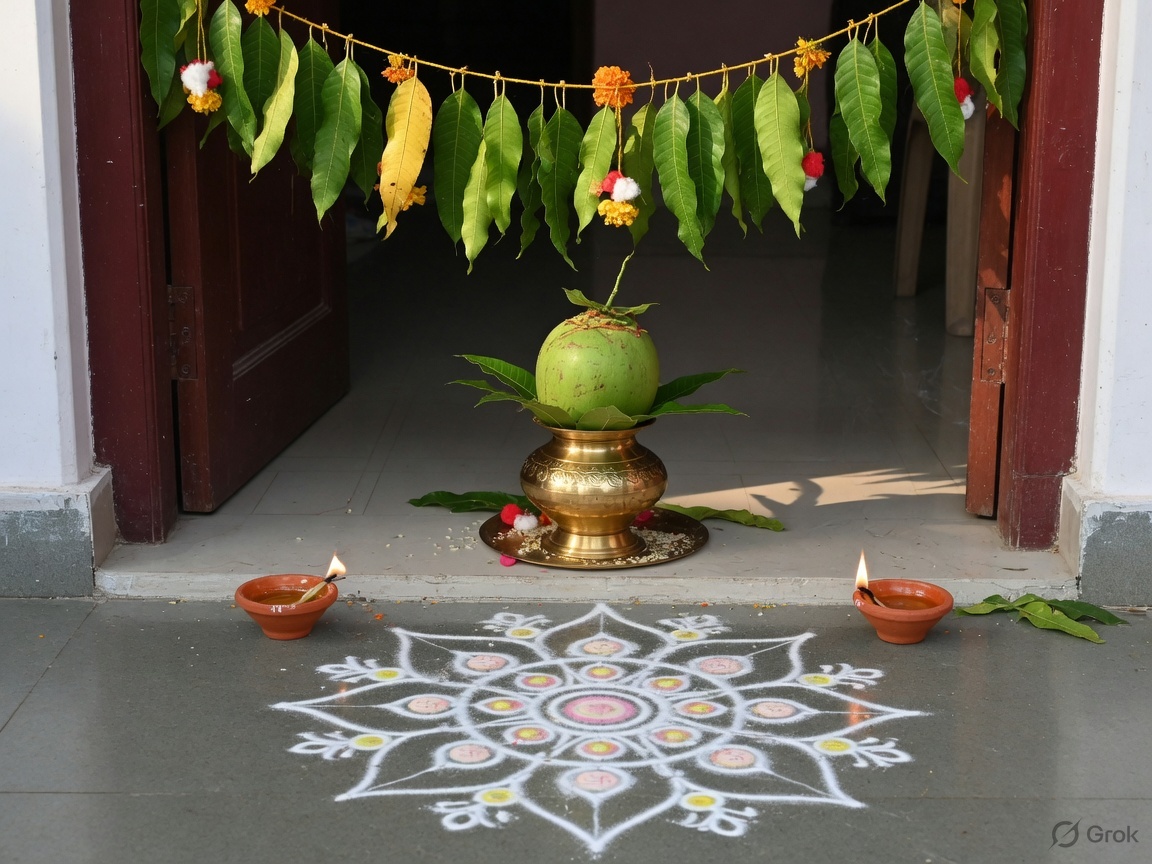
Griha Pravesh Puja on a chosen muhurat — Ganesh and kalash puja, vastu puja, the first entry, milk in the new kitchen and havan.
Bhoomi Pujan before Building a Home or Shop
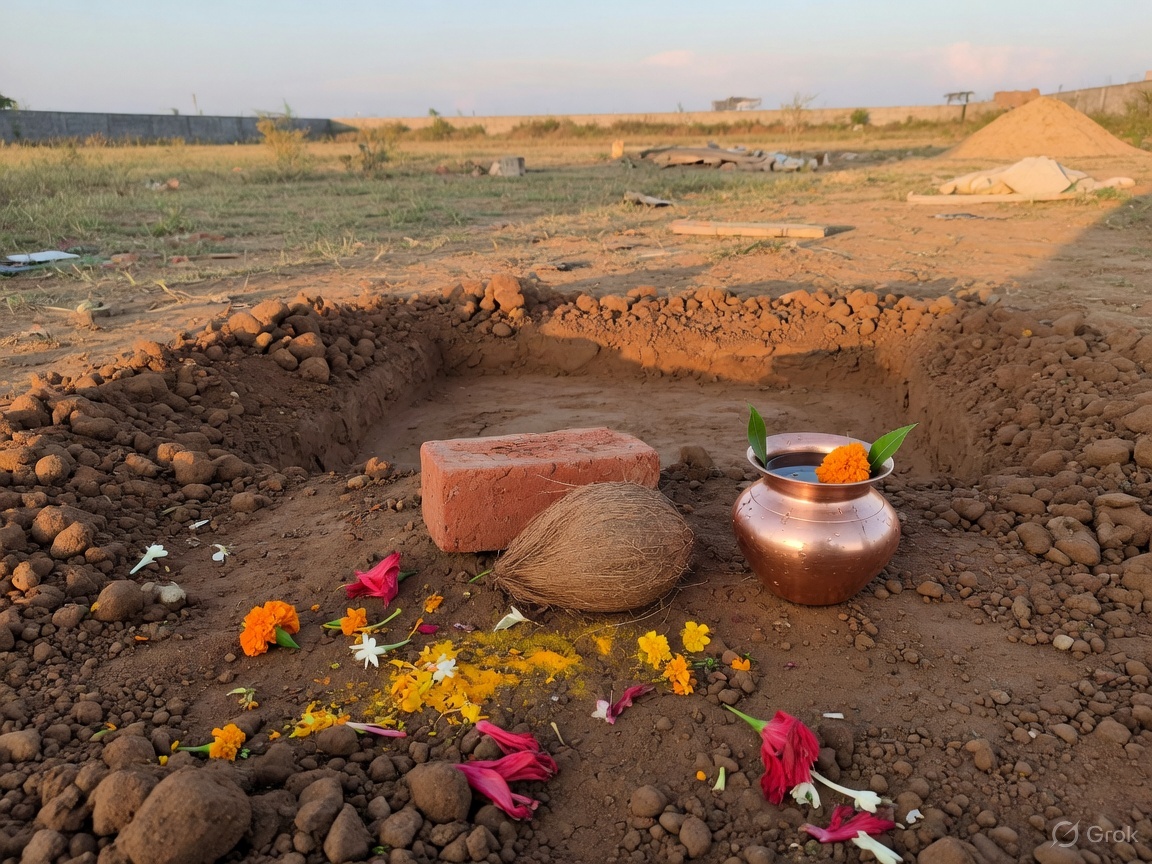
Bhoomi Pujan and shilanyas before construction — Ganesh, Prithvi and Vastu Purush puja, and the first dig in the north-east corner.
Namkaran Sanskar — Naming Ceremony by Nakshatra
The naming rite for a newborn at home — the nakshatra akshar, the puja, and the name first spoken by the father.