
Sanskar and griha puja
Griha Pravesh Puja for a New Home or Flat
Griha Pravesh Puja on a chosen muhurat — Ganesh and kalash puja, vastu puja, the first entry, milk in the new kitchen and havan.
Griha Pravesh Puja for a new house or flat, a return after long absence, or after rebuilding — Ganesh, vastu puja and havan, held at the home itself.
What this includes
- Muhurat for the entry from the panchang
- Dwar puja and entry with the right foot
- Ganesh puja, kalash sthapana and punyahavachan
- Navagraha and vastu puja
- Havan with vastu shanti ahutis
- Boiling milk in the new kitchen
Families usually plan a Griha Pravesh around the day everyone is free, and then ask me to fit a muhurat into it. Some have been told the opposite — that a house entered outside a narrow muhurat will never be peaceful. Neither is the tradition. Griha Pravesh is the household’s formal first entry into a dwelling. Ganesh and the kalash are worshipped, the Vastu devata and the devatas of the directions are honoured, a fire is lit, and milk is boiled in the new kitchen. It is a prayer for a settled, peaceful home. It is not insurance, and it does not decide the family’s fortunes in that house.
The three kinds of Griha Pravesh
The texts on muhurat distinguish three, and the kind decides how strictly the day is chosen.
- Apurva — the first entry into a new house or flat that no one has lived in. This is the full rite, and the muhurat is chosen most carefully.
- Sapurva — returning to one’s own house after a long absence: years of work in another city or abroad, or a house left closed.
- Dwandva — re-entering after renovation or rebuilding, often after damage from fire, flood or a collapse.
For sapurva and dwandva the tradition is more lenient about the month and the day, and the rite is usually shorter. The core — Ganesh, the kalash, the vastu puja and the first lamp — stays the same.
Flats as well as houses
A flat is a dwelling like any other, and the rite is the same. The main door of the flat is the door for the dwar puja. The flat’s own kitchen is where the milk is boiled. The havan is kept small — a metal kund on bricks, the windows open, the society’s smoke alarms discussed beforehand. A ninth-floor flat does not need a courtyard to be entered properly.
For a rented home many families keep a simpler pravesh — Ganesh, the kalash, a lamp and the milk — and that is a reasonable choice, not a lapse.
How the muhurat is chosen
I do not give a list of dates for the year. The muhurat is worked out for the family and the place. These are the considerations:
- The month. Magh, Phalgun, Vaishakh and Jyeshtha are traditionally favoured for a new house. Chaturmas — from Devshayani to Devuthani Ekadashi — is generally avoided, as are adhik maas and kharmas, when Surya is in Dhanu or Meen.
- Guru and Shukra should not be combust on the day.
- The nakshatra. Fixed and gentle nakshatras such as Rohini, Mrigashira, Chitra, Anuradha, Revati and the three Uttaras are preferred.
- The tithi and the day. The rikta tithis — Chaturthi, Navami, Chaturdashi — and Amavasya are avoided, and most families avoid Tuesday.
- The lagna at the moment of entry, a fixed sign where possible, and the Chandra bal and tara bal of the head of the household.
For sapurva and dwandva several of these are relaxed. Where every condition cannot be met on a date the family can actually keep, I say which have been met and which have not.
The vidhi, in outline
This is the order I follow for an apurva pravesh. Family custom may move one or two steps; the core does not change.
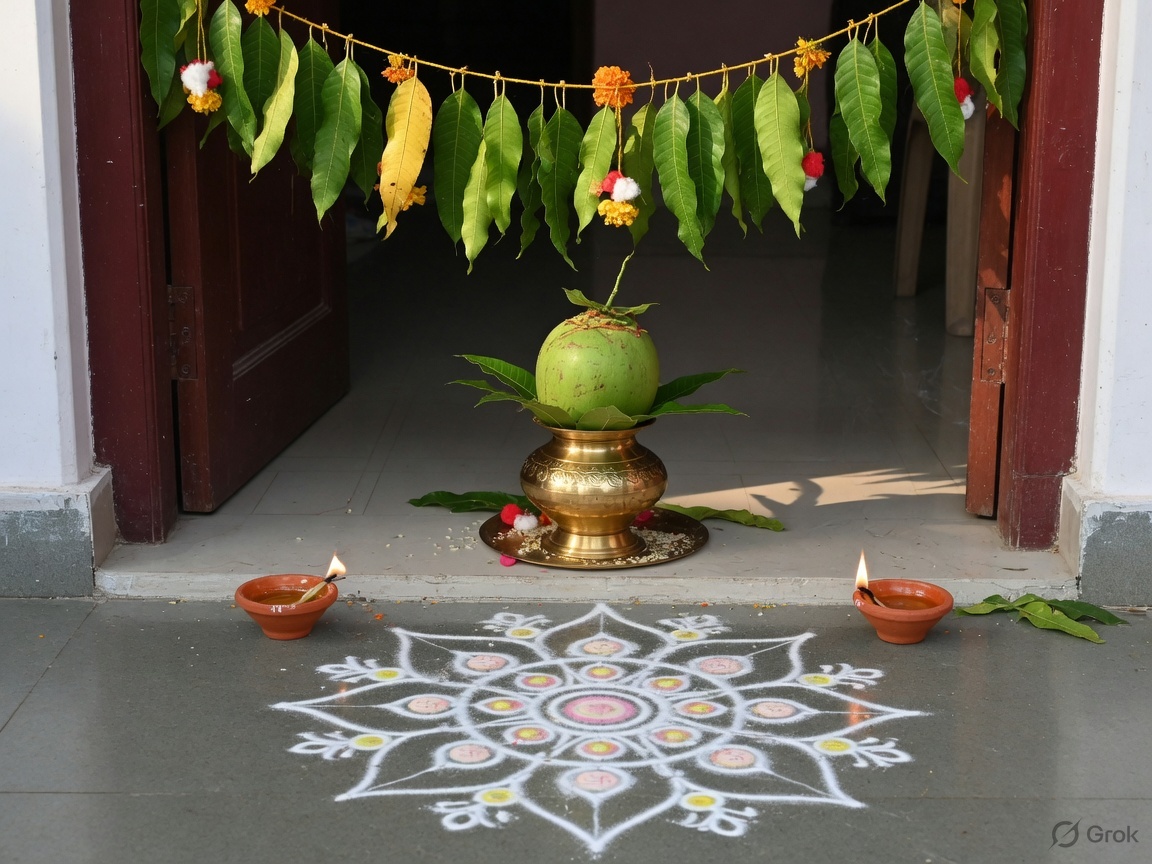
- Preparation — the house cleaned, the threshold washed, a toran of mango leaves at the door, a swastik and rangoli at the entrance.
- Sankalp and dwar puja — at the threshold, before anyone goes in, with the names and gotra of the household.
- Mangal pravesh — at the muhurat, with the conch sounded, the family enters with the right foot first. In many families the lady of the house carries the kalash of water, with mango leaves and a coconut on it, and the head of the house carries the family’s Ganesh or the image of the ishta devata.
- Ganesh puja, kalash sthapana in the north-east of the house, and punyahavachan.
- Navagraha puja and vastu puja — the Vastu Purush and the devatas of the directions invoked on a mandal and worshipped.
- Havan — vastu shanti and navagraha ahutis, closed with purnahuti.
- Milk in the new kitchen — the first flame is lit on the new stove and milk is boiled until it rises over the rim. Kheer or a sweet is made from it and offered to the deity first.
- Aarti, brahman bhojan or daan, and the household’s first meal in its own home.
Many families also keep the custom of not leaving the house empty on the first night. Where a family has its own kuldevta rite on entry, it is placed within this order.
Entering with the right foot, and the milk
Families sometimes worry about small details: who crosses first, which hand holds the kalash, whether the milk must spill towards the east. The right foot first is the common custom across North India, and I follow it. The milk rising over the rim is an old sign of plenty in the house, not a test the family can fail. If the flame is low or the milk does not spill neatly, nothing has been spoiled. What matters is that the first fire of the kitchen is lit with a prayer, and that the first food of the house is offered before it is eaten.
Vastu puja is worship, not a renovation order
A vastu puja honours the Vastu Purush and asks for a peaceful dwelling. It is not an inspection. I do not tell a family at their Griha Pravesh to break a wall or move a kitchen. If a family wants to think about vastu for a house that is still being built, that is a separate conversation, held with their architect and engineer in the room.
What the family arranges, and what I bring
I bring the paddhati, the mantras and the conduct of the puja. The samagri list, with what I arrange and what the family keeps ready, is shared on WhatsApp once the date is fixed. The family arranges the house itself: water and electricity running, the main door fitted, the kitchen able to light a flame, and a clean space for the vedi and the kund. Possession and the house’s paperwork are the family’s own matters. The puja does not stand in for them.
What I need from you
- The kind of pravesh — a new home, a return after absence, or re-entry after rebuilding.
- The address and city, and whether it is a house or a flat.
- The date of possession, and the dates on which the family can actually gather.
- Names and gotra, and if available the birth details of the head of the household, for Chandra bal and tara bal.
- Any family custom on entry — a kuldevta, a particular order for the kalash.
How it is held
Griha Pravesh is held at the house itself. I perform it in Sultanpur and the districts around it, and travel elsewhere in India. It cannot be done online: someone has to walk through the door. For families abroad who have bought or built a home in India, the muhurat is worked out on a WhatsApp or video consultation around the dates they can come, and the puja is held when they arrive. For a home outside India, I can work out the muhurat from that city’s panchang in a consultation; the rite itself needs a priest present in the house. Dakshina is discussed on WhatsApp.
Questions people ask
- Is a muhurat necessary for Griha Pravesh?
- For an apurva pravesh — the first entry into a new home — the tradition takes the muhurat seriously: the month, nakshatra, tithi, lagna and the householder’s Chandra bal. For a return after absence or a re-entry after rebuilding, it is more lenient. A muhurat is a considered choice of time, not a guarantee, and a house is not cursed because the family entered on a different day.
- Should we do Griha Pravesh in a rented flat?
- Many families do, in a simpler form — Ganesh puja, the kalash, a lamp and boiling milk in the kitchen — and some add a short havan. The full vastu shanti is usually kept for a home the family owns and means to live in. Either is a reasonable choice, made with the landlord’s and the society’s rules in mind.
- Is havan necessary in Griha Pravesh?
- In the full apurva pravesh, a havan with vastu shanti and navagraha ahutis is part of the rite. In a flat it is kept small — a metal kund on bricks, the windows open. Where a building does not allow a havan at all, I perform the puja with the kalash, the lamp and the mantras, and say plainly to the family that the havan has been left out.
- Can Griha Pravesh be done before the house is complete?
- The tradition expects the house to be ready to live in: the roof complete, the main door fitted, water and power running, and the kitchen able to light a flame. Entering a half-built house for the sake of a date means the milk is boiled on a borrowed stove. It is better to choose the next suitable muhurat after the house is finished.
- Can we move our belongings in before the Griha Pravesh puja?
- Custom varies. Many families bring in only the deity, the kalash and the kitchen essentials on the day, and move the rest afterwards. Others shift first for practical reasons, especially from another city. Neither spoils the rite. What I ask is that the kitchen is usable on the day and that the space for the vedi and the kund is clear.
- Duration
- 3–4 hours
- Where it is held
- At the new home
- Phone
- +91 94547 82346
Griha Pravesh Puja for a New Home or Flat
Book this serviceServices
Sanskar and griha puja
Bhoomi Pujan before Building a Home or Shop
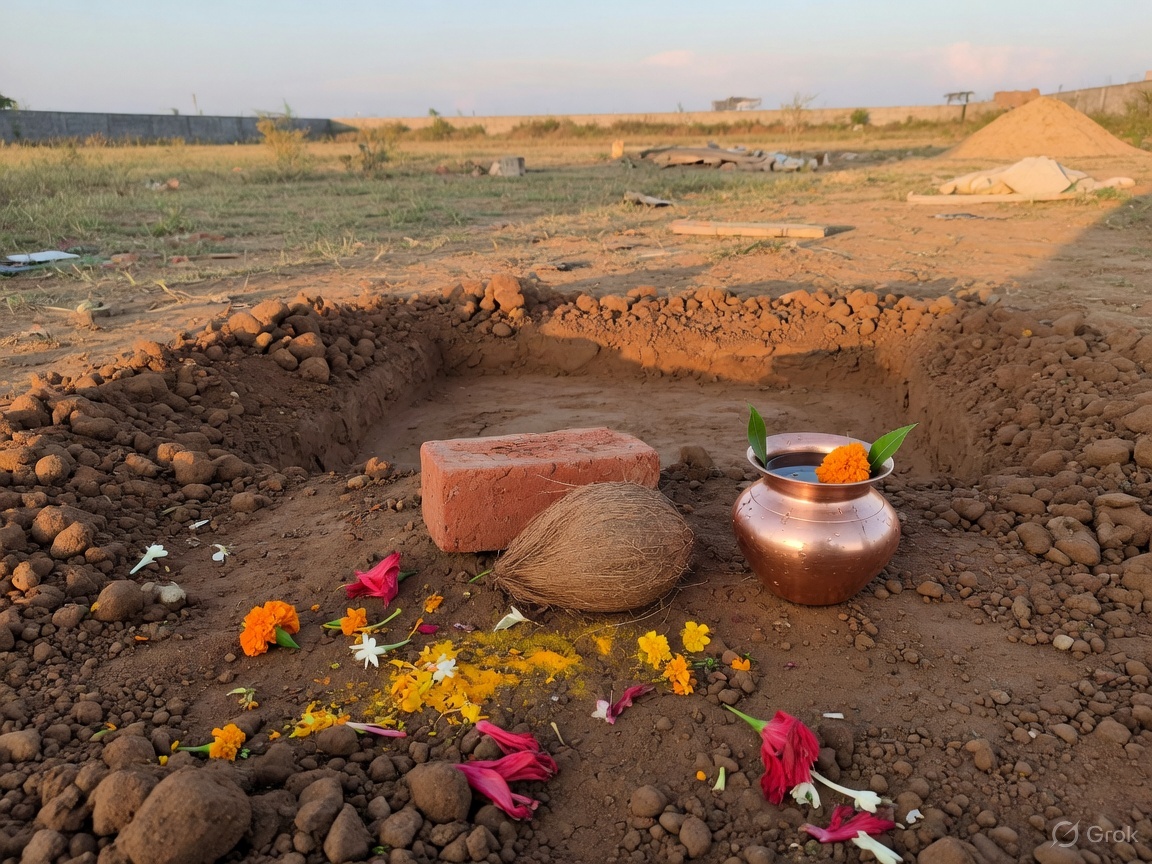
Bhoomi Pujan and shilanyas before construction — Ganesh, Prithvi and Vastu Purush puja, and the first dig in the north-east corner.
Vedic Vivah Sanskar (Hindu Wedding Rites)
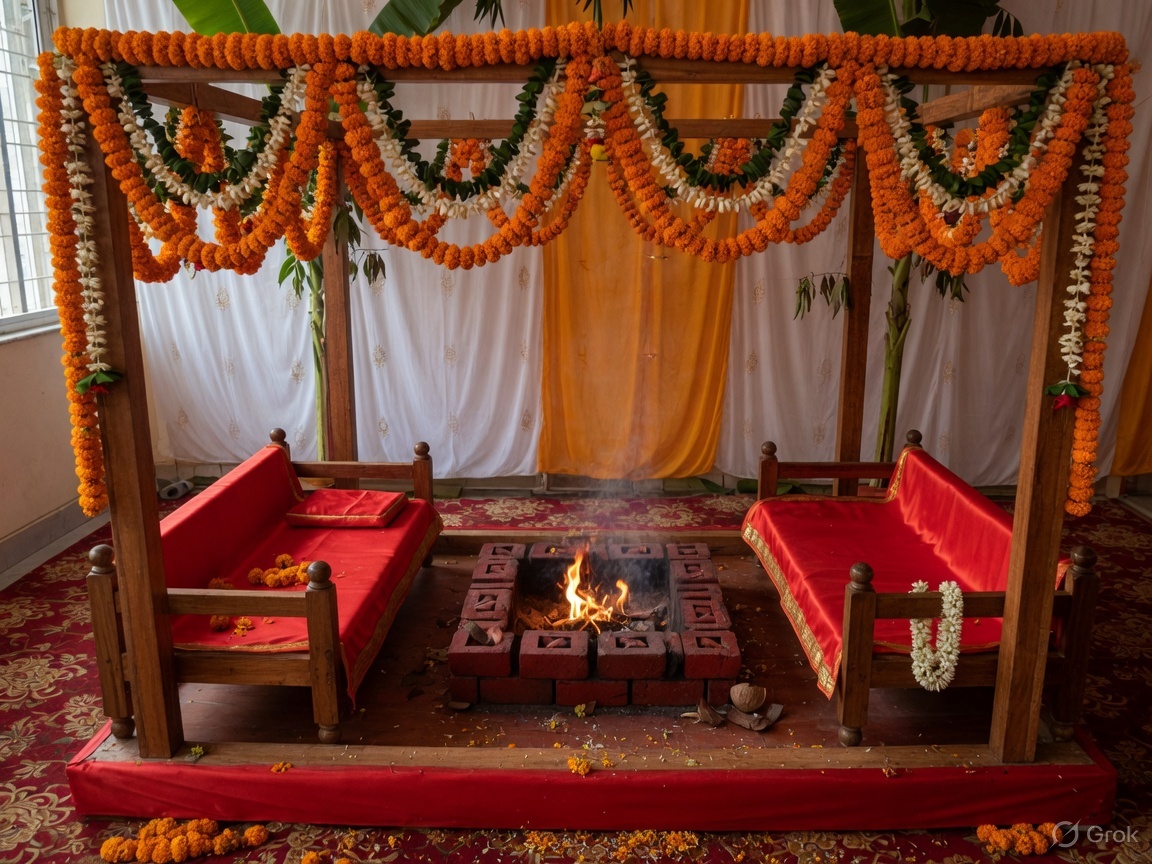
The Vedic wedding rites — dwar puja, kanyadaan, panigrahan, laja homa and saptapadi — performed in full order at the mandap.
Namkaran Sanskar — Naming Ceremony by Nakshatra
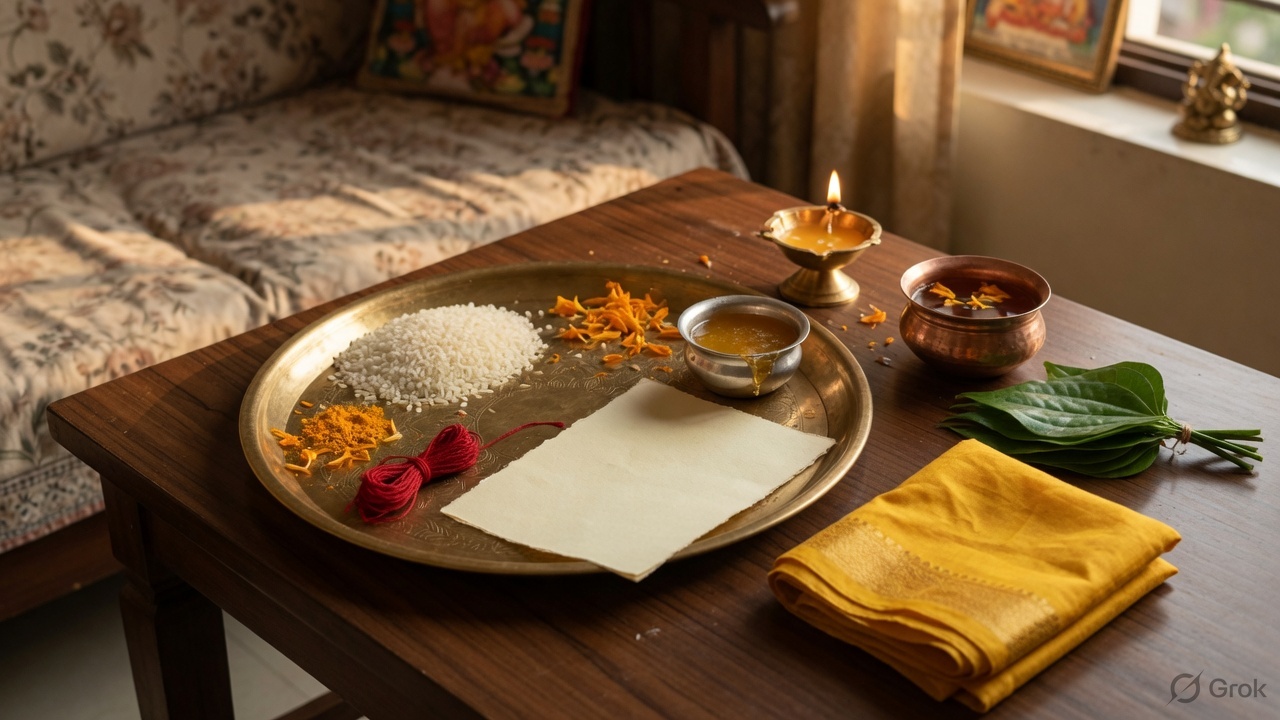
The naming rite for a newborn at home — the nakshatra akshar, the puja, and the name first spoken by the father.