
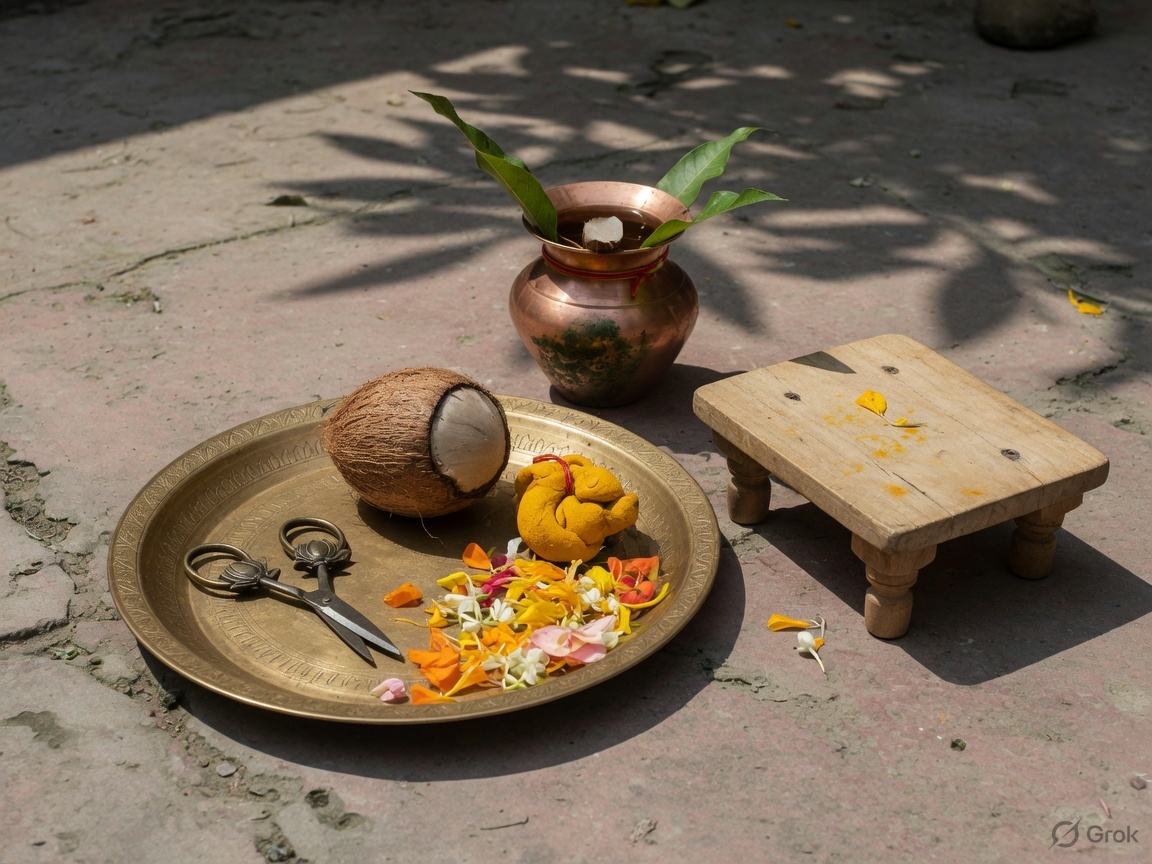
Sanskar and griha puja
Mundan Sanskar (Chudakarma) — First Haircut Rite
A child’s first haircut as a sanskar — muhurat, the puja before the first cut, and the hair offered as the family’s custom holds.
Mundan (Chudakarma) in the first, third or fifth year, at home, a tirtha or the kuldevta’s place: puja, the first cut with mantras, and the hair offered.
What this includes
- Muhurat from the Panchang and the child’s chart
- Sankalp, Ganesh puja and kalash
- The first locks cut with mantras
- Shikha kept as the family’s custom holds
- Havan, the hair offering and blessings
Families are often told that mundan is done to make the hair grow back thick, or to clear something carried over from a past birth, and that unless it is done at one particular temple the child will suffer. I hear both explanations every season. Chudakarma, the older name for mundan, is a sanskar of the household: the first time a child’s hair is cut, with sankalp, puja and mantras, in the year and at the place the family’s custom holds. It is not a hair treatment, and no child suffers because the family chose its own courtyard over a distant shrine.
The year of the mundan
Manu places chudakarma in the first or the third year, and the grihya sutras say much the same, adding that the family’s own custom may decide. In this region the practice is an odd year: the first, the third or the fifth, and in some families the seventh. Which one a household follows is usually settled by what was done for the father and the grandfather. I ask about that before I suggest anything.
In many Awadh households daughters have their mundan too, in the same odd years. In others only sons do, or a girl’s hair is trimmed rather than shaved. I follow the family’s custom and do not treat either as more correct.
Choosing the muhurat
Once the year is settled, the day comes from the Panchang and from the child’s chart. I look at the tithi, the vaar and the nakshatra, and at the child’s Chandra bal. The Rikta tithis — Chaturthi, Navami and Chaturdashi — and Amavasya are usually avoided, and many families prefer the Shukla paksha. Most also avoid Kharmas and the months of Chaturmas, as they would for other sanskars.
Chaitra and Sharad Navratri are popular for mundan at Devi shrines across Purvanchal. If that is the family’s custom, I choose the day within the Navratri. I do not publish mundan dates for the year. The right day depends on the child, the family’s custom and the place, and the place often decides more than families expect, because travel to a tirtha has to be planned around the muhurat, not after it.
Where it is held
A mundan is commonly held in one of three places, and the family’s custom usually decides among them:
- At home, in the courtyard or the room where the family worships, with the kuldevta remembered at the start.
- At a tirtha. Ganga ghats such as those at Prayagraj, Kashi and Haridwar have long been chosen for mundan, and Vindhyachal is a Devi kshetra many families of Purvanchal travel to for it.
- At the place of the kuldevta or kuldevi, where the family’s earlier generations had theirs.
The place should follow the custom, not a fear. If the custom is a distant shrine and the journey is hard this year, I would rather the family wait for the next sound muhurat than rush a small child across the state. Where the family asks, I travel to perform the rite at the tirtha or the kuldevta’s place, keeping to whatever that place’s own custom requires.
How the rite is performed
The rite takes about an hour and a half. The mother sits beside the father with the child in her lap, and the sequence I follow is this:
- Sankalp. The father takes the sankalp for the child’s chudakarma, naming the family, the gotra, the tithi and the place.
- Ganesh puja and kalash sthapana, with the kuldevta remembered. Where the family keeps them, the matrika puja and the Nandi shraddh follow.
- Preparing the hair. The hair is moistened with warm water while the mantra is recited. The grihya sutras describe blades of kusha being set in the hair before the cut.
- The first cut. The father, or whoever the family’s custom names, cuts the first locks with the mantras. The barber then completes the shave slowly, with the child held.
- The shikha. A small tuft is left at the crown where the family’s custom keeps a shikha.
- Receiving the hair. In many Awadh households the bua, the father’s sister, receives the hair in the fold of her sari. It is kept together for the offering.
- Bath and havan. The child is bathed and dressed in new clothes, and a short havan is held, with the fire kept away from the child.
- Ashirvad, and the offering of the hair.
The offering of the hair
The classical manuals describe the hair being placed in cow dung and buried in a cowshed or near water. Most families today offer it into the Ganga or another river, or leave it at the shrine where the mundan was done, as that shrine’s custom asks. A few bury it at the root of a tree. Whatever the custom, the hair is handled with respect and not thrown out with the day’s rubbish.
Karnavedha on the same day
Some families join the karnavedha, the piercing of the ears, to the mundan. It is a separate sanskar with its own muhurat considerations. If the family wishes to hold both together, I say so when I fix the date, and the piercing is done by someone the family trusts.
Caring for the child on the day
A mundan is done to a small child who did not ask for it. Most of what makes the day go well is ordinary care:
- Choose a time of day when the child is usually calm and has eaten.
- Find a barber the family trusts, with a new blade, who works slowly.
- Let a parent hold the child throughout, and keep a familiar toy or voice close.
- After the bath, keep the head covered from strong sun.
- If the child is unwell, or has any scalp or skin trouble, move the date and ask your doctor. The sanskar can wait.
What the family arranges, and what I bring
The family arranges the barber, the place, new clothes for the child, any offering the kuldevta’s custom asks for, and the samagri. I share the samagri list on WhatsApp once the date is fixed. If the mundan is at a tirtha, the family plans the journey and the stay; I tell them how much time the rite needs so the travel can be arranged around it. I bring the vidhi — the sankalp, the mantras and the order — and I explain each step to the family as it happens.
What I need from the family
- The child’s date, time and place of birth, for the muhurat.
- Which year the family’s custom follows, and whether a shikha is kept.
- Where the mundan is to be held, and any rule of that place the family knows of.
- Whether karnavedha is to be joined to it.
- The dates the family can travel, if the rite is away from home.
Where it is held
I perform mundan at home in Sultanpur and the districts around it, and I travel elsewhere in India, including to a tirtha or kuldevta’s place the family chooses. A mundan cannot be done online; the child has to be there, in front of the fire and the barber. For families living abroad, the year and the muhurat can be worked out on WhatsApp or a video call, and many hold the mundan when they next come to India — in the next odd year, if the first has passed.
Questions people ask
- At what age should Mundan be done?
- In an odd year — the first, third or fifth, and in some families the seventh. Manu and the grihya sutras name the first or third year and leave room for the family’s own custom. Most households follow what was done for the father and grandfather. If that year has passed, the next odd year is chosen, with the day taken from the Panchang and the child’s chart.
- Can Mundan be done at home instead of a temple?
- Yes. A home mundan with sankalp, Ganesh puja, the first cut with mantras and a short havan is a complete chudakarma. Tirthas and kuldevta shrines are chosen because a family’s custom points there, not because a home rite is lesser. If your custom names a shrine and travel is hard this year, wait for a sound muhurat rather than rush a small child.
- Is Mundan done for girls too?
- In many households of this region, yes, in the same odd years as sons. In others only sons have a mundan, or a daughter’s hair is trimmed rather than shaved. Both are living customs. I follow the family’s practice, perform the same sankalp and puja where the family wants a daughter’s mundan, and do not treat either custom as more correct.
- What should be done with the hair after Mundan?
- Most families offer it into the Ganga or another river, or leave it at the shrine where the mundan was done, as that shrine’s custom asks. The classical manuals describe burying it in cow dung in a cowshed or near water, and some families bury it at the root of a tree. Whatever the custom, it is handled with respect, not thrown away.
- Can Mundan be done during Navratri?
- Yes. Many families in Purvanchal choose Chaitra or Sharad Navratri for a mundan at a Devi shrine, and that is a long-standing custom. The day within the Navratri is still chosen from the Panchang and the child’s chart. If the family’s custom is a mundan at home or at another shrine, Navratri is not required, and any sound muhurat in the right year will do.
- Duration
- About 1.5 hours
- Where it is held
- At home, a tirtha or the kuldevta’s place
- Phone
- +91 94547 82346
Mundan Sanskar (Chudakarma) — First Haircut Rite
Book this serviceServices
Sanskar and griha puja
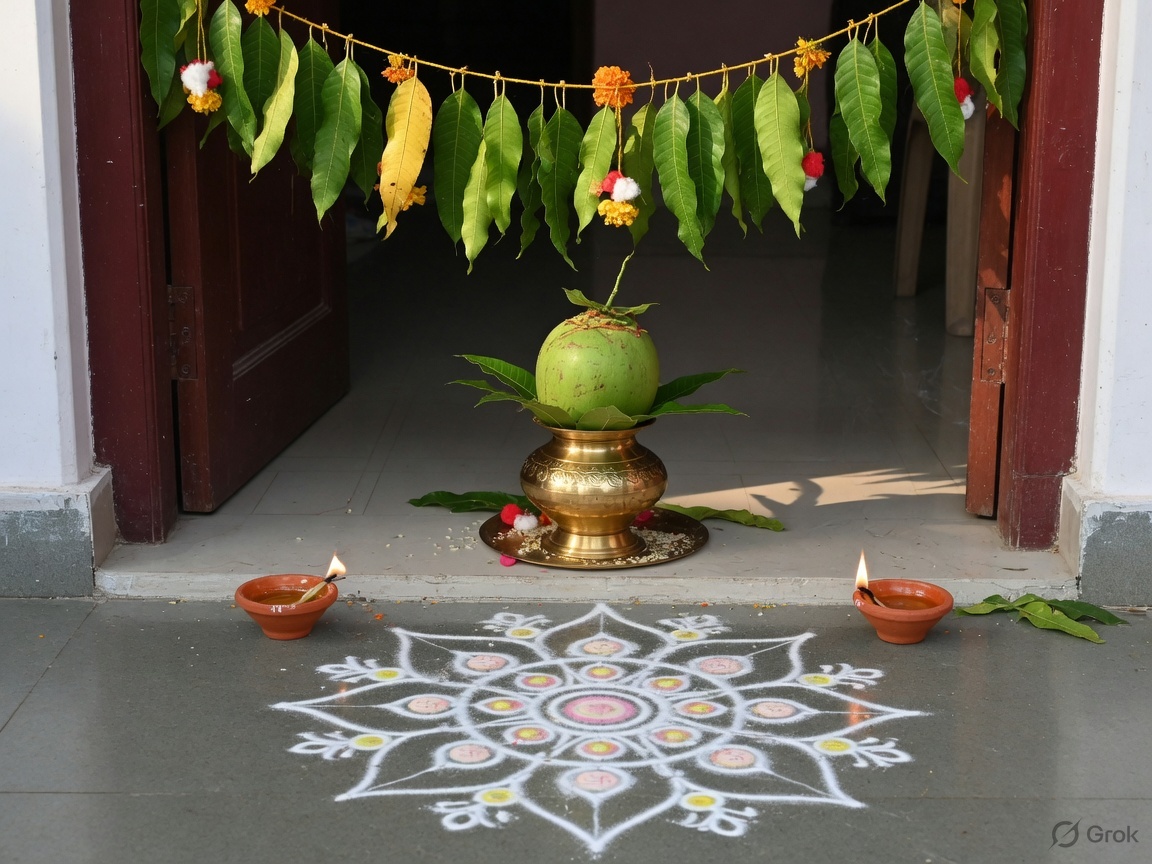
Griha Pravesh Puja for a New Home or Flat
Griha Pravesh Puja on a chosen muhurat — Ganesh and kalash puja, vastu puja, the first entry, milk in the new kitchen and havan.
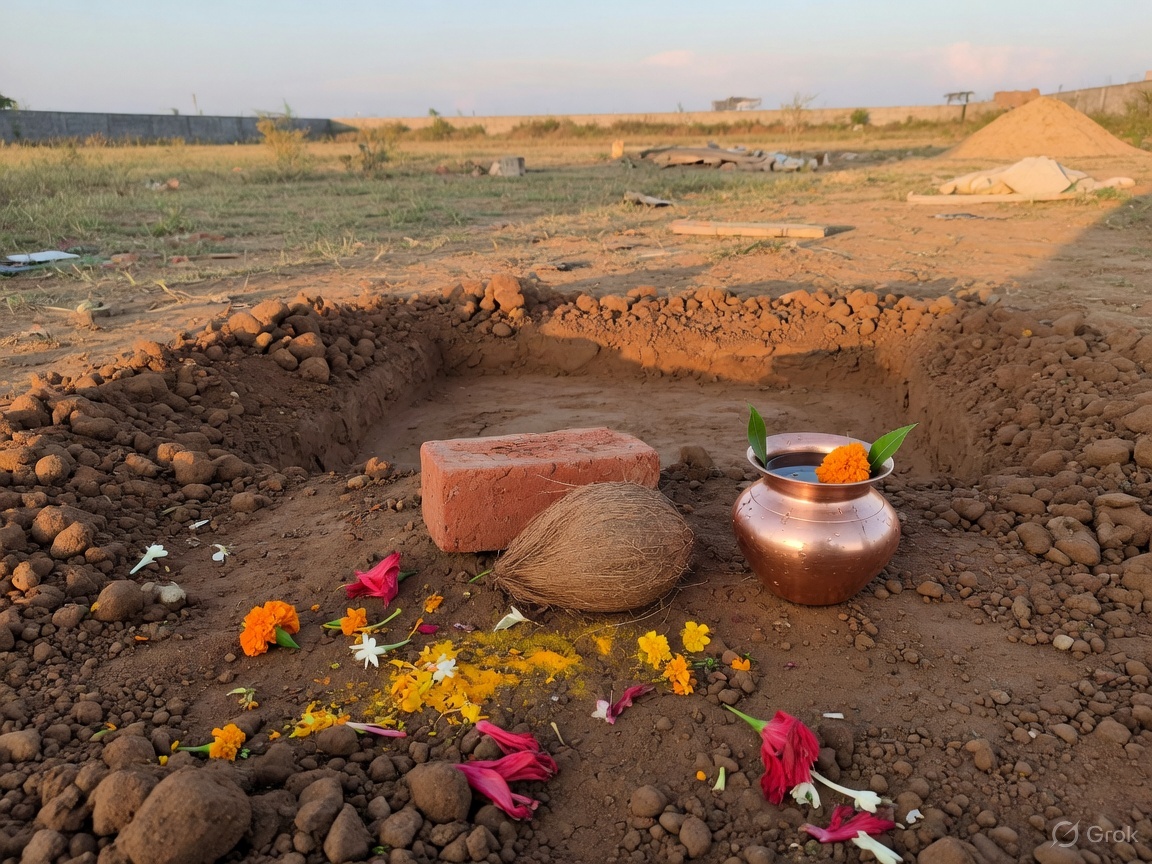
Bhoomi Pujan before Building a Home or Shop
Bhoomi Pujan and shilanyas before construction — Ganesh, Prithvi and Vastu Purush puja, and the first dig in the north-east corner.
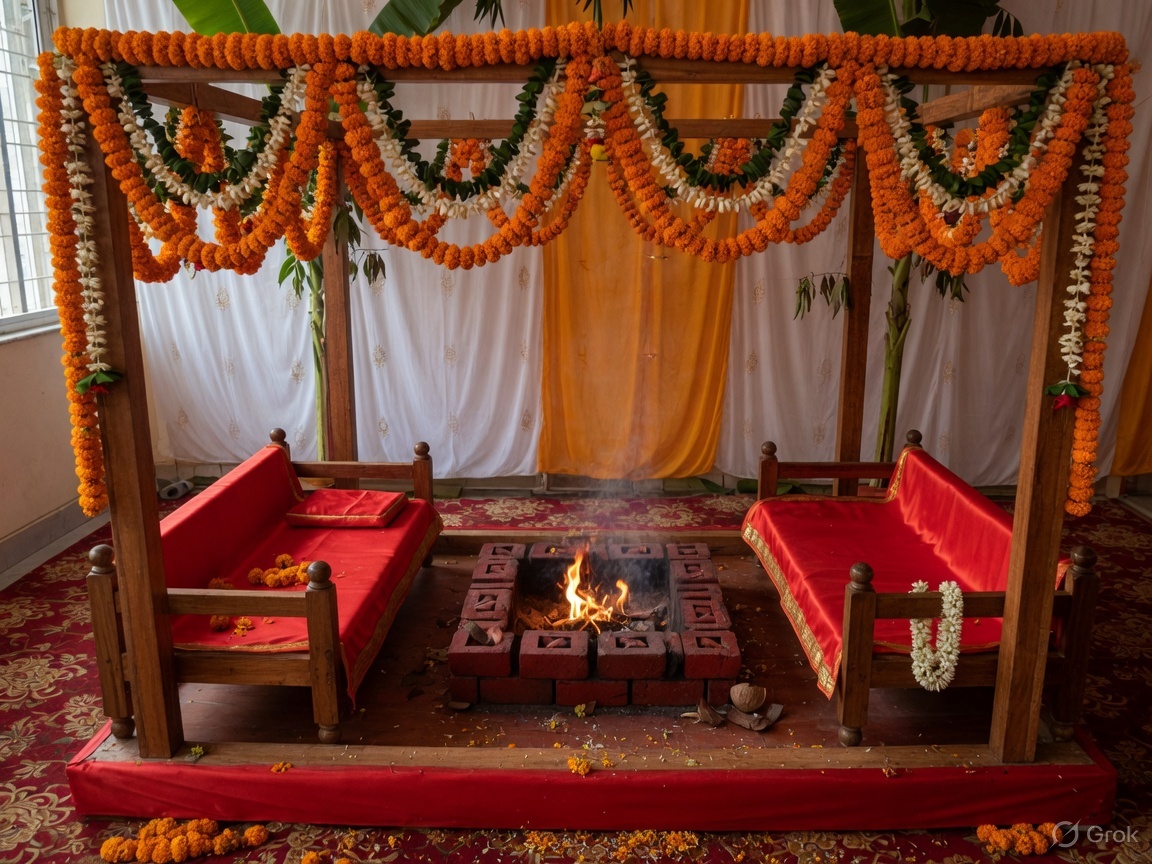
Vedic Vivah Sanskar (Hindu Wedding Rites)
The Vedic wedding rites — dwar puja, kanyadaan, panigrahan, laja homa and saptapadi — performed in full order at the mandap.