
Ahoi Ashtami in Nepal 2026 — before Tihar, on Kathmandu's own sky
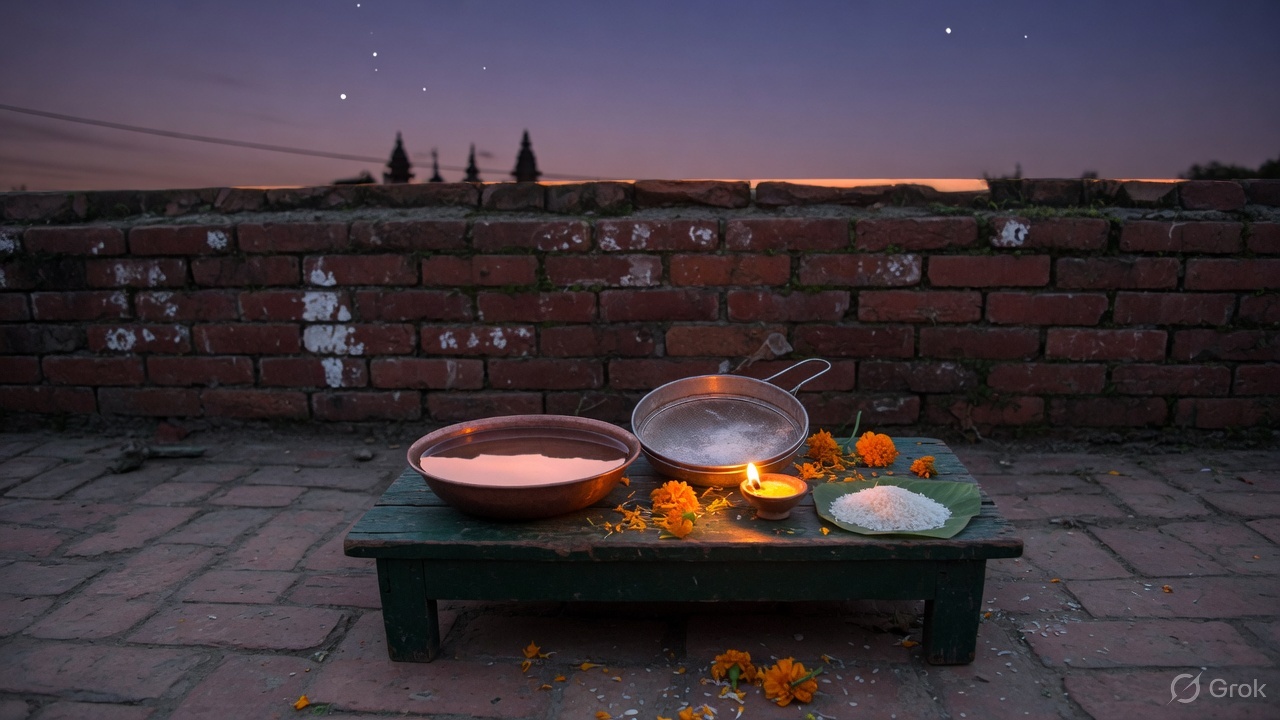
Published: 21 October 2026 · Acharya Krishna Kant Shrimukh Shandilya Ji Maharaj · 8 min read
Ahoi Ashtami in Nepal is the same Kartik Krishna Ashtami a courtyard in the Tarai already knows, kept by a mother for the children of the house, broken when the evening stars are actually in that sky. What gets forwarded into a Kathmandu flat is usually a Lucknow reel: a moon, a lehenga that belongs to Karwa Chauth, and a promise that the fast will keep a child from harm. Ahoi is none of those. It is not Dashain. It is not Tihar. It sits in the quiet days before Tihar begins, and the sky it wants is the sky over the roof you are standing on.
I am writing this on 21 October 2026. I am based in Sultanpur, in India. I do not keep a house in Kathmandu, and I will not invent one. Families write from Kathmandu, Lalitpur, Bhaktapur, Birgunj, Janakpur and the towns of the Tarai asking whether the Indian date is their date, whether Sunday is a holiday, and whether a Delhi star-time plus fifteen minutes is Nepal. On the working panchang I use, the vrat is Sunday 1 November 2026. Karwa Chauth is Thursday 29 October. Nepal's Tihar, with Laxmi Puja in the same cluster as Diwali, follows in the next week — Laxmi Puja on Sunday 8 November on that same working sheet, then Govardhan and Bhai Tika. Ahoi is the evening before that week fills. Do not fold its sankalp into Tihar. A lamp for Laxmi on the 8th is a different evening from water offered to the stars on the 1st.
The clock, and why 'IST plus fifteen minutes' still misses Kathmandu
Nepal Standard Time is fifteen minutes ahead of Indian Standard Time. That sentence is true, and it is the sentence that makes people late. Kathmandu sits east of Delhi and of Lucknow. The sun does not wait for a north-Indian screenshot and then add a quarter of an hour. Longitude moves the sky. The clock moves the wrist. They are not the same correction. A mother who breaks her fast because a cousin in Sultanpur has texted 'stars are out' may still be looking at a bright valley haze, or she may already have missed her own first star while she was doing the arithmetic.
On the morning of Sunday 1 November, open one panchang set to Kathmandu if you are in the valley, or to your own town if you are in Birgunj, Janakpur, Nepalgunj or Biratnagar. Write sunset and the note 'stars after the sky actually darkens' on a paper. Put the phone face-down. Do not reopen a second site at dusk because it printed a prettier minute.
Why Sunday the 1st, in a year when sunrise is still Saptami
On the working sheet I use for the Indian plains, Krishna Ashtami begins on the afternoon of 1 November — about 2:52 p.m. IST — and runs into the early afternoon of the 2nd. At sunrise on the 1st the tithi is still Saptami. Nepal's sunrise is its own, a quarter-hour of clock and a sky further east, so do not copy my Delhi minute into a Kathmandu argument. Copy the shape of the argument. A rule that names the day only by the tithi at sunrise can call Monday the Ashtami. The Ahoi the Tarai houses keep, and the Ahoi I keep, is named by the evening. The stars of Sunday evening fall inside Ashtami. That is why I place the vrat on Sunday 1 November 2026, and why I ask a Nepali household to confirm that their own evening does the same before they paint the wall.
If your elders have always kept the sunrise Ashtami, and their sheet puts the vrat on Monday, keep Monday and tell the house on Saturday. A family that changes the day at 3 p.m. on Sunday, because a group chat has split, keeps neither day well.
Sunday is not automatically a holiday
In much of North India this Sunday is a weekly off, and the mother is already home. In Nepal many government offices work on Sunday. Saturday is the weekly holiday that replaced the old Saturday-Sunday weekend. Schools do not all follow the office. A child may be in class while the mother is at a desk in New Road or in a hospital in Biratnagar. Plan the vrat as a working day until your own institution says otherwise. The stars arrive whether the office closed or not.
Eat before sunrise if your body needs a morning meal, or begin the fast as your house has always begun it. Many mothers take nothing from the morning onward until the stars. A woman who is pregnant, ill, or under a physician's instruction eats. The valley's stairs and a Tarai afternoon are both capable of putting a fasting body on the ground. The vrat is not proved by a fall.
Valley and Tarai are not one courtyard
In the Tarai — Birgunj, Janakpur, the towns that share a language and a lane with Bihar — the evening looks like the evening I know: a patch of wall, Ahoi Mata drawn in geru or a clean printed image where the landlord's paint forbids the drawing, a kitchen sieve, water offered to the stars, then puri or a sweet and the family meal. That is the form. I will not dress it in a costume it does not wear.
In Kathmandu valley the same vrat is often quieter, kept by Madhesi families and by houses that follow the north-Indian panchang, inside a flat that has no courtyard wall worth drawing on. A picture on a low table, the sieve, a bowl of water, a lamp, a window that can actually see sky — that is enough. This is not a Newar jatra, and I will not invent a Guthi, a procession, or a named temple in order to make the page sound local. If your house has its own priest and its own way, follow that house. What I can tell you is the evening the north-Indian and Tarai mothers keep, and the mistakes that arrive by WhatsApp from India.
Haze sits in the valley in early November. The first star is a sighting, not a notification. Step away from the tube-light. A balcony above the brick, a roof, a dark lane — somewhere the eye can work. If cloud covers the sky, wait until a star is honestly seen, or follow the elder of the house who has already decided what a covered sky means in your family. Do not break the fast on a photograph of a star over Lucknow.
The katha, without a promise
The story is a mother's loss and a vrat kept until the evening sky. Versions differ. I will not stitch them into one official Nepal text, because that text is not what the houses are keeping. The shape is enough: grief, a sieve, stars, and a telling in which the child is restored. Then the sentence I say in every country. The story is not a contract. It does not return a sick child. It does not fill a womb. It does not rank a son over a daughter. Older verses say sons. The vrat, as I speak of it, is for the children of the house. Anyone who sells Ahoi as insurance against illness or accident is selling fear, in Kathmandu as in Sultanpur.
Tihar comes after. Leave it alone.
The week after Ahoi belongs to Tihar: the crows, the dogs, Laxmi on the evening of the 8th, the mountain of food, Bhai Tika. Houses that are already tired from Dashain will try to fold Ahoi into the shopping for Tihar. Let the shopping wait a day. Ahoi's thali is small. Water, a sieve, a lamp, food the kitchen can cook. The rangoli and the many lamps of Laxmi Puja are a different sankalp. A mother who keeps both evenings honestly is not keeping one long festival. She is keeping two.
What a reading from me can and cannot be
You do not need me in the room. A mother who knows the stars can keep the day. If you want the date read against Kathmandu or Birgunj because a journey, a school exam or a Tihar booking is sitting on the same Sunday, write on WhatsApp, in Nepali or Hindi, and name the city. There is no online payment. Dakshina, if any sitting is arranged, is spoken before the day. The three honest forms are the same as everywhere else I work: travel when a date is truly fixed, a sitting in India if the family comes, and a live link when the wall is in Nepal and the voice can still be heard in the room. I will not pretend a flight is part of the vrat.
Questions people ask
Is Ahoi Ashtami celebrated in Nepal?
Yes, above all in Tarai households and in families who keep the north-Indian calendar. It is not Dashain and it is not a Newar jatra. Tihar is the festival that follows it.
What is the date in 2026?
Sunday 1 November 2026, on the evening rule I use. Confirm with a panchang set to your town that morning. A sunrise table may say Monday.
Can I add fifteen minutes to an Indian star-time?
No. Nepal's clock is fifteen minutes ahead of India's. Kathmandu's sky is also further east. Use a sheet made for your city.
Is Sunday a holiday?
Not for many government offices. Saturday is the weekly holiday. Schools vary. Plan the fast as a working day until you know your own timetable.
Must we wait for the moon?
The ordinary close is the evening stars, with water through a sieve. A few houses wait for a late moon. Know which house you are before dusk.
Share the service and a preferred date. You will get a WhatsApp message to confirm. No account needed.
Book ConsultationRelated
Read next
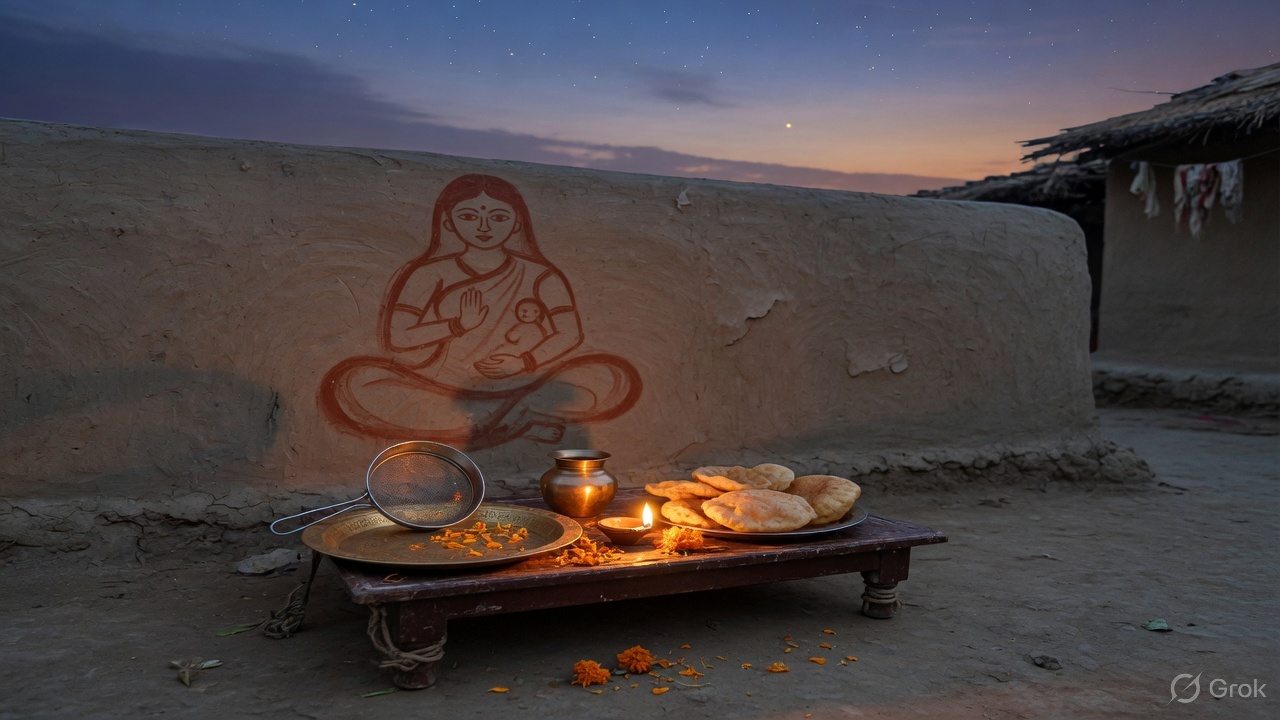 Ahoi Ashtami in India 2026 — Sunday 1 November, stars and not the moonAhoi Ashtami 2026 is Sunday 1 November. In a North Indian house the fast breaks at the evening stars, the wall carries Ahoi Mata, and the vrat is a mother's niyam — not a promise about a child.Read the article
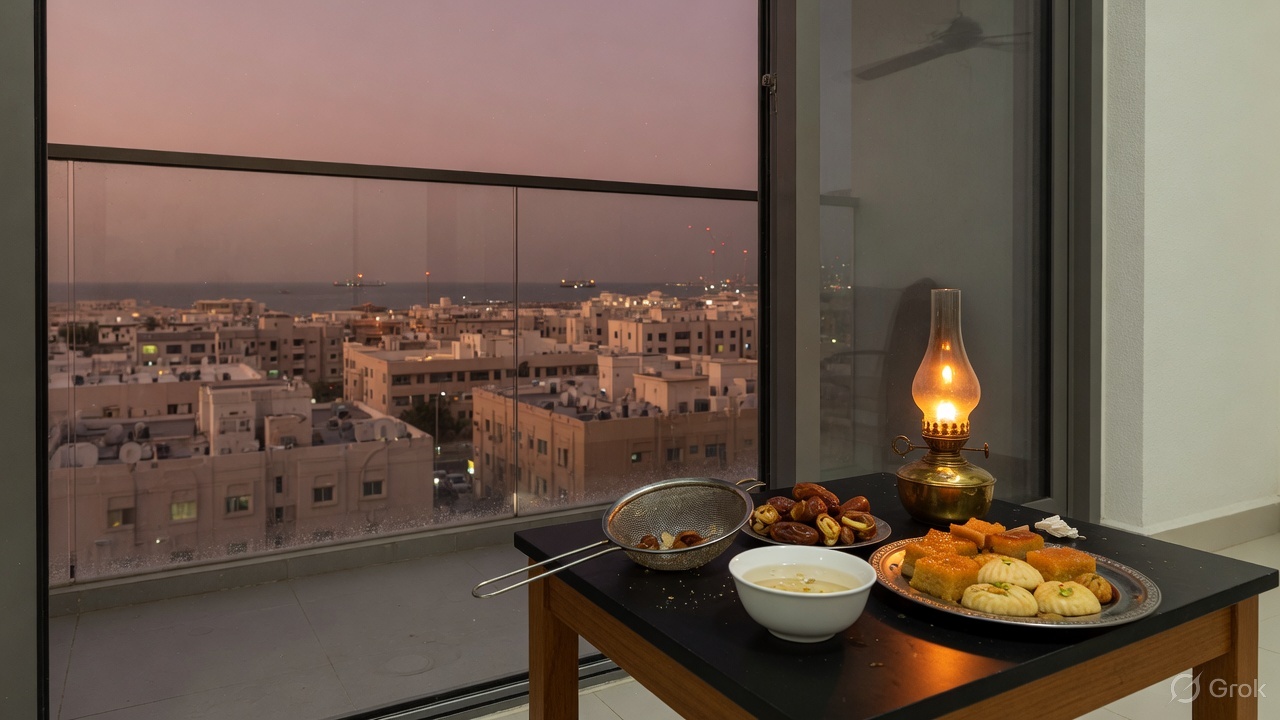 Ahoi Ashtami in the UAE 2026 — a working Sunday, and a sky that is not Dubai-onlyAhoi Ashtami 2026 is Sunday 1 November, a working day across the UAE. Gulf Standard Time is not Indian time minus ninety minutes, and Abu Dhabi's stars are not a Dubai screenshot.Read the article
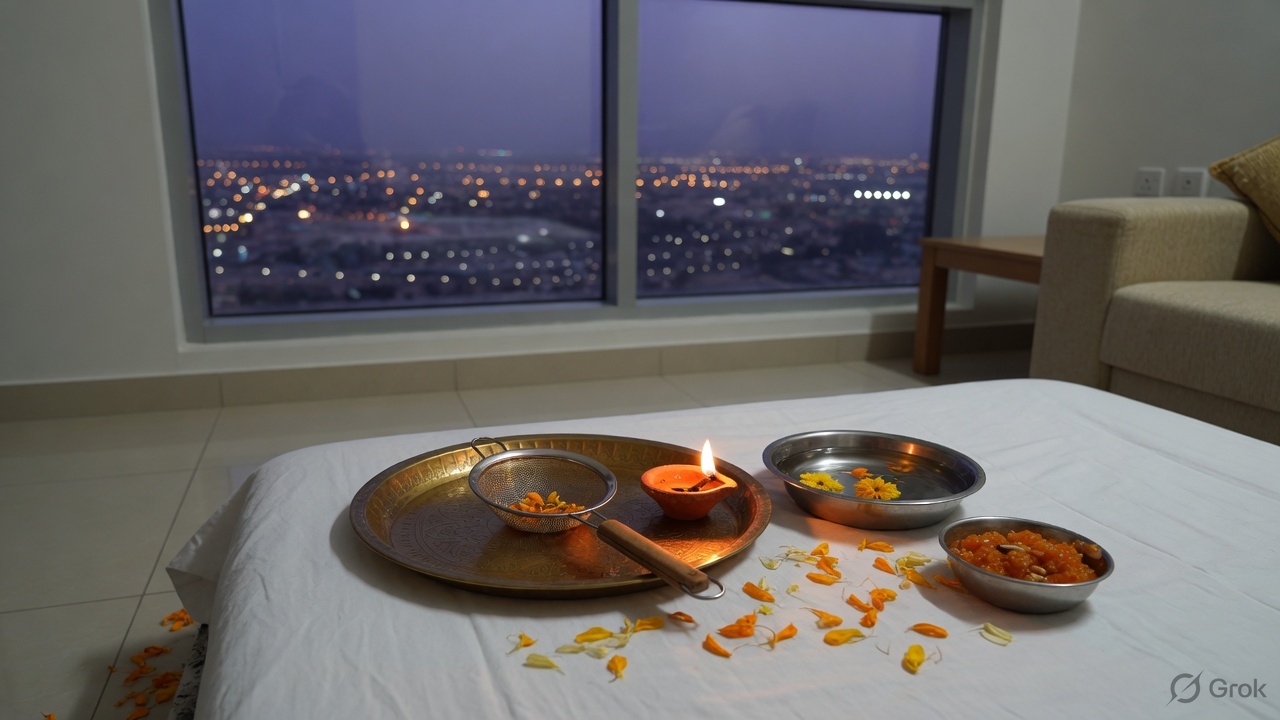 Ahoi Ashtami in a Dubai flat 2026 — the sieve, the window, a working SundayAhoi Ashtami 2026 in Dubai is Sunday 1 November, a school day. The fast breaks at stars seen from that window, not at a Lucknow moon, and the thali has to live with the smoke detector.Read the article