
Ahoi Ashtami in the UAE 2026 — a working Sunday, and a sky that is not Dubai-only
Published: 21 October 2026 · Acharya Krishna Kant Shrimukh Shandilya Ji Maharaj · 7 min read
Ahoi Ashtami in the UAE is the Ashtami of Kartik's dark fortnight, kept by a mother for the children of the house, released when the stars of that emirate are actually visible. The search that arrives in my WhatsApp is usually one word, 'Dubai', pasted over seven cities. Abu Dhabi, Dubai, Sharjah, Ajman, Umm Al Quwain, Ras Al Khaimah and Fujairah do not share a balcony. They share a clock, Gulf Standard Time, and a Sunday that is a working day. The vrat is not a Dubai festival that the rest of the country watches. A mother in Sharjah who waits for a Jumeirah story, or a mother in Abu Dhabi who subtracts ninety minutes from a Lucknow star, is using someone else's sky.
I am writing this on 21 October 2026. I live in Sultanpur. I do not live in the Gulf, and a page will not pretend otherwise. On the working panchang I use, Ahoi Ashtami is Sunday 1 November 2026. Karwa Chauth was the Thursday before, 29 October, and a separate article on this site is that moon in Dubai. Diwali's Lakshmi Puja is Sunday 8 November, Dhanteras Friday 6 November. Ahoi is the Sunday between them. Another article is the same vrat inside a Dubai flat — the room, the detector, the window. What follows here is the country: which clock, which city, and why a single 'UAE time' printed on a foreign website is how the fast gets opened too early or held too long.
Sunday is an office day
The UAE weekend is Friday and Saturday. Sunday 1 November 2026 is an ordinary working day in Abu Dhabi and in every other emirate. Schools run. Sites run. Hospitals run. The Indian habit of a free Sunday does not travel with the suitcase. A mother who plans the vrat as a holiday will meet a school run and a desk, and will then decide at noon that the vrat was a mistake. Plan it on Saturday night as a working fast.
There is no ceremonial pre-dawn sargi of the Karwa kind unless your own house has added one. Ahoi, as the lanes I know keep it, begins at sunrise. If the body needs food before the day, eat before sunrise, sitting down, not a biscuit in the car. Then the fast runs through the office until the stars. People who are pregnant, ill, on a physician's instruction, or already faint by culture of a Gulf afternoon, eat. An air-conditioned lobby is still a long day without water. The vrat is not a prize for being driven home.
GST is not IST minus ninety minutes, and the emirates are not one sunset
Gulf Standard Time is one and a half hours behind India. That corrects the wristwatch. It does not correct the sky. A star seen in Sultanpur at six in the evening Indian time is not half past four in Abu Dhabi. Longitude is the rest of the sum, and haze, and the floor you live on. Families open the fast at the Indian moment minus ninety minutes and then sit guilty because the sky outside the window is still blue. Other families wait for a Delhi moon near midnight because a reel joined Ahoi to Karwa. Both errors are common across the emirates. Both are avoidable.
Early November sunsets on the UAE coast fall in the late afternoon on Gulf time. I will not print a minute in October and call it your balcony. On Saturday 31 October, or on Sunday morning, open one panchang set to your city — Abu Dhabi is not Dubai, Sharjah is not Ras Al Khaimah, Fujairah looks the other way to the Gulf of Oman. Write sunset. Write 'stars when I can see them, after the sky darkens'. If your mother's house in India waits for the moon, write that too, and look up that city's moonrise, which will be late. Then close the other tabs.
A few minutes separate the coastal emirates. They are real minutes if you are standing on a balcony trying to be exact, and they are not a reason to keep two fasts. Pick the city you are sleeping in. A woman who works in Dubai and sleeps in Sharjah keeps Sharjah's sky if the sieve is lifted at home, and Dubai's sky if she is still in the office when the first star shows. The sieve should be where she is. The panchang should match that place.
What the evening actually needs
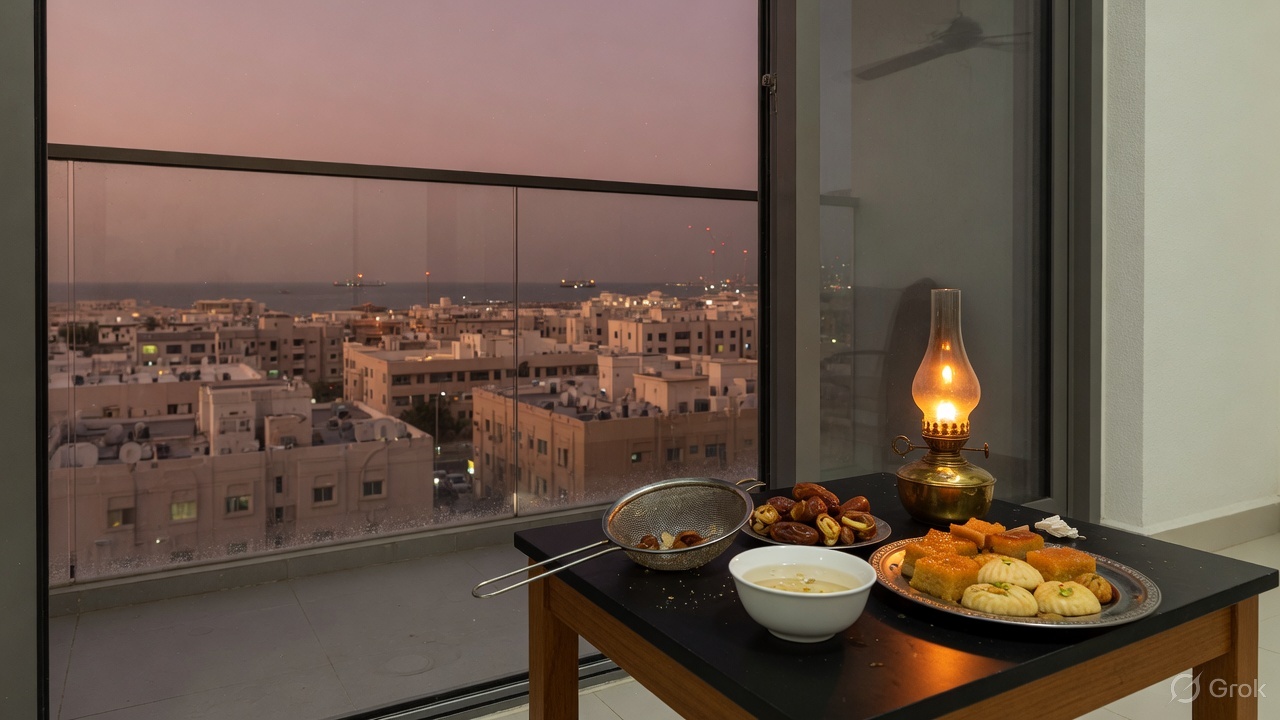
A lamp. Water. The kitchen sieve. A picture of Ahoi Mata, or a drawing if the wall is yours to draw on — most rented flats are not. Food the kitchen can finish: something fried, a sweet, fruit. The children, if they are home from school, sitting rather than fasting to prove a point. After the stars are seen, water through the sieve toward that sky, then the house eats.
Light is the practical difficulty. A flat on a high floor, a compound full of lamps, a mall glow on the horizon — the first star is harder here than in a Sultanpur lane. Step into the darkest side of the balcony. Switch off the room behind you. Give the eye a minute. If the building's glass is too bright, a roof the management allows, or the single dark corner of the compound, is more honest than declaring the star 'seen' on a phone. A photograph from India is not arghya in Ajman.
The children, and the sentence I will not say
The older katha speaks of sons and of a loss restored by the evening's fast. I tell it, when asked, as a katha, and then I refuse the use it is put to. This vrat does not guarantee a child's health, a safe road, a visa, a school place, or a pregnancy. A daughter is not a lesser reason to keep the day than a son. A mother who is afraid, because someone told her the fast is what stands between her child and an accident, should eat if she must and sit the evening anyway. Fear is not the rite. Attention is.
One house, one sheet, then Diwali
Between 1 November and 8 November the same families will keep Dhanteras and Lakshmi Puja. Do not let Ahoi's evening become a rehearsal for gold and fireworks. The building rules you already negotiated for Diwali — no crackers, a lamp that the detector will tolerate, guests who fit the majlis — can be thought about later in the week. Sunday's thali is small. If you are in a camp, a labour accommodation, or a shared room where a lamp is genuinely not allowed, a picture, water, and the stars from a permitted doorway are the vrat. Do not break a rule of the building in order to look stricter than the paddhati.
How a conversation with me works from the Gulf
Name the emirate and the city in the first message. 'UAE' is not a sky. WhatsApp, in Hindi or English, is the door. There is no online payment. Dakshina, if you want the katha read with you on a live link that evening, is spoken before the Sunday. I am in Sultanpur. Travel, a sitting in India, and a live link are the three forms I actually offer. I will not sell a package, and I will not tell you the vrat is incomplete without me. Most mothers will keep it better alone than on a call that starts late because of the time difference.
Questions people ask
Is Ahoi Ashtami a public holiday in the UAE?
No. Sunday 1 November 2026 is a working day. Friday and Saturday are the weekend.
Which emirate's time do I follow?
The city where you will lift the sieve. Abu Dhabi, Dubai, Sharjah and Fujairah are not one sunset. Set the panchang to that city on Sunday morning.
Can I subtract ninety minutes from India?
That corrects the clock and misses the sky. Use a Gulf panchang for your city. Do not open the fast because Lucknow has texted.
Stars or moon?
Stars, for the ordinary house, with water through a sieve. A few families wait for a late moon. Decide in the morning.
What if I cannot light a diya in the flat?
Keep the picture, the water and the stars from a place the building allows. A forbidden flame is not a stricter vrat.
Share the service and a preferred date. You will get a WhatsApp message to confirm. No account needed.
Book ConsultationRelated
Read next
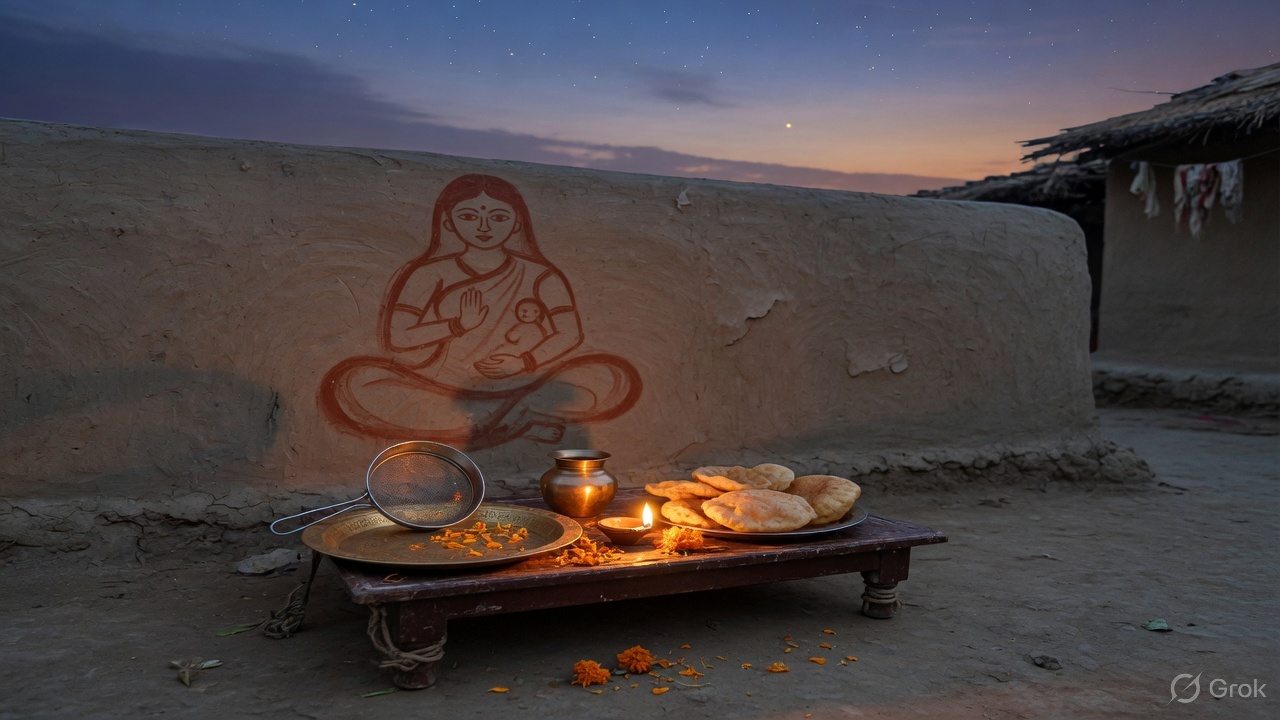 Ahoi Ashtami in India 2026 — Sunday 1 November, stars and not the moonAhoi Ashtami 2026 is Sunday 1 November. In a North Indian house the fast breaks at the evening stars, the wall carries Ahoi Mata, and the vrat is a mother's niyam — not a promise about a child.Read the article
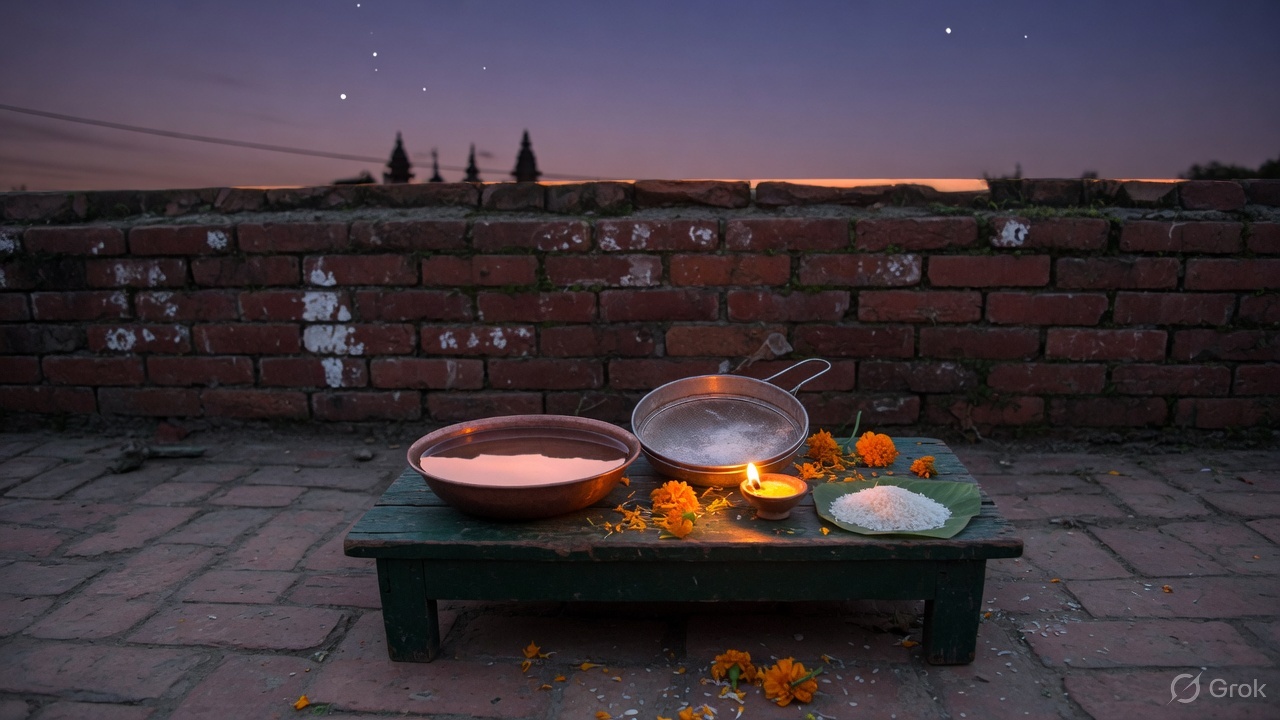 Ahoi Ashtami in Nepal 2026 — before Tihar, on Kathmandu's own skyAhoi Ashtami 2026 is Sunday 1 November, before Nepal's Tihar. Nepal's clock is fifteen minutes ahead of India; Kathmandu's stars are not a Lucknow screenshot plus a quarter of an hour.Read the article
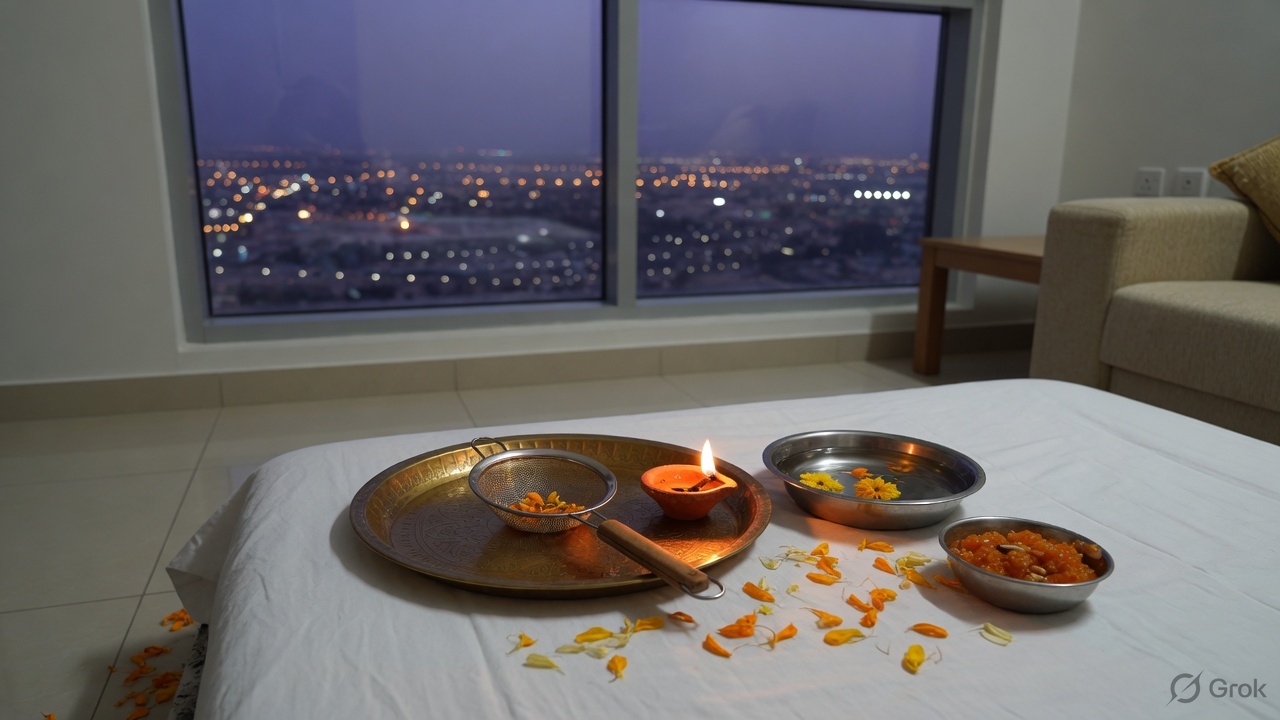 Ahoi Ashtami in a Dubai flat 2026 — the sieve, the window, a working SundayAhoi Ashtami 2026 in Dubai is Sunday 1 November, a school day. The fast breaks at stars seen from that window, not at a Lucknow moon, and the thali has to live with the smoke detector.Read the article